
A stakeholder asks what distinguishes watsonx.data from simply keeping Parquet files in a bucket and pointing a query tool at them. Which answer best captures the difference?
Select an answer to reveal the explanation.
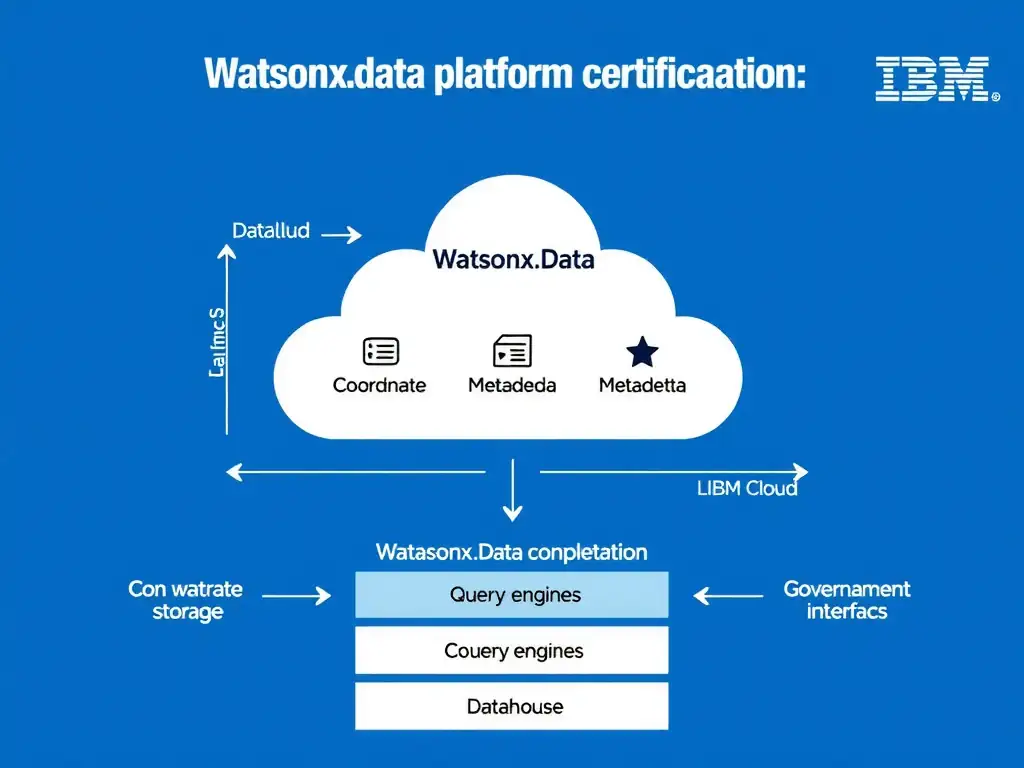
Short Explanation
Raw files in a bucket give you storage and nothing else—no table semantics, no concurrency guarantees, no policy, no discovery. What you need is the layer above the bytes: catalog metadata, transactional table semantics, governance, and managed engines coordinated as one platform. That lets one governed copy safely serve many engines and users at once.
Full Explanation
The correct answer is the one stating that it adds catalog metadata, transactional table semantics, governance and managed engines over that storage as one coordinated platform. Raw files in a bucket are storage without semantics. watsonx.data layers a catalog that defines tables, open table formats that supply transactional consistency and schema evolution, governance that enforces who may see what, and managed engines that execute queries—all coordinated as one platform rather than assembled per team.
The answer claiming it stores files in a proprietary format that only IBM engines can read is incorrect and inverts a defining property. The platform is built on open table formats specifically so the data is not locked to one vendor's engines.
The answer claiming it replaces object storage with a managed block storage tier for lower latency is incorrect because object storage remains the storage layer. Scalability and durability at low cost are why it was chosen; the platform does not replace it.
The answer claiming it is functionally the same, differing only in providing a console over the bucket, is incorrect because a console over a bucket would supply none of the table semantics, concurrency guarantees or policy enforcement that constitute the actual difference.
For the exam, be able to name what the platform adds above storage: metadata, table format guarantees, governance, engines, and the interfaces that manage them.