
A pipeline's service identity currently holds broad write access across all catalogs, but the pipeline writes to only one schema. What should be done?
Select an answer to reveal the explanation.
Short Explanation
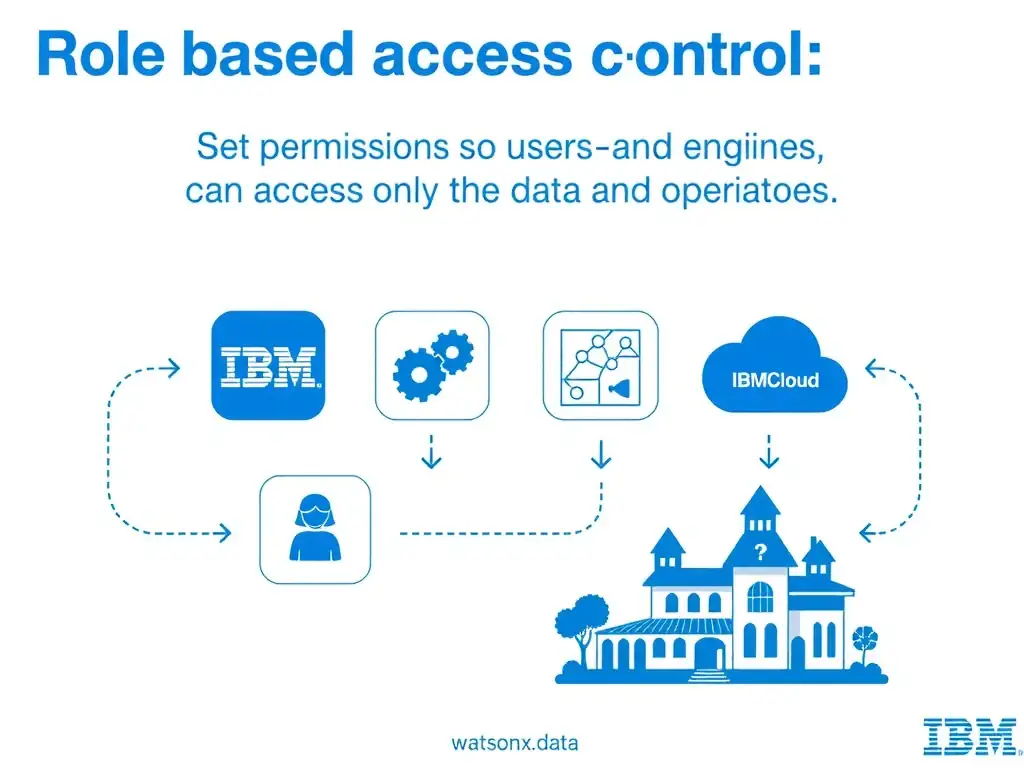
Scope the grant to what the job actually touches. If the pipeline writes to one schema, give its identity write access only there. Relying on the code to stay well-behaved isn't a control—a bug or compromise turns a broad grant into broad damage.
Full Explanation
Least privilege limits the blast radius. If the pipeline writes to one schema, its identity should be able to write only there, so a defect, a bad deployment, or a stolen credential cannot damage unrelated data. That's why reducing its permissions to write access on that schema alone is the right move.
Leaving the permissions unchanged is incorrect because current behavior is not a control. Code changes, and a compromised credential does whatever the attacker wants within the granted scope.
Replacing the service identity with a named administrator's account is incorrect because using a person's account destroys attribution and grants the pipeline that person's full rights.
Removing all write permissions and having an administrator apply the pipeline's output manually is incorrect because manual application makes a routine automated process depend on a human and does not improve the security model.
For the exam, scope service identities to exactly the objects and operations they use.