
Why is choosing storage tiers based on file extension unsound?
Select an answer to reveal the explanation.
Short Explanation
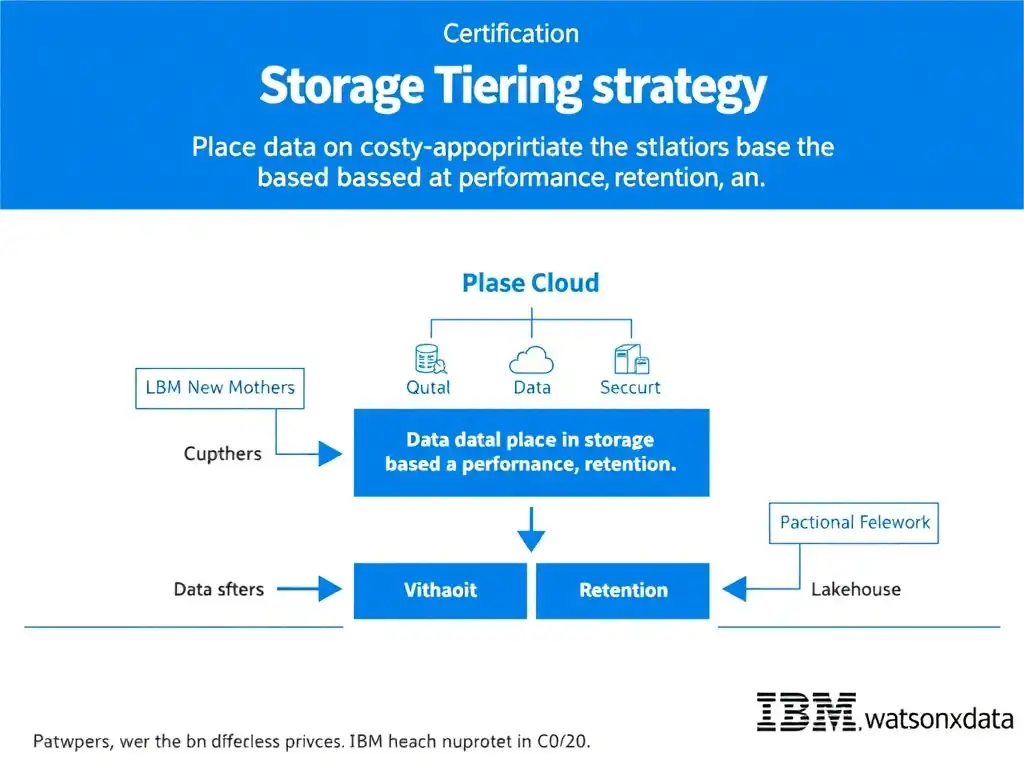
Two files in the same format can have opposite access patterns—this quarter's data and 2019's are both Parquet. The format doesn't tell you which tier either belongs on, so you place data by read frequency and retention.
Full Explanation
Placement should follow access frequency, performance requirement and retention obligation. Format is orthogonal: the current partition and a six-year-old one are typically the same format with entirely different access profiles. That's why the option saying format says nothing about how often data is read or how long it must be retained is correct.
The option claiming file extensions are not visible to the storage layer is incorrect because object keys and their extensions are perfectly visible; visibility is not the objection.
The option claiming only one file format is permitted per storage tier is incorrect because tiers impose no format restriction.
The option claiming extensions change whenever a table's schema evolves is incorrect because schema evolution does not rename files by extension.
For the exam, name the three real drivers - access pattern, performance need, retention - and reject format as a proxy for any of them.