
A team proposes disabling metadata tracking on their tables to reduce write overhead. What do they lose?
Select an answer to reveal the explanation.
Short Explanation
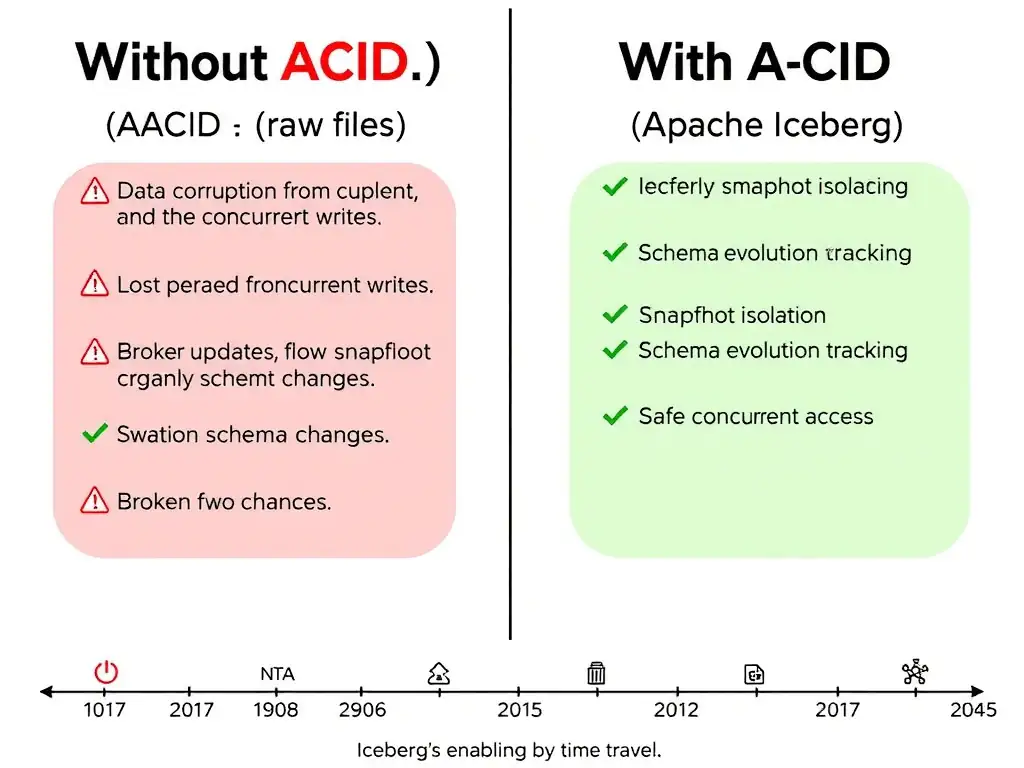
Metadata isn’t side bookkeeping—it’s what makes a table a table instead of a pile of files. Disable it, and you trade away transactions, snapshot consistency, and safe concurrent access just to save some write time.
Full Explanation
The correct answer is the one stating that disabling metadata tracking loses the transactional guarantees, snapshot consistency, and concurrent-access safety that the metadata layer provides. Table metadata defines the current snapshot, records commits, and is what makes atomic visibility and safe concurrent access possible. Removing it reduces the table to a directory of files with no consistency guarantees.
The option saying the loss is only the ability to see table descriptions in the catalog browser is incorrect because the loss is far larger than descriptive display; the operational guarantees go with it.
The option saying nothing functional is lost because metadata tracking is purely an optional reporting feature is incorrect because metadata tracking is functional infrastructure, not reporting.
The option saying the ability to store data in object storage at all is lost is incorrect because files can still be stored; the point is that they no longer constitute a reliable table.
For the exam, treat metadata as the mechanism behind the guarantees, so proposals to disable it are proposals to give up transactions.