
A team proposes dropping formal schema definitions so their tables can "stay flexible" as requirements change. What is the main problem with this?
Select an answer to reveal the explanation.
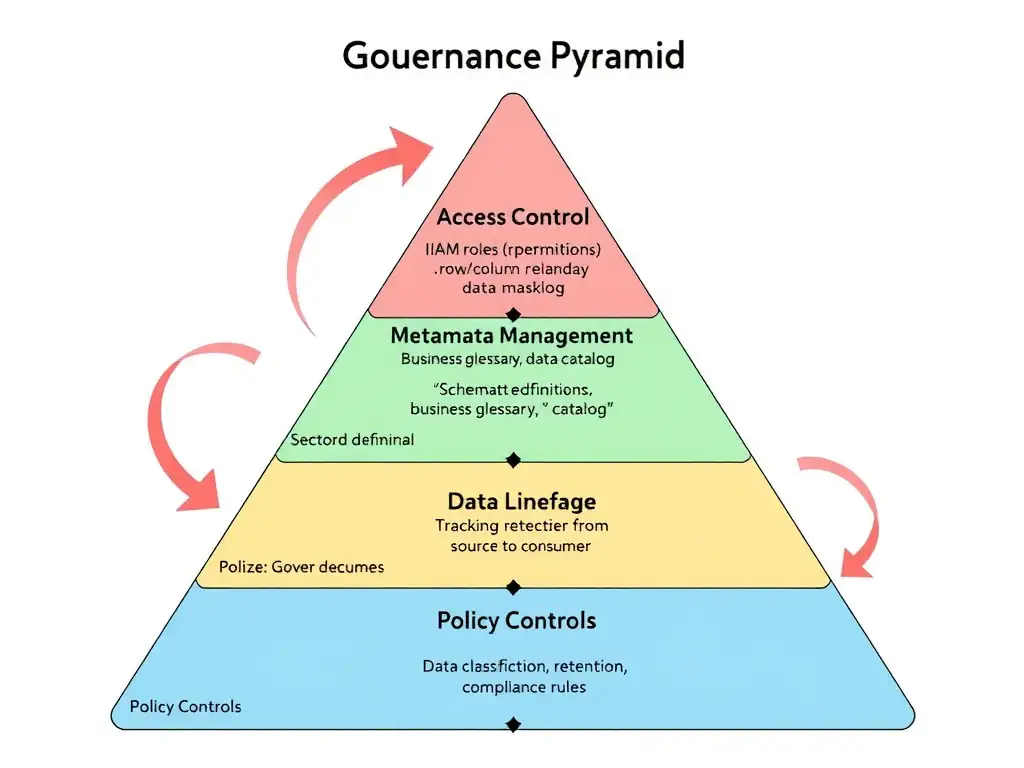
Short Explanation
The schema is the contract consumers build against, and column-level policy needs columns to point at. Dropping it doesn't buy flexibility—modern table formats already give you schema evolution with the contract intact. You don't need to abandon schema to stay flexible.
Full Explanation
The main problem is that consumers lose any contract about structure and types, so queries break unpredictably and governance controls that reference columns cannot be applied. The defined schema is the contract downstream consumers rely on. Without it, a producer's change silently breaks queries, and any governance control expressed at column level—masking a field, restricting a sensitive attribute—has nothing stable to reference.
The claim that the platform will refuse to store data without a schema definition is incorrect because the objection is not a hard platform refusal; the point is the consequence for consumers and governance.
The claim that schemaless tables always consume substantially more storage is incorrect because storage consumption is not the issue and does not follow from the absence of a definition.
The claim that flexibility is only available on premium engine tiers is incorrect because flexibility is not a tier feature. Open table formats provide schema evolution on any tier, which is the proper answer to changing requirements.
For the exam, note that schema evolution—not schema abandonment—is how a governed lakehouse handles change.