
A team wants to predict which customers will churn but has never recorded whether a customer churned. What must happen before a predictive model can be built?
Select an answer to reveal the explanation.
Short Explanation
No labels, no supervised model. You have to define what churn means for the business and label past customers before training. That definition is a business decision, not a modelling one.
Full Explanation
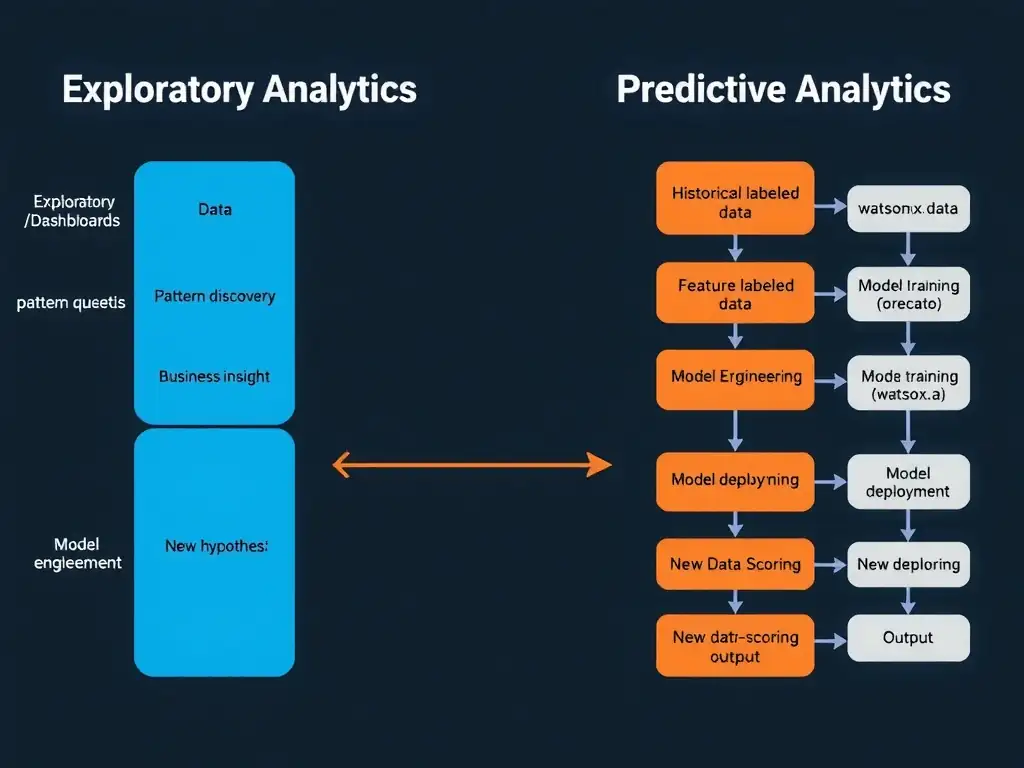
The correct answer is the choice requiring a target variable and historical labels, since supervised learning requires known outcomes to learn from. Supervised learning maps inputs to a known outcome, so the outcome must exist in the historical data. That means agreeing an operational definition of churn - which is a business judgement, not a technical one - and applying it retrospectively so each historical customer carries a label. The choice about provisioning a larger query engine is wrong because compute affects how quickly training runs, not whether the problem is well posed. A faster engine cannot manufacture labels. The choice about federating the customer table rather than ingesting it is wrong because federation is a data access decision. Training uses history, and freshness of the current customer table does not supply past outcomes. The choice saying nothing is needed because the model infers the target from the columns available is wrong because no supervised algorithm invents a target. Methods that work without labels, such as clustering, answer a different question and do not predict churn. For the exam, treat no target and no history as a definitive block on predictive work - it is the intended answer when a scenario mentions it.