
A deployment plan for watsonx.data covers sizing, storage and engine topology but does not mention how users will authenticate or how the platform reaches existing systems on the corporate network. Why does this matter?
Select an answer to reveal the explanation.
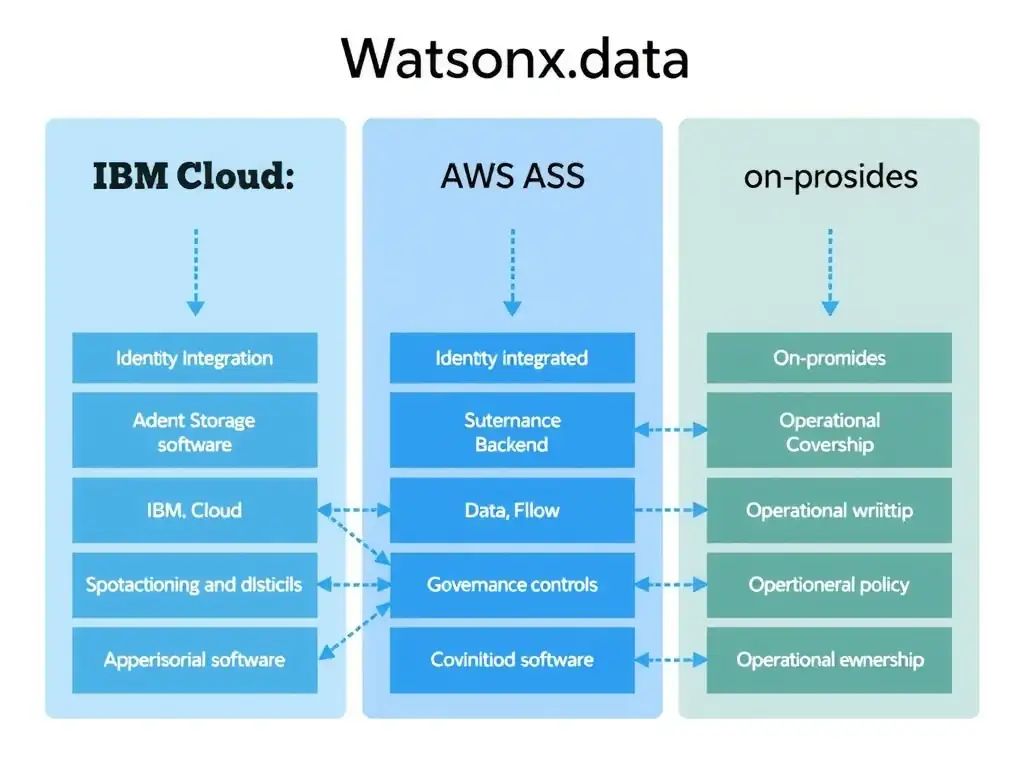
Short Explanation
Sizing gets argued about, but identity and network integration are what actually delay go-live. You need to federate the identity provider, map groups to roles, and open paths from engines to sources. Those usually aren't your team's tickets.
Full Explanation
Identity and network integration determine whether users can sign in and whether engines can reach data sources, and they typically involve other teams with their own lead times. Identity integration decides how users authenticate and how their group memberships map to platform roles, which is a prerequisite for governance to mean anything. Network integration decides whether engines can reach data sources and whether clients can reach the platform. Both usually depend on identity and network teams whose change windows are outside the project's control. The claim that these are configured automatically during installation is incorrect because installation does not discover an organisation's identity provider or open its firewalls; these are deliberate configuration steps. The claim that it matters only for cloud deployments, since on-premises installs inherit domain trust automatically, is incorrect because on-premises deployments still require explicit identity federation and role mapping; being inside the perimeter does not confer automatic trust. The claim that it matters only because auditors require the diagrams, not because deployment depends on it, is incorrect because it reduces a functional dependency to documentation; without it, nobody can log in. For the exam, include identity and network integration in any deployment-planning answer; their omission is a recurring distractor theme.