
A source system adds a new column and the downstream team needs it in the lakehouse table without rebuilding history. Which table-format capability addresses this?
Select an answer to reveal the explanation.
Short Explanation
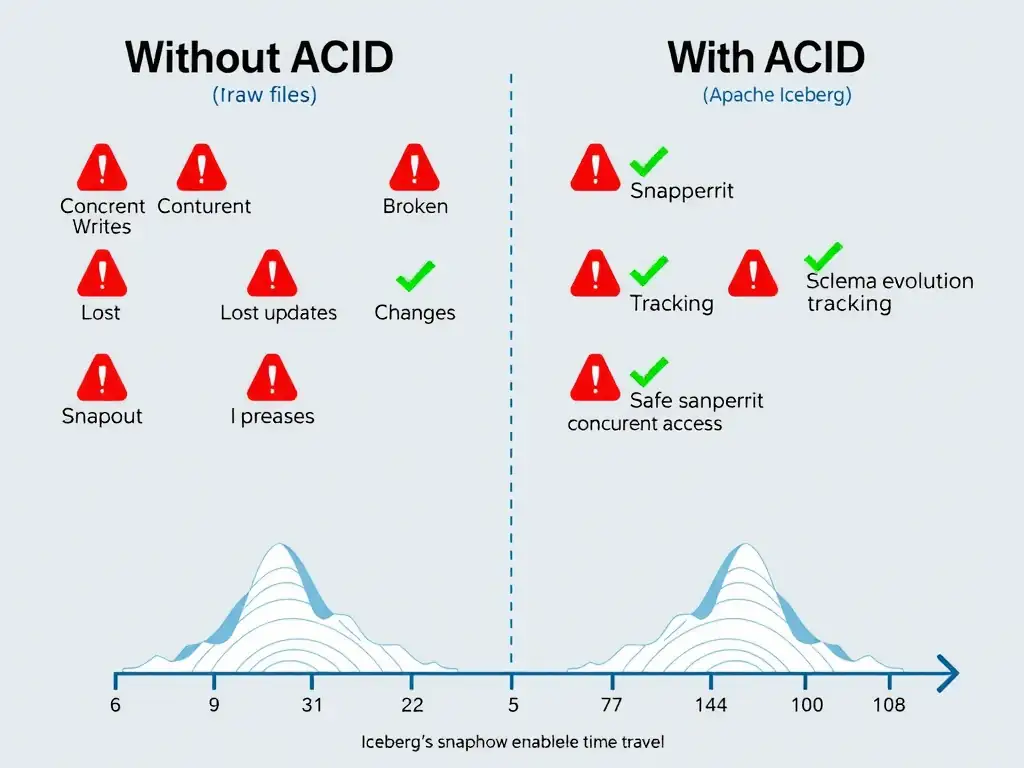
Schema evolution is the whole answer here: add the column, old files stay readable, no rebuild. The other options are real features solving entirely different problems.
Full Explanation
Schema evolution, which allows the table definition to change while existing data remains readable, is the correct capability. It lets a table's definition change, such as adding a column, while previously written data remains valid and queryable. That is what avoids a full rewrite when an upstream source changes.
The partition pruning option, which limits the files a query must scan, is incorrect because partition pruning is a query optimisation that reduces scanned data; it has no bearing on the table's definition.
The storage tiering option, which moves older data to cheaper storage, is incorrect because tiering concerns physical placement and cost, not structure.
The query caching option, which reuses previous result sets, is incorrect because caching reuses results and does not change what the table contains.
For the exam, associate structural change over time with schema evolution, and be ready to distinguish it from the performance features it is often listed beside.