
Suppose a rollout plan picks which mainframe programs to modernise first based purely on which ones are smallest. What is the problem with that approach?
Select an answer to reveal the explanation.
Short Explanation
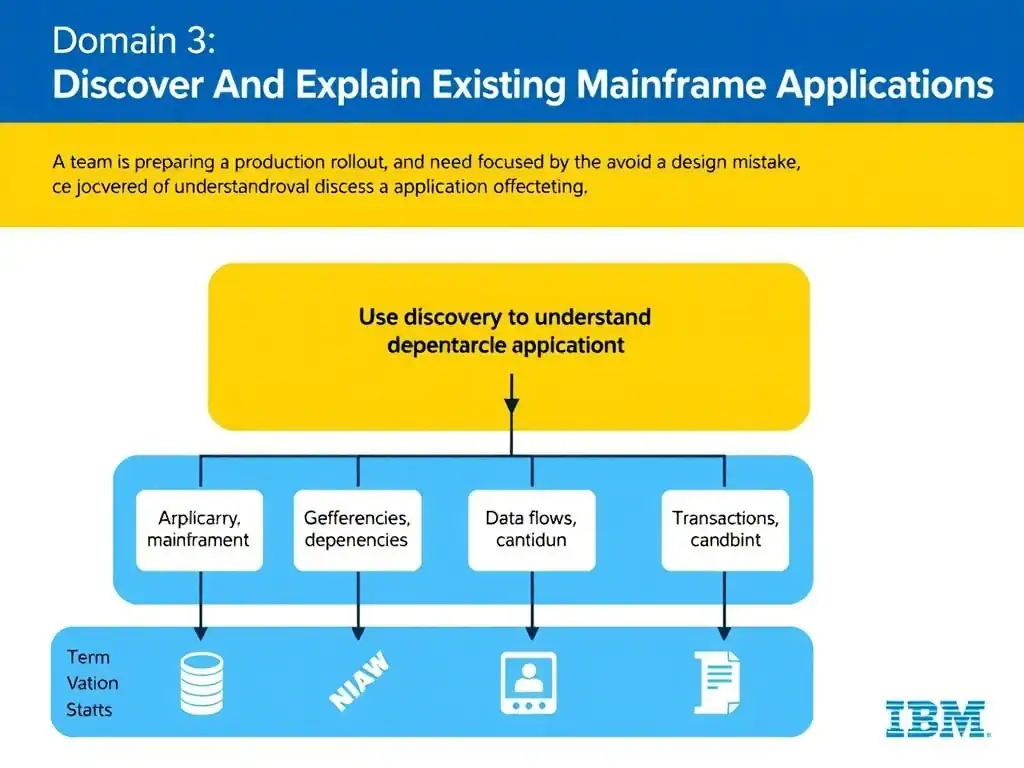
Don't let size drive your modernisation plan. Small programs can sit at the centre of a dozen dependencies, and size tells you nothing about that. Use discovery findings about data flows and transactions to prioritise instead.
Full Explanation
The correct answer is that size does not indicate business importance or dependency complexity; discovery-based understanding of data flows and transactions should drive prioritisation. A small program can be heavily depended upon or central to a critical transaction, while a large one might be self-contained; prioritisation should follow what discovery reveals about dependencies and data flow, not line count. The claim that there is no problem because smaller programs are always lower risk is incorrect because a small but heavily depended-upon program can be higher risk than a large, isolated one. The claim that smaller programs should be modernised last as a fixed rule regardless of discovery is incorrect because it substitutes another fixed rule for the same mistake, rather than using discovery findings. The claim that program size is the single most reliable signal discovery can provide is incorrect because dependency and transaction data are far more informative than size for this purpose. For the exam, prioritise modernisation candidates using discovery findings, not raw program size.