
A proof of concept is being converted into a governed release process, and the draft criteria list successful code generation as the only bar to clear. Why is code generation alone an unsafe release criterion?
Select an answer to reveal the explanation.
Short Explanation
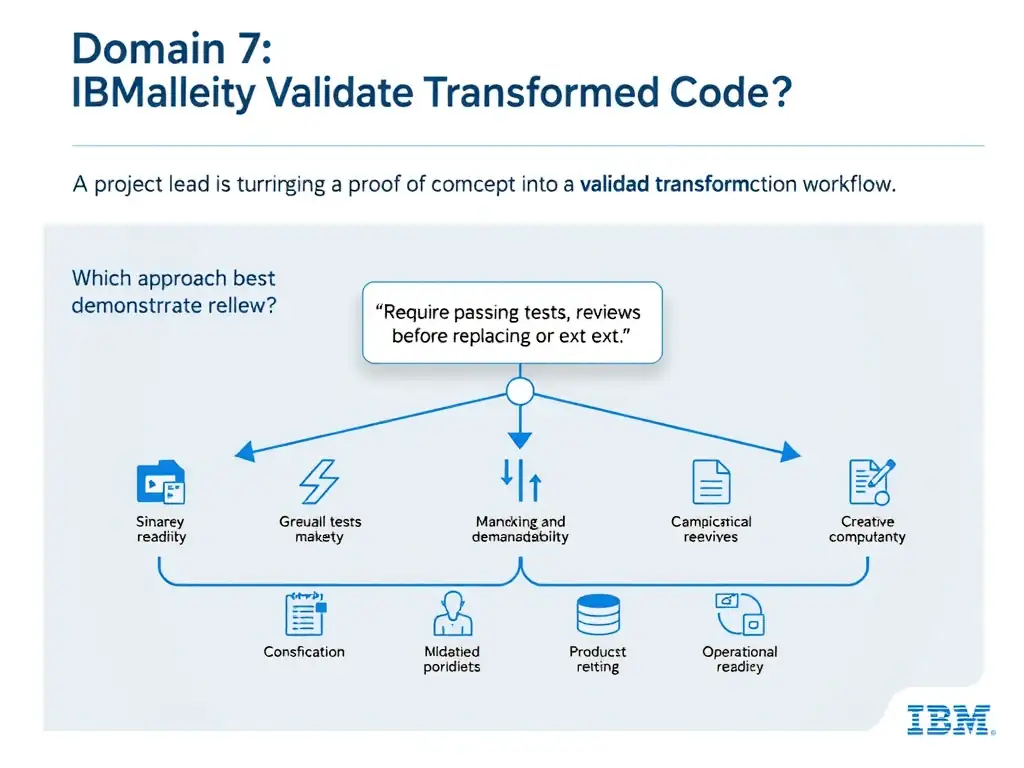
Compiling isn't the same as correct, and correct isn't the same as ready to operate. You need tests, review, and readiness checks to catch wrong results and missing safeguards before you release.
Full Explanation
The correct answer says generated code can compile and run while still producing wrong results or missing operational safeguards that only tests, review and readiness checks would catch. A candidate can be syntactically sound and still diverge from expected behaviour, and correct behaviour is not enough without rollback plans and monitoring after release.
The claim that generated code cannot be reviewed by anyone outside the original developer is wrong: anyone with access can review it, like hand-written code.
The claim that generation always fails to compile on the first attempt is wrong: generated code often compiles cleanly, which is why compiling is a weak signal.
The claim that generated code is licensed differently and cannot be released without renegotiation is wrong: licensing renegotiation is not a real release blocker here.
For the exam, separate 'it was generated' from 'it is ready to release'.