
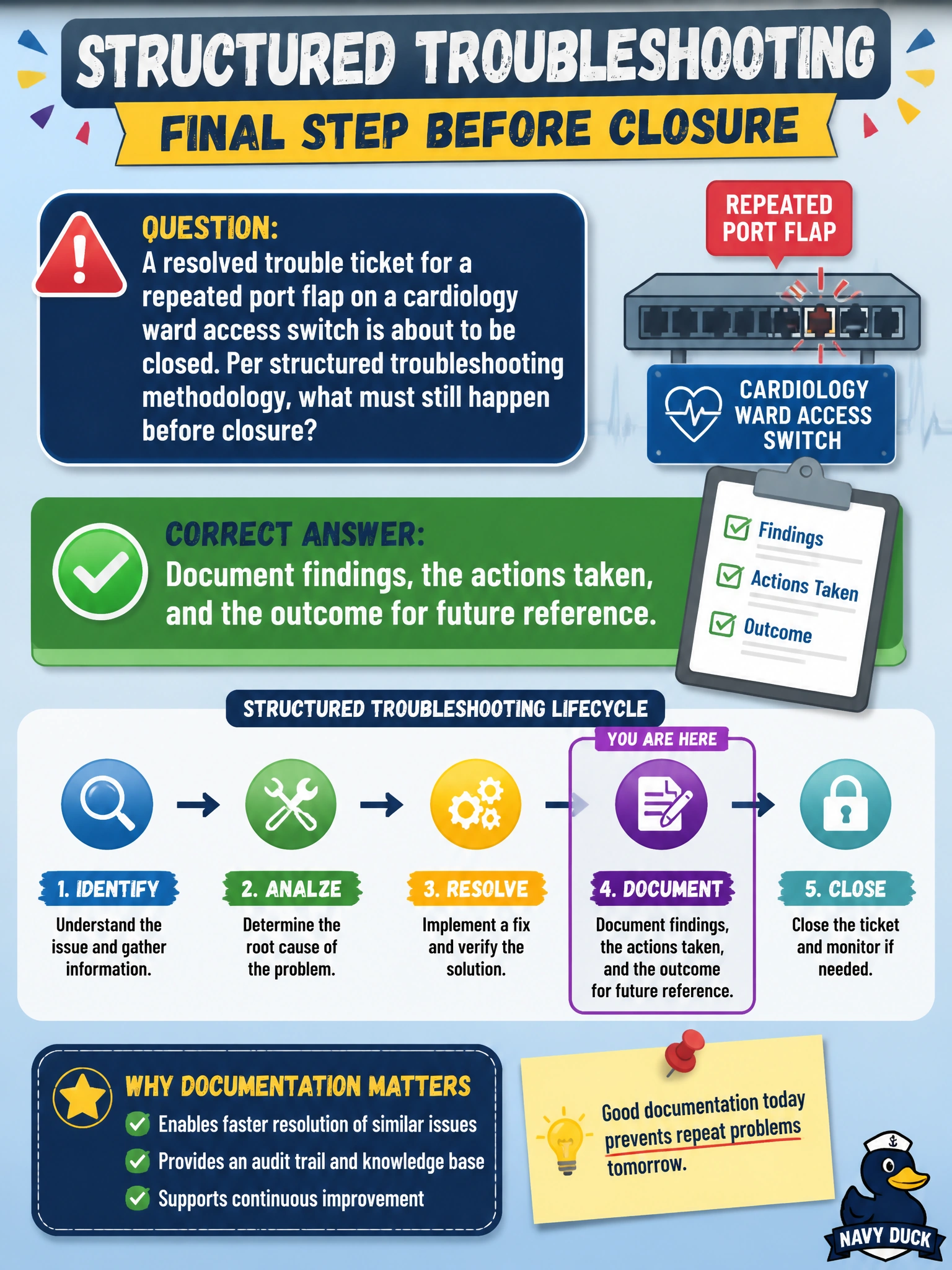
A resolved trouble ticket for a repeated port flap on a cardiology ward access switch is about to be closed. Per structured troubleshooting methodology, what must still happen before closure?
Select an answer to reveal the explanation.
Short Explanation
Fixing the problem isn't the finish line, writing it down is. A short record of what broke, what you found, and what you did is what saves the next tech from repeating your whole investigation. Skip that step and the fix basically evaporates from institutional memory.
Full Explanation
The final stage of structured troubleshooting methodology is documentation: recording the symptoms, the confirmed cause, the resolution steps, and the outcome, so the record is available for future reference, audits, and trend analysis across the campus. This matters operationally because a hospital network team relies on that history to spot recurring faults, such as a port that keeps flapping on the same switch, which might point to a deeper hardware issue rather than a one-off event. Re-running the theory-testing step again after resolution is redundant; testing belongs earlier in the sequence, and repeating it does not add value once the fix has already been validated as successful. Escalating a resolved ticket regardless of status contradicts the point of resolving it and would waste a higher support tier's time on a closed issue. Deleting ticket history is actively harmful: it destroys the audit trail that change-management and compliance processes in a healthcare setting typically require, and it removes the exact information a future technician would need. A practical check before closing is confirming the ticket clearly states root cause and remedy in plain language, not just a status of resolved.