
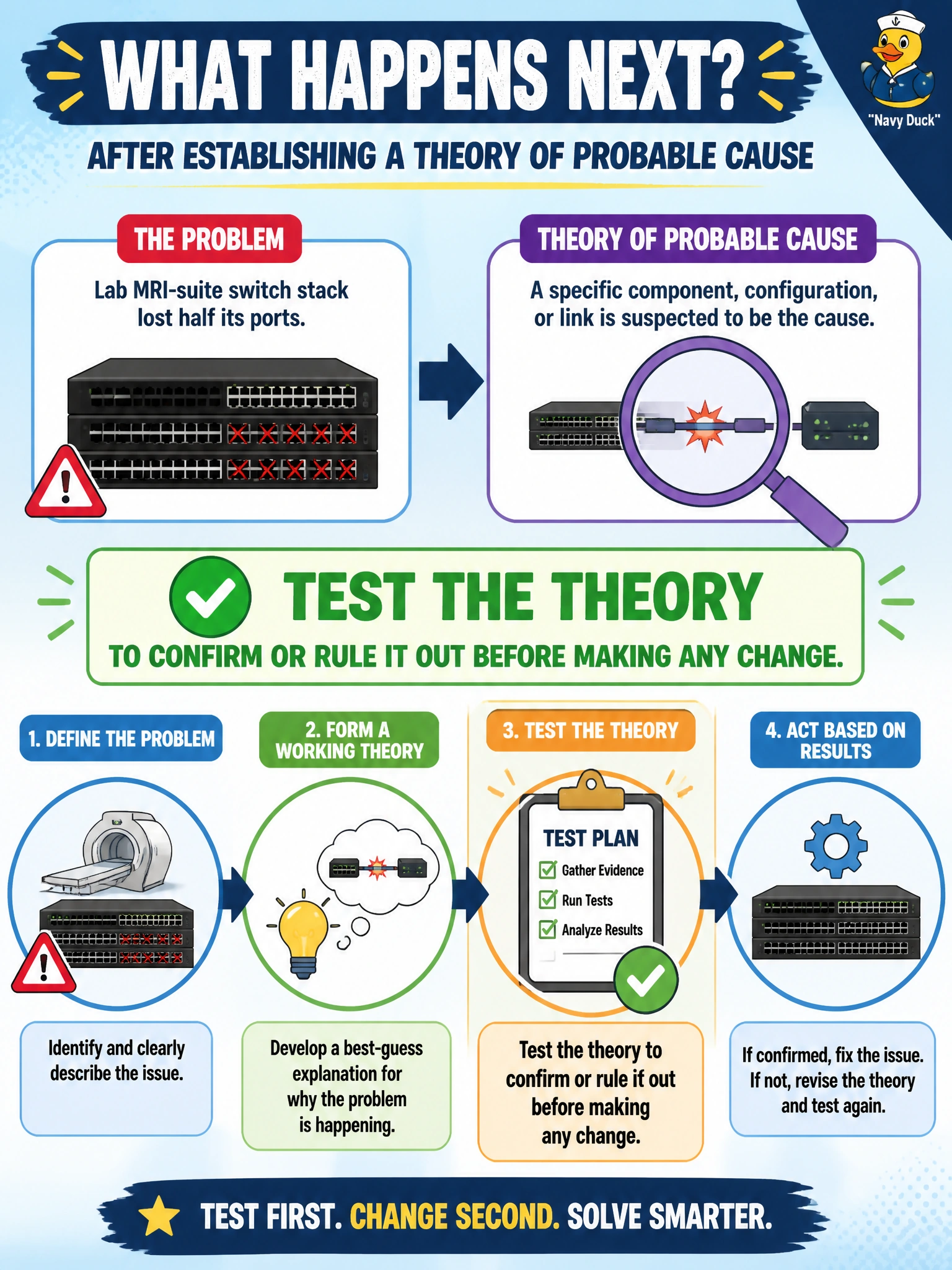
After defining the problem and forming a working theory for why a lab MRI-suite switch stack lost half its ports, a technician at the hospital is ready to move forward. What should happen immediately after the theory of probable cause is established?
Select an answer to reveal the explanation.
Short Explanation
A theory is just a guess until you check it. Testing the theory means finding a low-risk way to confirm your suspicion is actually true before you touch anything that could make the outage worse, kind of like double-checking a diagnosis before starting treatment. Only once the theory holds up do you move on to planning the fix.
Full Explanation
Structured methodology places theory testing directly after theory formation: the technician confirms the suspected cause through observation, a status check, or a small reversible action, and only escalates the theory if testing shows it does not hold. This ordering exists because acting on an unconfirmed guess can waste time or, worse, introduce a change that has nothing to do with the actual fault. Closing the ticket at the theory stage is wrong because nothing has been fixed or even confirmed yet; a theory is not a resolution. Updating the network diagram is a documentation task that belongs at the end of the process, once resolution is implemented and validated, not while the cause is still unproven. Notifying the vendor about hardware replacement jumps straight to a remedy without first confirming the theory, which risks an unnecessary parts order and truck roll if the real cause turns out to be something simpler, like a stack cable seated incorrectly. A concrete operational check here is to look for independent evidence supporting the theory, such as confirming the affected ports all sit on the same stack member, before committing to any corrective step.