
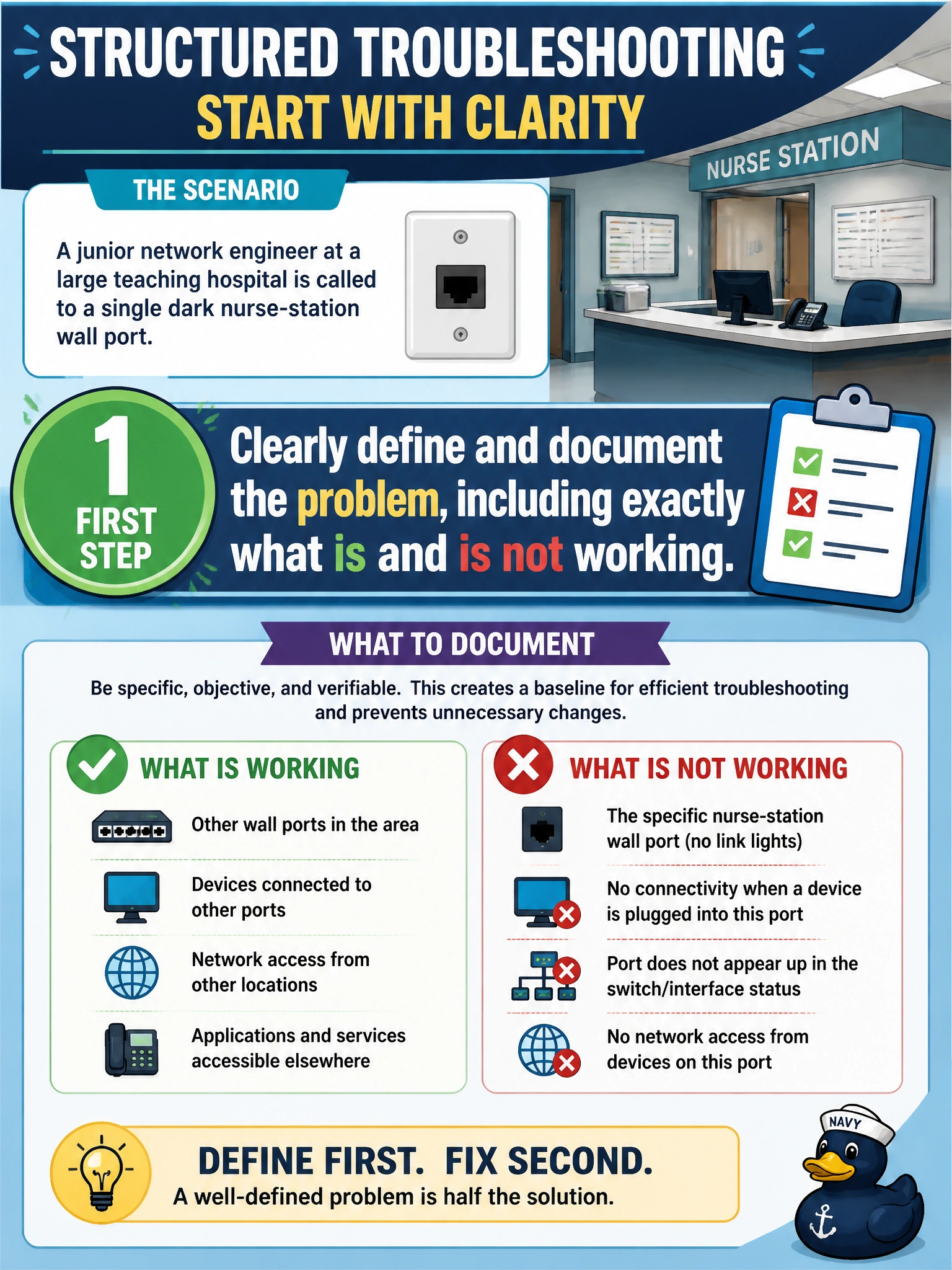
A junior network engineer at a large teaching hospital is called to a single dark nurse-station wall port. Before touching any configuration, which step of a structured troubleshooting methodology should come first?
Select an answer to reveal the explanation.
Short Explanation
Every good fix starts with a clear question, not a quick swap. If you jump straight to a cable or a reboot, you might solve today's symptom without ever knowing what actually broke, and it can bite you again next week. Nailing down exactly what is and isn't working first tells you where to look next.
Full Explanation
Structured troubleshooting methodology begins with problem definition: gathering facts about what is failing, what still works, when the failure started, and what changed recently, before any corrective action is taken. That definition step shapes every later stage, including forming a theory of probable cause and building a plan of action, so skipping it risks fixing a symptom rather than the real fault. Swapping the patch cable is a corrective action taken before the problem is even scoped, which can mask the real cause if, for example, the switch port itself is administratively disabled. Escalating to the architect confuses design responsibility with operational troubleshooting; the associate-level technician is expected to work the fault first and only escalate once methodology has been applied and the issue exceeds their authority or knowledge. Rebooting the switch is a blunt, disruptive action that could affect every other port on that switch, and taking it before understanding scope risks a wider outage for a single-port complaint. A practical check that respects this order is to first confirm from the end user, from a status light, or from the switch's port status whether the failure is truly isolated to that one port before deciding on any next action.