
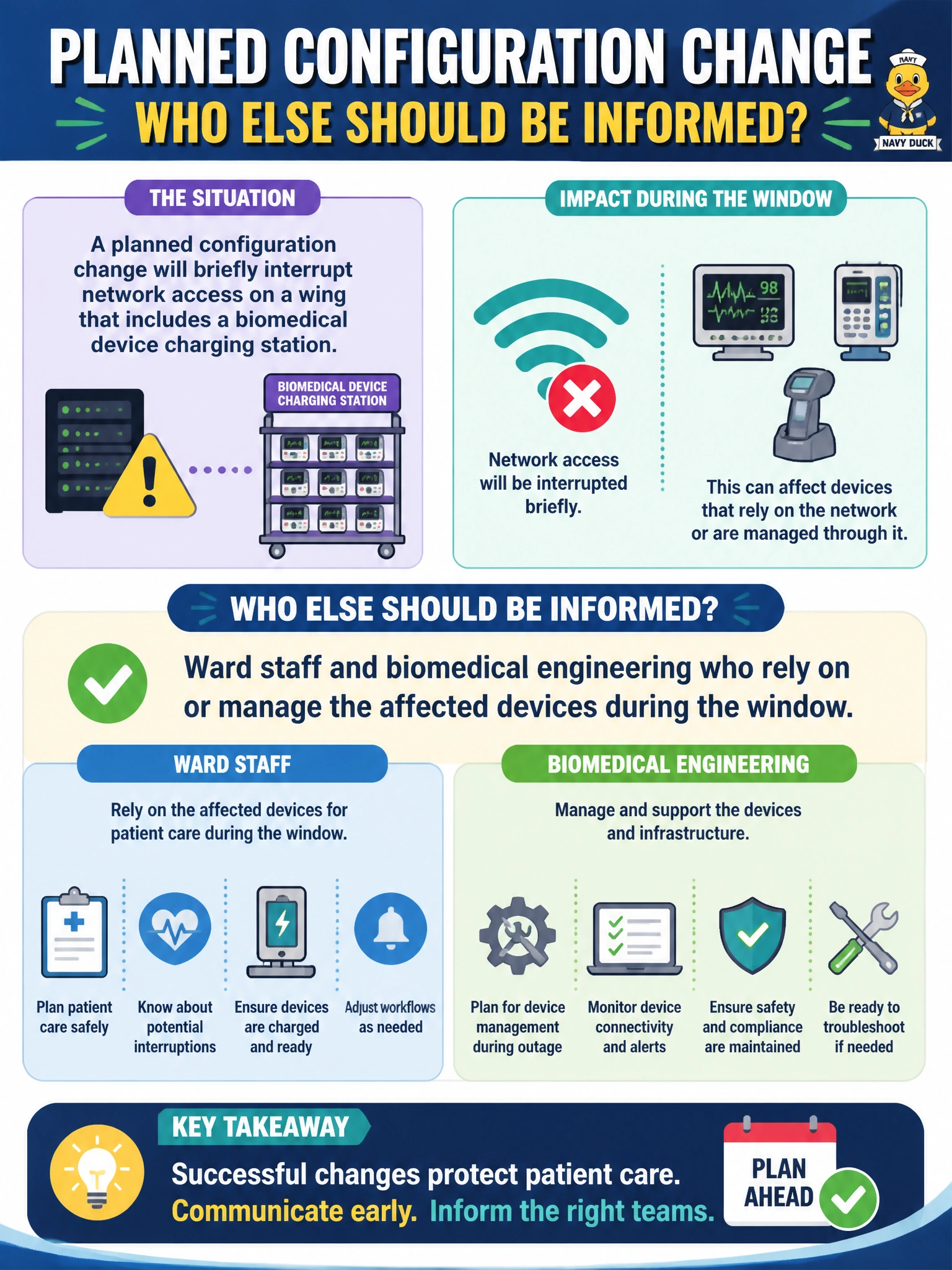
A planned configuration change will briefly interrupt network access on a wing that includes a biomedical device charging station. Who else, besides IT, should be informed before the change proceeds?
Select an answer to reveal the explanation.
Short Explanation
A brief network blip means something very different to IT than it does to a nurse relying on a charging station for monitoring equipment. Looping in ward staff and biomedical engineering before the change means they can plan around it — maybe delay a task, maybe keep a backup device handy — instead of being caught off guard. That short conversation beforehand avoids a much longer one afterward.
Full Explanation
Ward staff and biomedical engineering are the stakeholders who directly depend on or manage the devices affected by a brief interruption, so notifying them beforehand lets them adjust workflows, avoid relying on affected equipment during that exact window, or have a contingency ready — none of which is possible if the interruption is a surprise. This is core to change-control practice on a live clinical network: the technical change and its human impact are evaluated together, not the technical change alone. Assuming no one else needs to know as long as the change is quick ignores that even a short interruption can matter a great deal depending on what's happening on that device at that moment — the risk isn't about duration alone, it's about who is depending on continuity. The switch hardware vendor has no operational role in this specific change and doesn't need advance notice about a scheduled maintenance window on customer equipment. Marketing has no functional connection to network maintenance affecting clinical devices and including them adds noise without adding value to the change process. A caveat: notification timing matters too — informing stakeholders the day before a change is generally more useful than informing them minutes beforehand, since it gives them time to actually adjust their plans. As an operational check, confirm acknowledgment from the affected ward or biomedical contact before starting the change, not just that a notification was sent.