
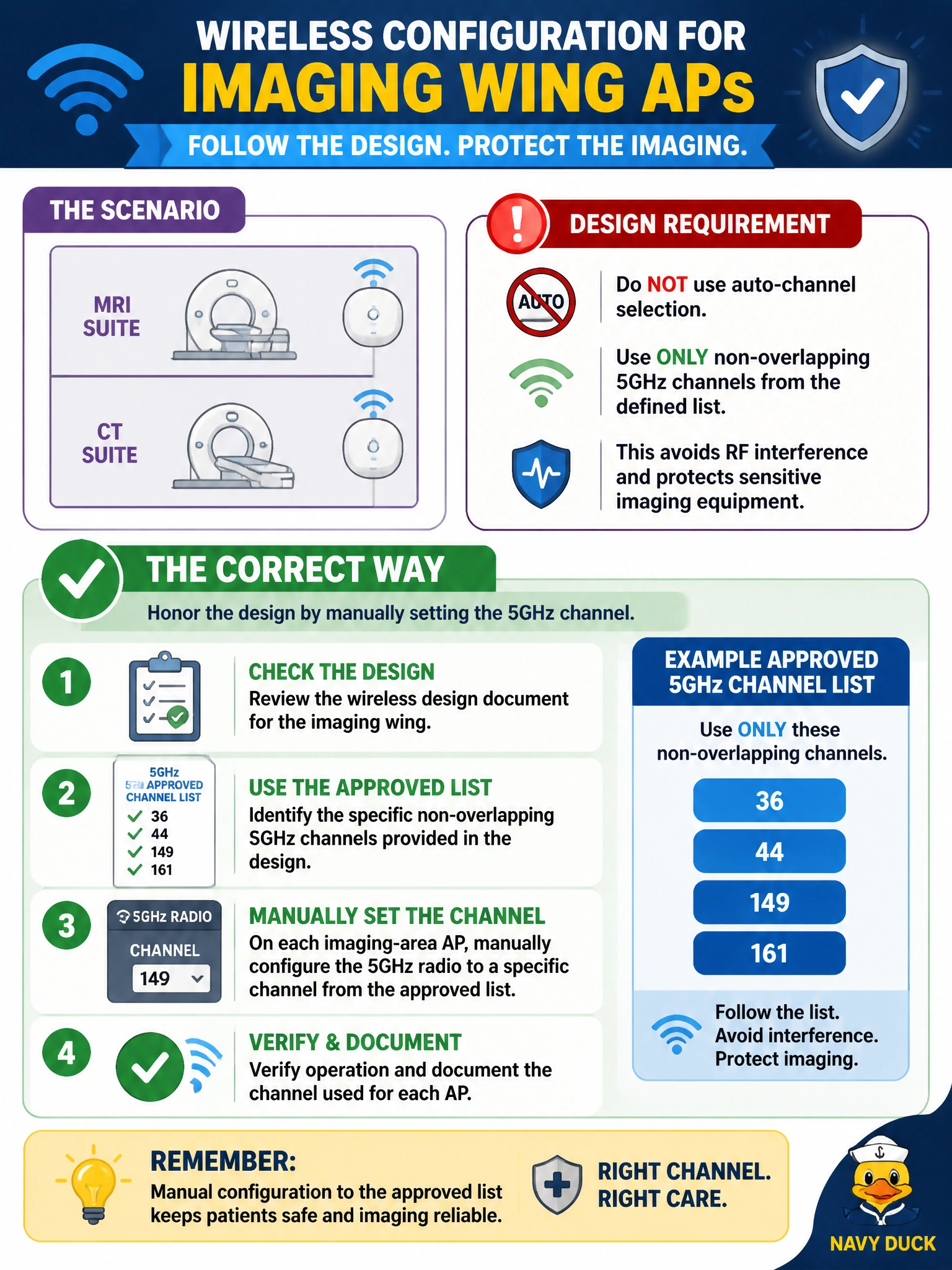
A wireless design document for the new imaging wing specifies that APs near the MRI and CT suites must use only non-overlapping 5GHz channels from a defined list, avoiding auto-channel selection, because of known RF sensitivity around the imaging equipment. When configuring those APs, what is the correct way to honor this requirement?
Select an answer to reveal the explanation.
Short Explanation
A design document that names specific channels isn't a suggestion — it's an instruction to lock those radios down by hand. Letting automatic channel management run in an RF-sensitive imaging suite would just override the very plan someone carefully worked out for that space.
Full Explanation
When a design calls out specific channels for a sensitive area, the correct implementation step is to statically assign those exact channels on the affected radios, overriding automatic RF management for that AP or AP group so the plan's intent is preserved. Leaving channels on automatic defeats the purpose because adaptive radio management optimizes for general coverage and interference avoidance without knowledge of the specific medical-equipment constraints the design already accounted for. Disabling 5GHz entirely goes far beyond what the design asked for, sacrificing capacity and performance in exchange for a restriction the requirement never specified. Pinning every AP campus-wide to one channel ignores the instruction's actual scope (a specific imaging area, not the whole campus) and would create massive co-channel interference everywhere else. A caveat: static channel assignment trades away automatic self-healing if RF conditions change later, so any future retuning of that area has to be a deliberate, documented change, not left to the system. Operational check: after configuration, pull the radio settings for those specific APs and confirm the active channel matches the channel list in the design document, not an auto-selected value.