
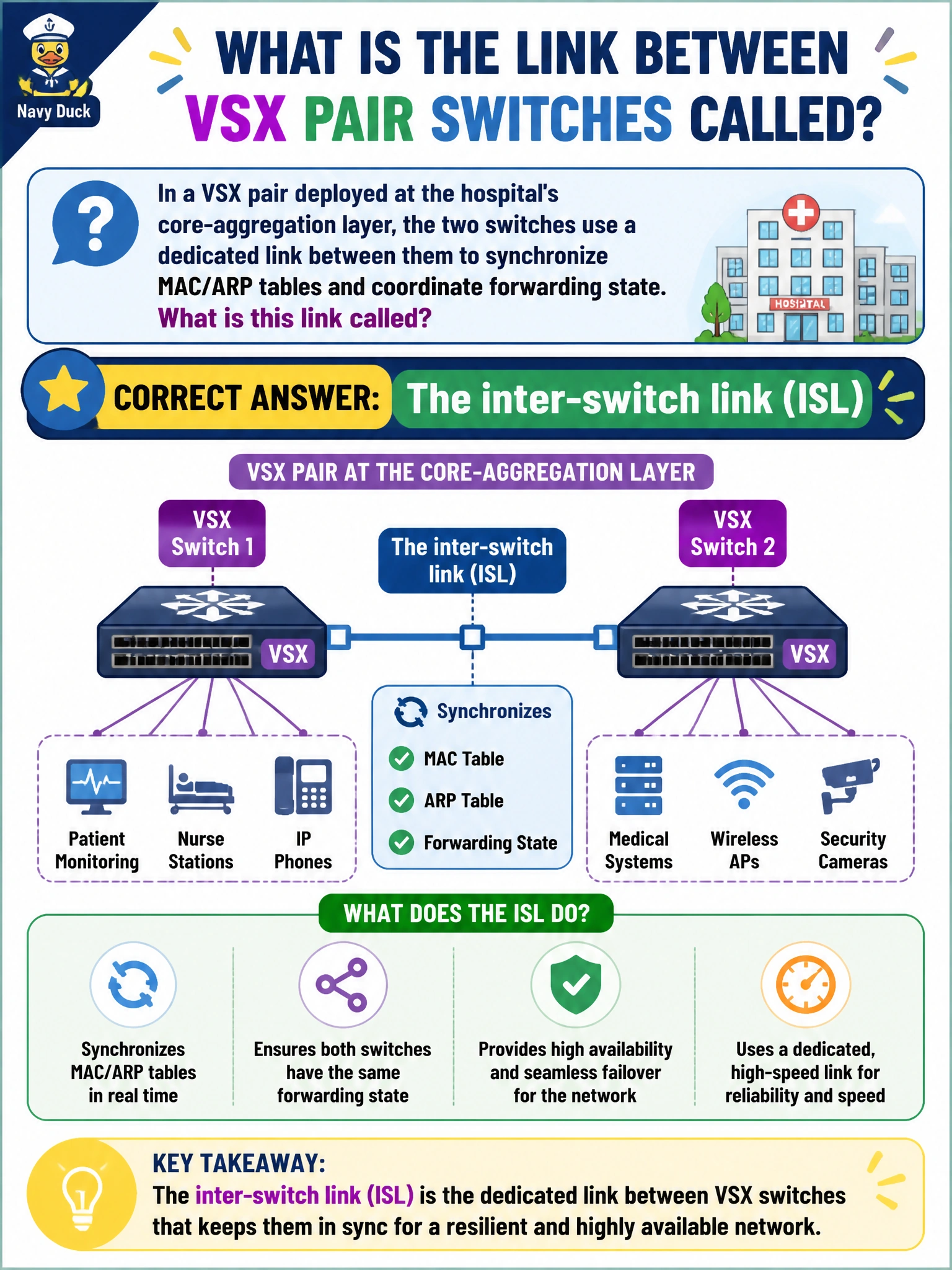
In a VSX pair deployed at the hospital's core-aggregation layer, the two switches use a dedicated link between them to synchronize MAC/ARP tables and coordinate forwarding state. What is this link called?
Select an answer to reveal the explanation.
Short Explanation
The two VSX switches need a private line just to talk to each other, keeping their tables in sync behind the scenes. That dedicated connection is the inter-switch link, and it's what makes the pair act like one coordinated unit instead of two strangers.
Full Explanation
The inter-switch link, or ISL, is the dedicated connection between the two VSX peer switches used specifically to synchronize state such as MAC and ARP tables, keepalives, and configuration consistency checks, which is what allows the pair to coordinate forwarding decisions without merging into a single device. A LAG toward the access layer is a downstream-facing aggregate link to end devices or access switches, not the private synchronization channel between the two VSX peers themselves, and confusing the two would mean pointing at the wrong cable entirely. The out-of-band management network handles administrative access to each switch's management interface and carries no VSX synchronization traffic — it is a separate, lower-bandwidth path meant for reachability during outages, not state sync. A native VLAN trunk toward the annex is a production data-carrying trunk to a remote site and has no defined role in VSX peer synchronization. Caveat: losing the ISL entirely is a serious failure mode called a split-brain risk, so AOS-CX pairs it with a separate keepalive path so each switch can tell the difference between 'the peer died' and 'just the ISL died.' Operational check: confirm ISL status and keepalive status both show up and healthy as part of any VSX deployment validation.