
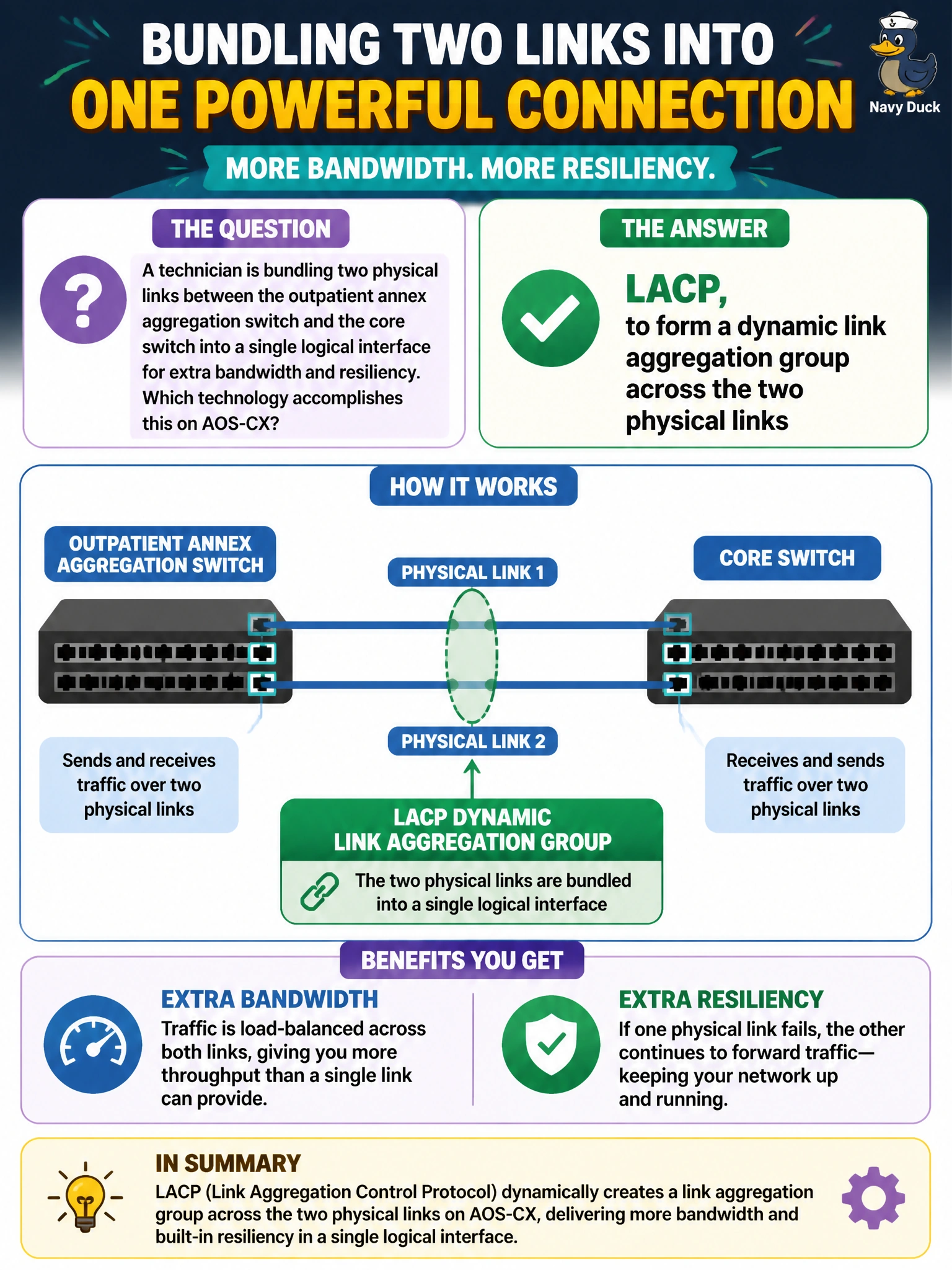
A technician is bundling two physical links between the outpatient annex aggregation switch and the core switch into a single logical interface for extra bandwidth and resiliency. Which technology accomplishes this on AOS-CX?
Select an answer to reveal the explanation.
Short Explanation
Two cables acting as one fat pipe, with the switches actively checking that both ends agree — that's exactly what LACP link aggregation does. It bundles the physical links into a single logical interface so traffic load-shares across both and the connection survives losing one cable.
Full Explanation
Bundling multiple physical links between two devices into one logical interface for combined bandwidth and failover is the definition of link aggregation, and LACP is the dynamic protocol AOS-CX uses to negotiate and monitor that bundle, continuously confirming both ends agree on membership before passing traffic. VSF stacks multiple physical switches into a single logical switch chassis for management and forwarding purposes — a different problem than aggregating links between two already-separate switches. VSX synchronizes control planes and forwarding tables between a pair of switches so they can each independently front an aggregation link toward a downstream device, which is a redundancy technology for the switches themselves, not the mechanism that bundles the two cables in this scenario. Spanning tree exists to prevent loops by blocking redundant paths, which is the opposite goal here — the technician wants both links actively forwarding traffic simultaneously, not one held in standby. Caveat: both physical links in a LAG should match in speed and duplex, and ideally connect to compatible hardware, or the bundle can behave unpredictably. Operational check: after configuring the LAG, verify both member interfaces show as up and aggregated, not as individual standalone interfaces, on both switches.