
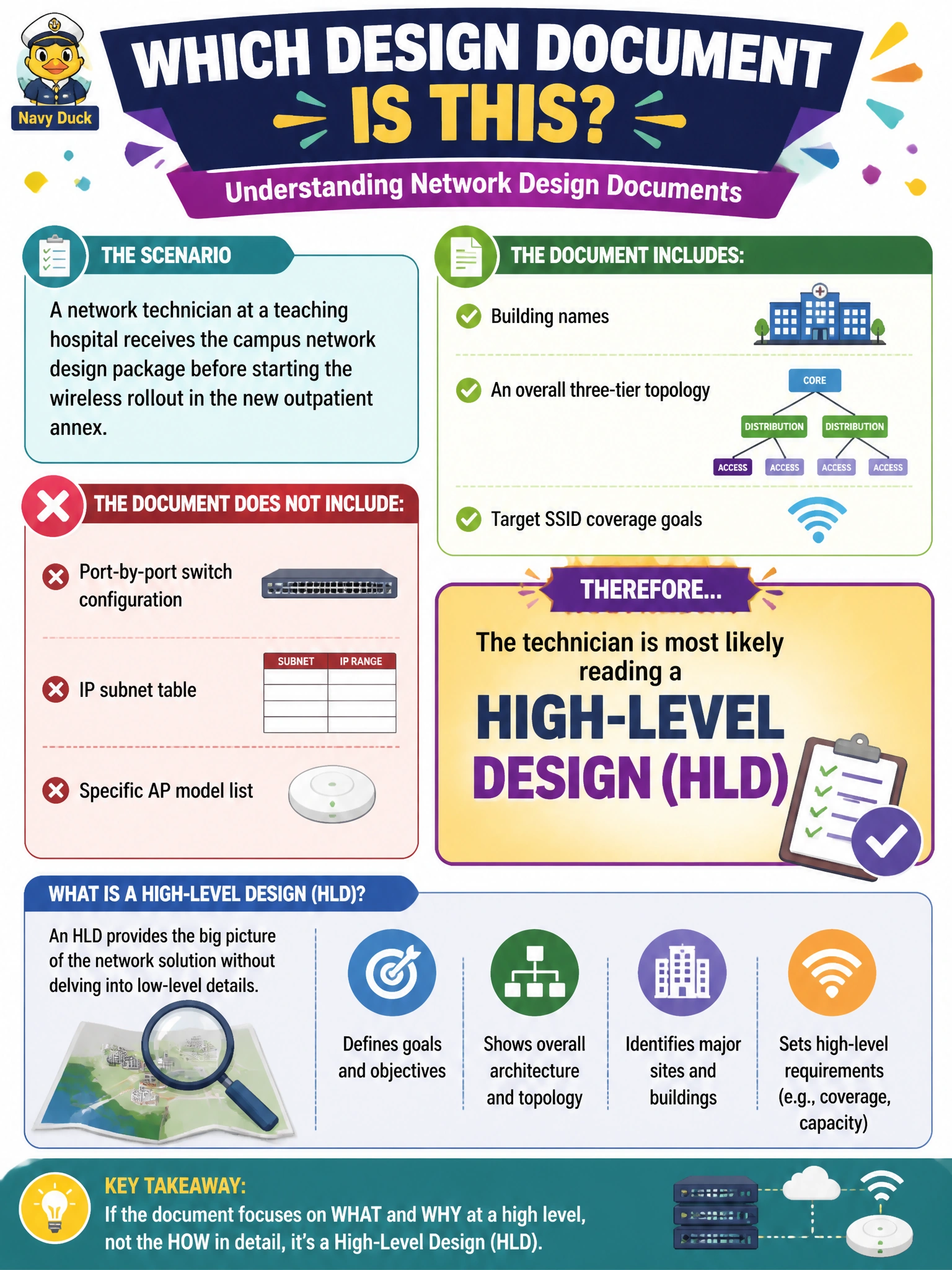
A network technician at a teaching hospital receives the campus network design package before starting the wireless rollout in the new outpatient annex. The document lists building names, an overall three-tier topology, and target SSID coverage goals, but no port-by-port switch configuration, IP subnet table, or specific AP model list. Which type of design document is the technician most likely reading?
Select an answer to reveal the explanation.
Short Explanation
Think of the HLD as the blueprint an architect hands over before anyone picks up a wrench: it says what the building needs to do, not which screw goes where. Topology, goals, and building names are the big picture, and the port-level detail lives one document down. Once you see subnet tables and model numbers, you've moved into the LLD.
Full Explanation
A high-level design communicates intent and architecture: how many tiers the network has, what each building must accomplish, and the coverage or performance goals a solution has to meet. It intentionally leaves out implementation-specific detail like VLAN IDs, IP subnets, port assignments, or exact hardware models, because those decisions belong to whoever turns the intent into a buildable plan. A low-level design is the wrong answer here because it is defined by exactly the detail this document lacks — subnet tables, device-by-device configuration, and model numbers. A site survey report is also not a fit: it documents measured or predicted RF conditions gathered from a physical site, not building-level topology and goals. A change-control ticket tracks an approved, scheduled modification to a live network, which has nothing to do with describing an overall solution before deployment. Recognizing which document you're holding matters operationally: pulling a subnet or VLAN number from an HLD is a mistake, because that information hasn't been decided yet at that stage. A quick check in the field is to scan the document's table of contents — if it discusses goals and topology tiers without a device inventory or addressing table, it's an HLD, and the technician should expect the missing detail to arrive in a follow-on LLD.