
Leadership asks how the organization's HCP Terraform Standard bill is calculated so it can forecast next year's cost. Which description of the usage measure is accurate?
Select an answer to reveal the explanation.
Short Explanation
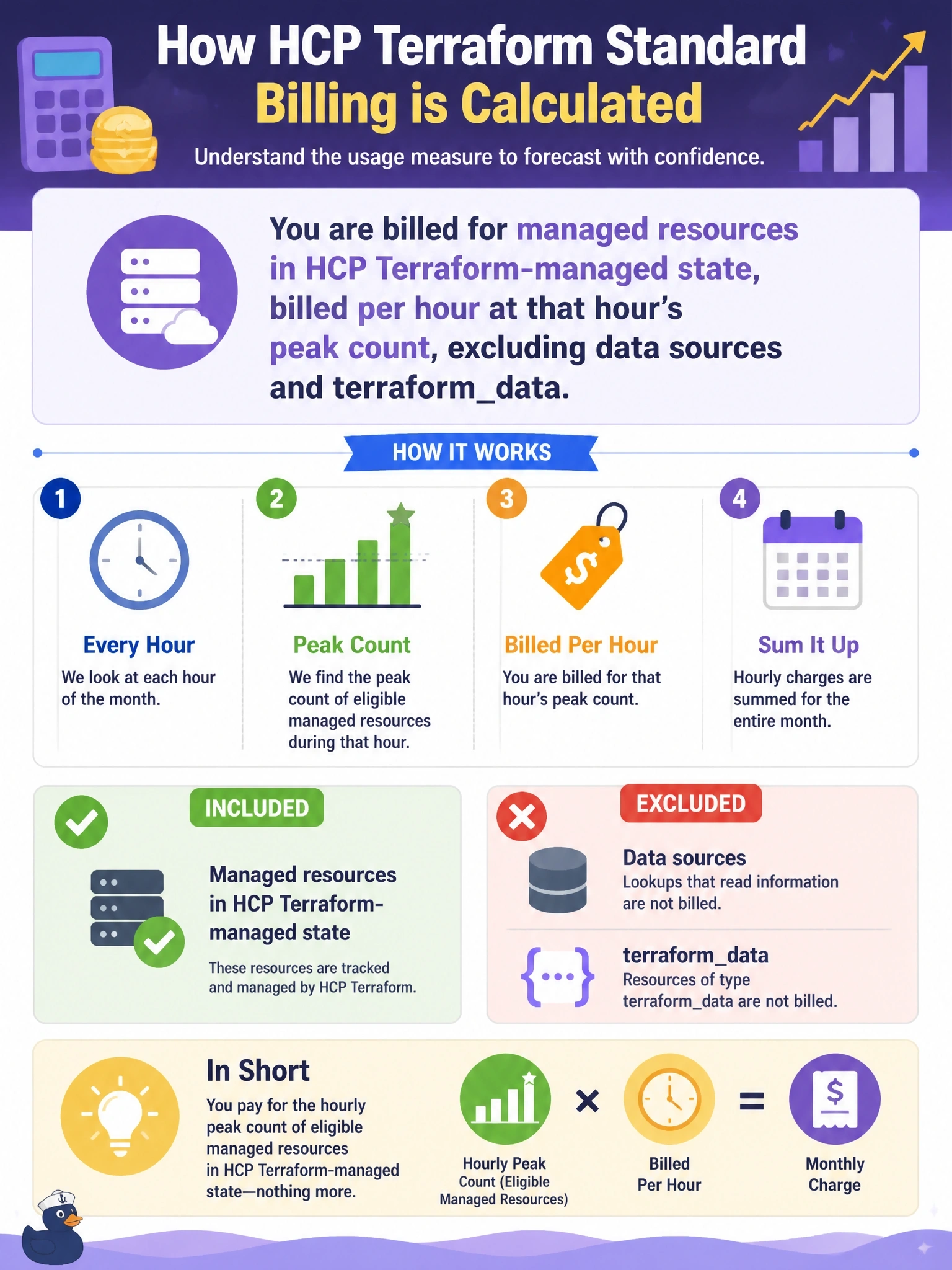
HCP Terraform bills on what it actually looks after: managed resources, metered hourly at each hour's peak. Data sources, null_resource and terraform_data ride free, and you aren't billed by runs, workspaces or users.
Full Explanation
For the Essentials, Standard and Premium plans, HCP Terraform pricing is based on managed resources. A managed resource is a resource in an HCP Terraform-managed state file with mode set to managed, counted from the first plan or apply that includes it, and workspace and Stacks resources are combined. Resources created with count or for_each and resources inside modules all count. Data sources, null_resource and terraform_data resources, and local values and variables do not. HashiCorp charges per managed resource per hour from provisioning until destruction; a partial hour is billed as a full hour, and the peak number of managed resources in an hour sets that hour's cost. Run volume is not the meter: plans have concurrency limits by tier, but they are not billed per run. Workspace count is not the meter either; workspaces, projects and Stacks are unlimited on paid plans. Seats are also not the basis for pay-as-you-go pricing, so counting team members or treating owners differently would mis-forecast the bill. Exam caveat: because peak per hour matters, a large short-lived test environment raises cost even if it is destroyed later the same day, which is one reason to auto-destroy ephemeral environments. Operational check: open the organization's Usage page to read the current managed resource count, then confirm the billing period's usage in the HCP portal.