
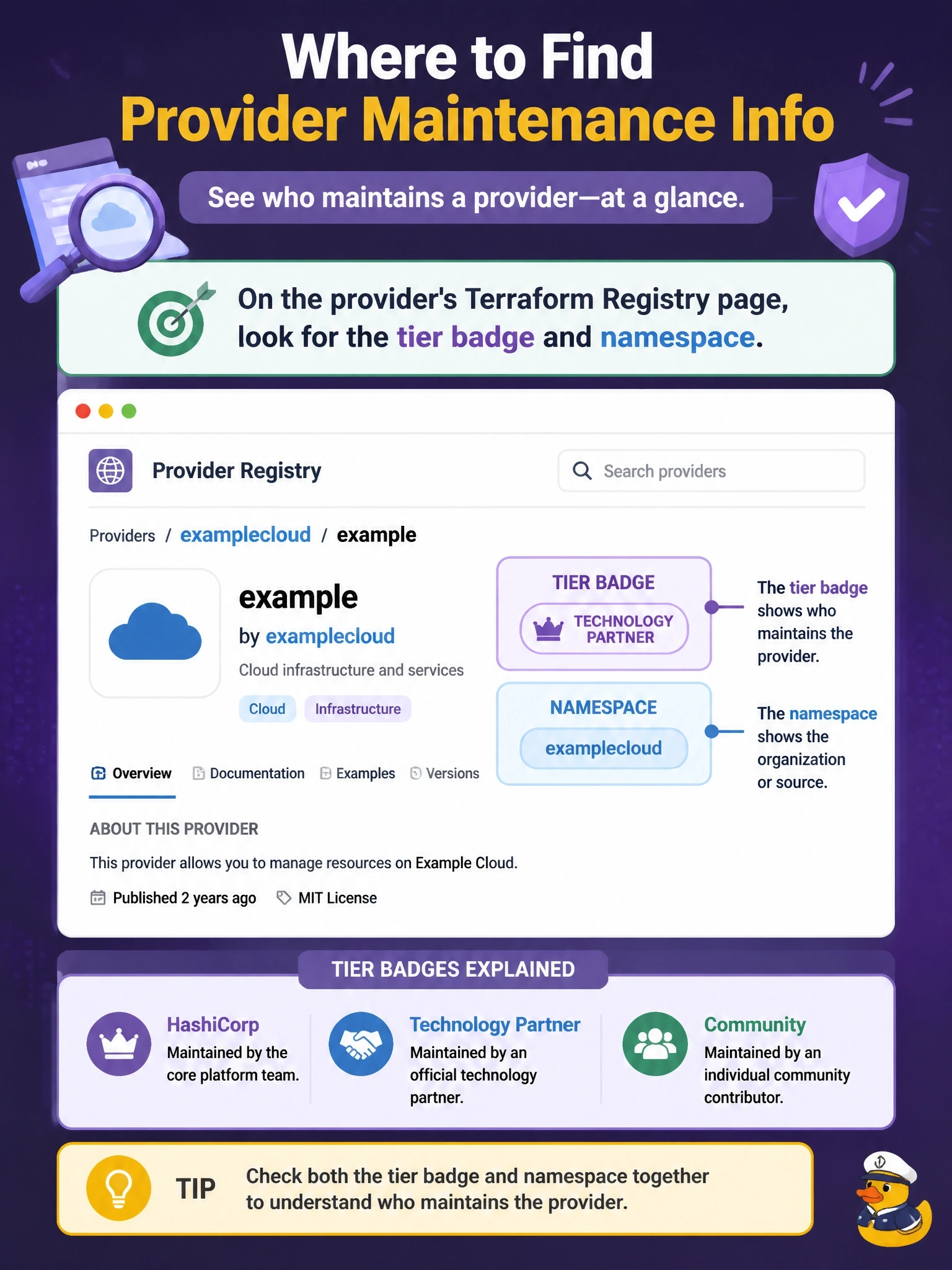
A security reviewer asks whether a third-party provider in a new configuration is maintained by HashiCorp, by a technology partner, or by an individual community contributor. Where is this information shown?
Select an answer to reveal the explanation.
Short Explanation
The registry wears its provenance on its sleeve: every provider gets a tier badge, official, partner or community. Download counts and version numbers tell you how popular or mature it is, not who stands behind it.
Full Explanation
The Terraform Registry uses tiers, shown as badges, together with namespaces to identify who publishes and maintains each provider. Official providers are owned and maintained by HashiCorp and published under namespaces such as hashicorp. Partner providers, including the partner premier tier, are written, maintained and published by third-party technology partners against their own APIs under the partner's organization namespace. Community providers are published by individual maintainers or groups under their own accounts, and archived providers are ones that are no longer maintained. The reviewer can therefore read the answer directly from the provider's registry page. Download counts measure popularity, which says nothing about who maintains the code. Version numbers reflect each maintainer's own release history; reaching 1.0 confers no tier. Every provider in the public registry may be referenced without a hostname, because the hostname defaults to registry.terraform.io for all of them, so omitting it indicates nothing about tier. Exam caveat: tier speaks to maintainership and support expectations, not to security; review permissions, source and release practices regardless of tier. Operational check: open each provider in the configuration's required_providers on the registry, record its tier and namespace, and flag community or archived providers for additional review.