
A business analyst designs human review for AI-generated release summaries that pull from private GitHub repositories containing customer data. Reviewers must catch leaks and insecure suggestions before publishing. Which Copilot security consideration should shape the human-review design?
Select an answer to reveal the explanation.
Short Explanation
You proofread with security glasses on, not just grammar checks. Permission checks plus secret screening catch leaks early. Safe publishing starts with what reviewers can actually see.
Full Explanation
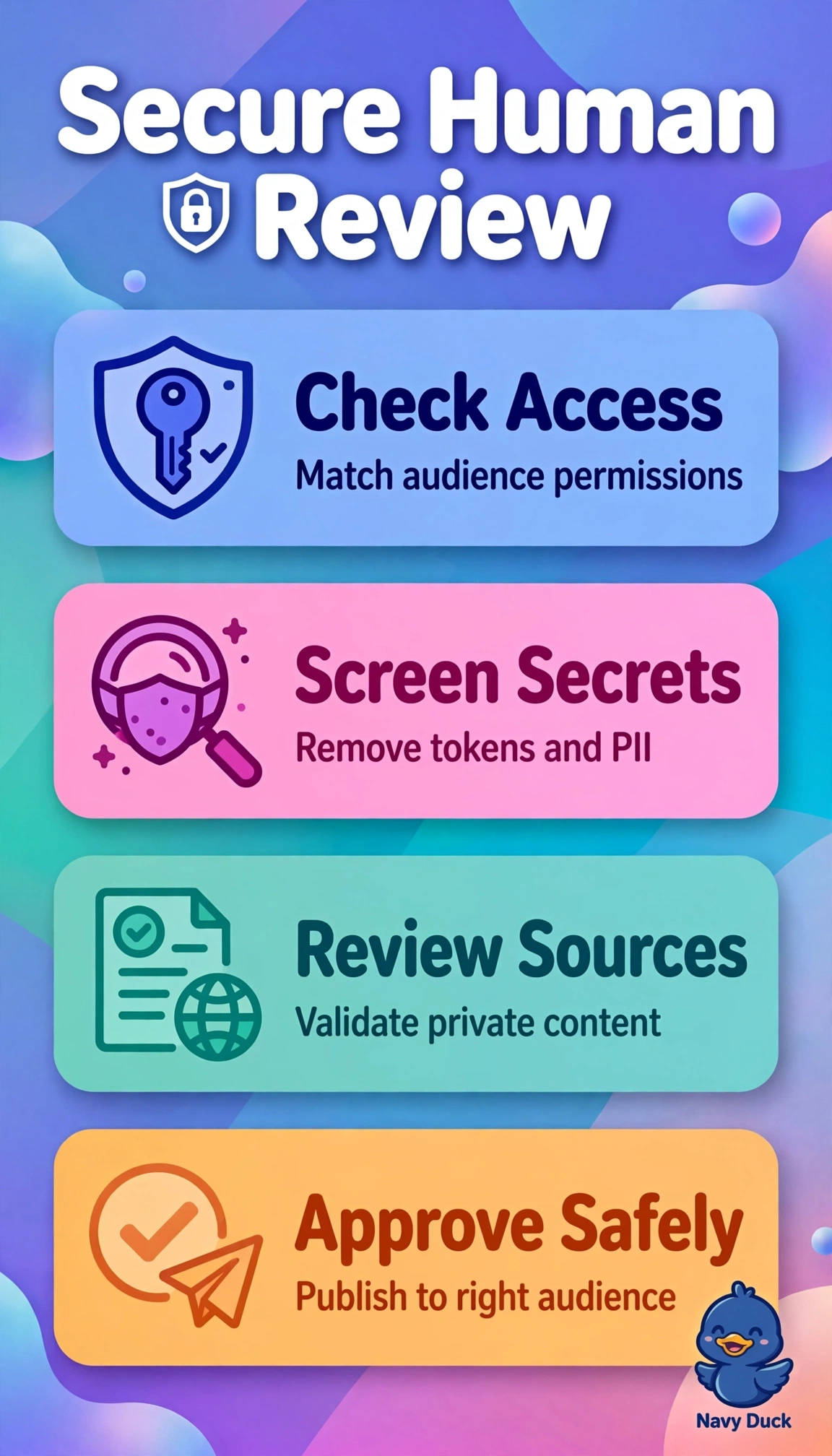
The correct consideration requires human review to enforce both authorization and confidentiality because summaries derive from private repositories with customer data and will be published externally, so reviewers must confirm the intended audience is entitled to the included details and actively screen for secrets, PII, and other exposure plus unsafe guidance before release. Having reviewers validate accuracy, clarity, and formatting is standard editorial practice for release notes and improves readability, but it fails on the security concept because polished wording can still leak tokens or customer data. Instructing reviewers to flag insecure patterns addresses secure-coding review and helps prevent unsafe suggestions, but it fails on the confidentiality concept because it omits screening for secrets and verifying that private source material is appropriate to disclose. Limiting reviewer access under least-privilege principles is essential platform hygiene for private repositories, but it fails on the output-review concept because controlling who can review does not ensure the published content itself is free of leaks. On the exam, distinguish controls on the review process from controls on the AI output, choosing the answer that screens the artifact to be published. As a practical check, require a pre-publish checklist confirming repository permissions, secret and PII scan results, and removal or correction of insecure recommendations.