
A nonprofit team tracks a charity gala in GitHub Projects with separate items for venue booking, catering confirmation, and invitation mailing where catering cannot start until venue is locked and mailing depends on catering numbers. Which method should the coordinator use to link project items to represent those delivery dependencies?
Select an answer to reveal the explanation.
Short Explanation
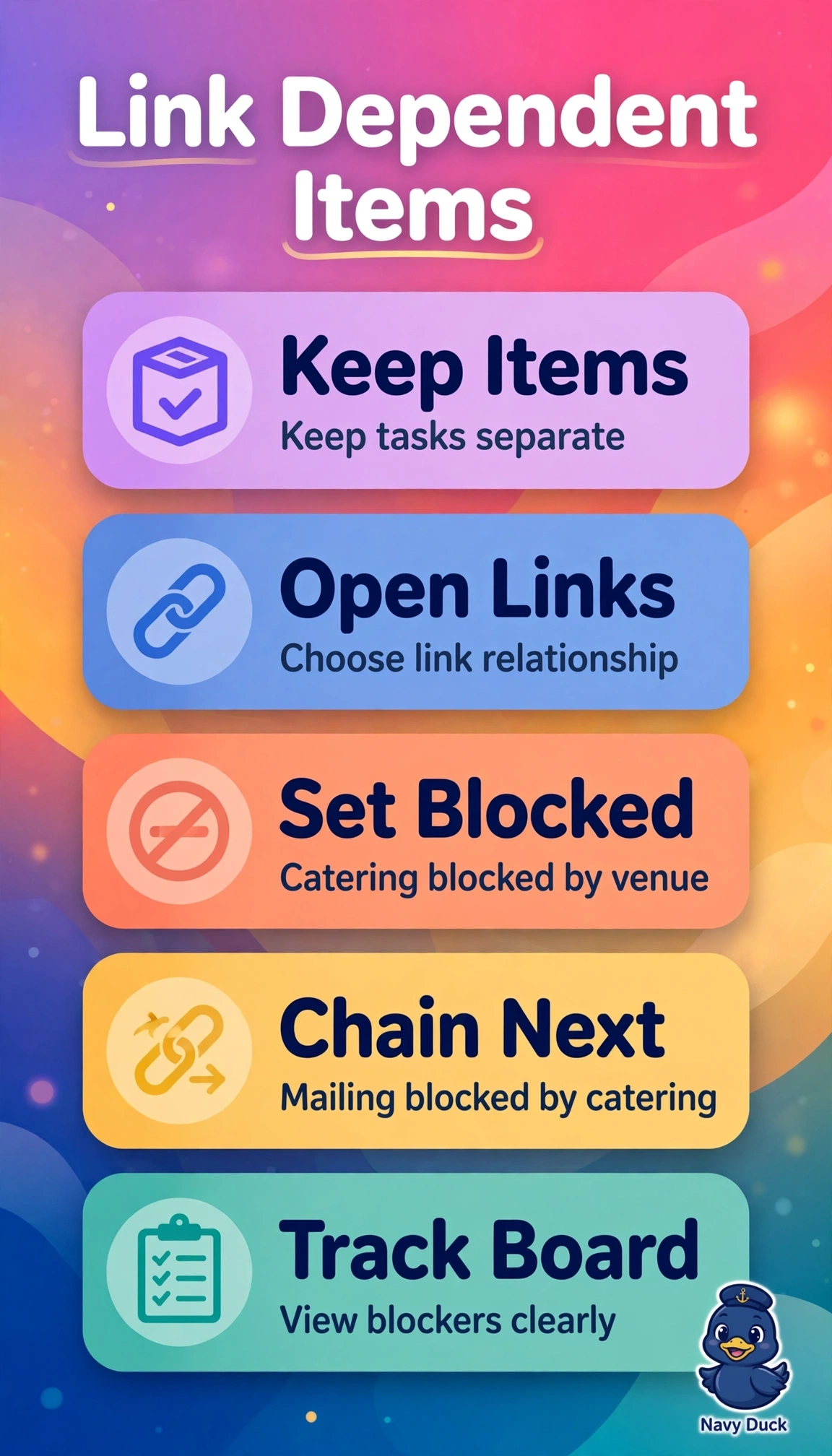
You’re mapping a domino chain: one piece can’t fall until the prior one does. Linking the items with blocked-by dependencies makes that order visible, so you can see what’s waiting on what.
Full Explanation
Blocked-by and blocking relationships in GitHub Projects model delivery order directly. Marking catering as blocked by venue and mailing as blocked by catering keeps the work as separate items while making the required sequence and readiness visible for planning and filtering. Grouping venue, catering, and mailing as sub-tasks under a gala parent captures decomposition and ownership, but parent-child hierarchy shows containment, not a predecessor-successor constraint; it does not indicate that catering cannot start until venue is locked. Connecting the items with related links shows an association, but related links do not convey direction or blocking behavior, so they cannot show which item must be completed first. Assigning all three items to the same milestone with staggered due dates can support release planning, but a milestone represents a shared deadline cohort rather than links between items; dates may suggest an intended sequence, yet can be reordered or missed without preserving the venue-catering-mailing chain. On an exam, distinguish wording such as “tracks with,” “part of,” “due with,” and “blocked by”: only “blocked by” asserts that one item cannot proceed until another is complete. As a practical check, open an item’s detail pane and confirm the dependency section displays the blockers and that completing venue automatically unblocks catering in the project view before relying on labels or dates.