
A product manager designs an agentic workflow that drafts vendor contracts, approves payments up to $50,000, and notifies suppliers automatically, with finance policy requiring accountability for spend and legal exposure. Which design choice best identifies critical decision points where human judgment is required?
Select an answer to reveal the explanation.
Short Explanation
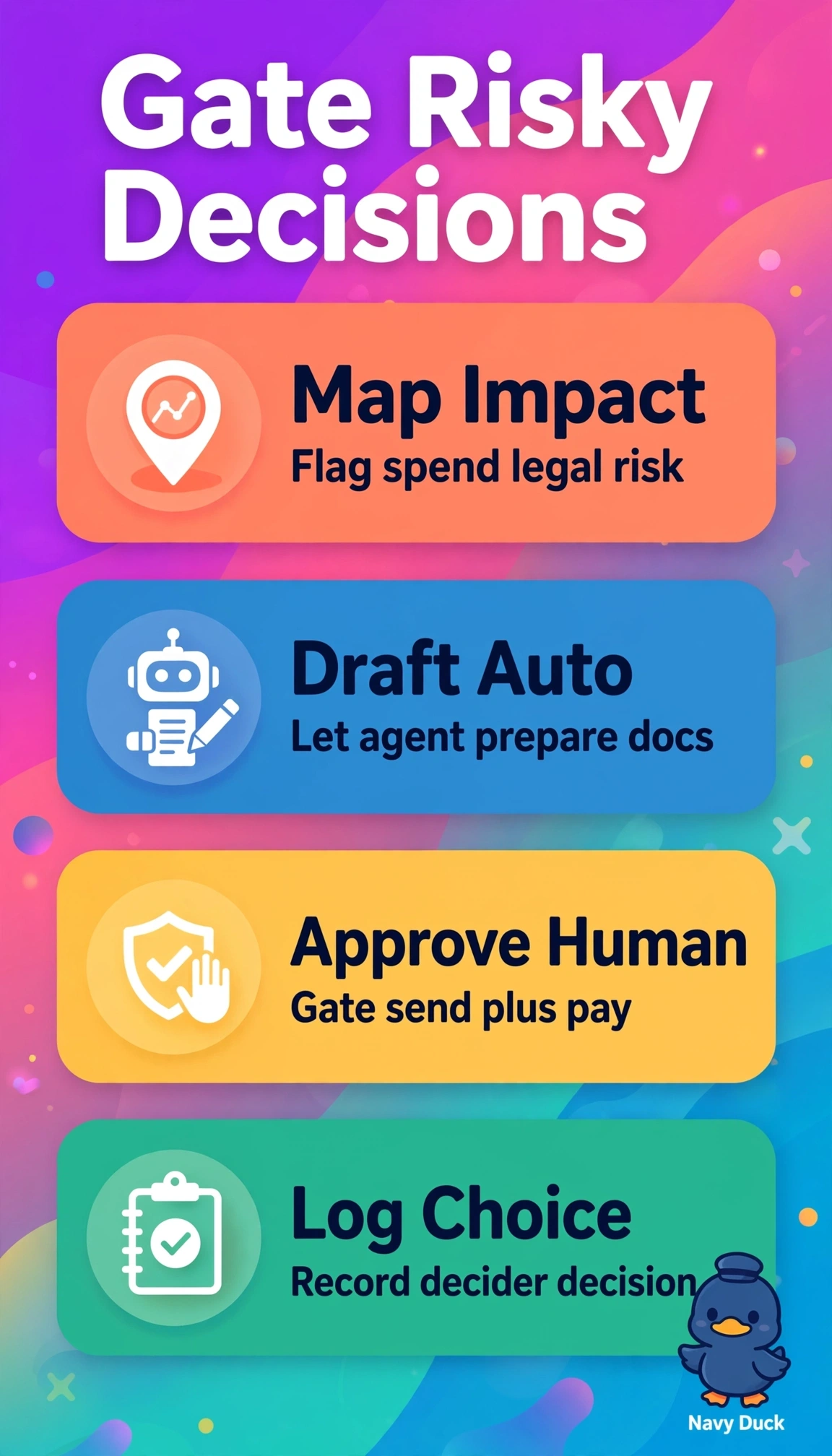
You keep a person involved where money and legal exposure are on the line. Those approval gates are your brakes before contracts are sent and payments cross the review threshold.
Full Explanation
Human approval before sending contracts and releasing payments above the finance review threshold places judgment at both high-stakes decision points: contracts create legal exposure, and qualifying payments require spend accountability. Supplier notifications can remain automated because they do not make those commitments. Human approval for contracts paired with automated payments and audit logging fails because observability after a payment is not authorization before money moves. Human approval for payments paired with automatically finalized standardized contracts fails because standardization and tracking do not assess the terms, liability, or suitability of each contract before it is sent. Approval of templates and rules during design fails because build-time review does not provide judgment about each live contract or qualifying payment. An exam caveat is to distinguish retrospective controls, such as logs and reviews, from prospective controls, such as holds and approvals; finance policy and legal exposure point to prospective control at the critical point. As a practical check, map each agent action by external effect, reversibility, and monetary value, then place a human hold before legally binding commitments and payments above the threshold while keeping supplier notifications automated.