
A business analyst must clean 500 rows of CRM data where rules are unclear, errors could break billing, and the manager wants to learn the agent's plan before any bulk edits. Which agent working mode best balances learning and safety for this task?
Select an answer to reveal the explanation.
Short Explanation
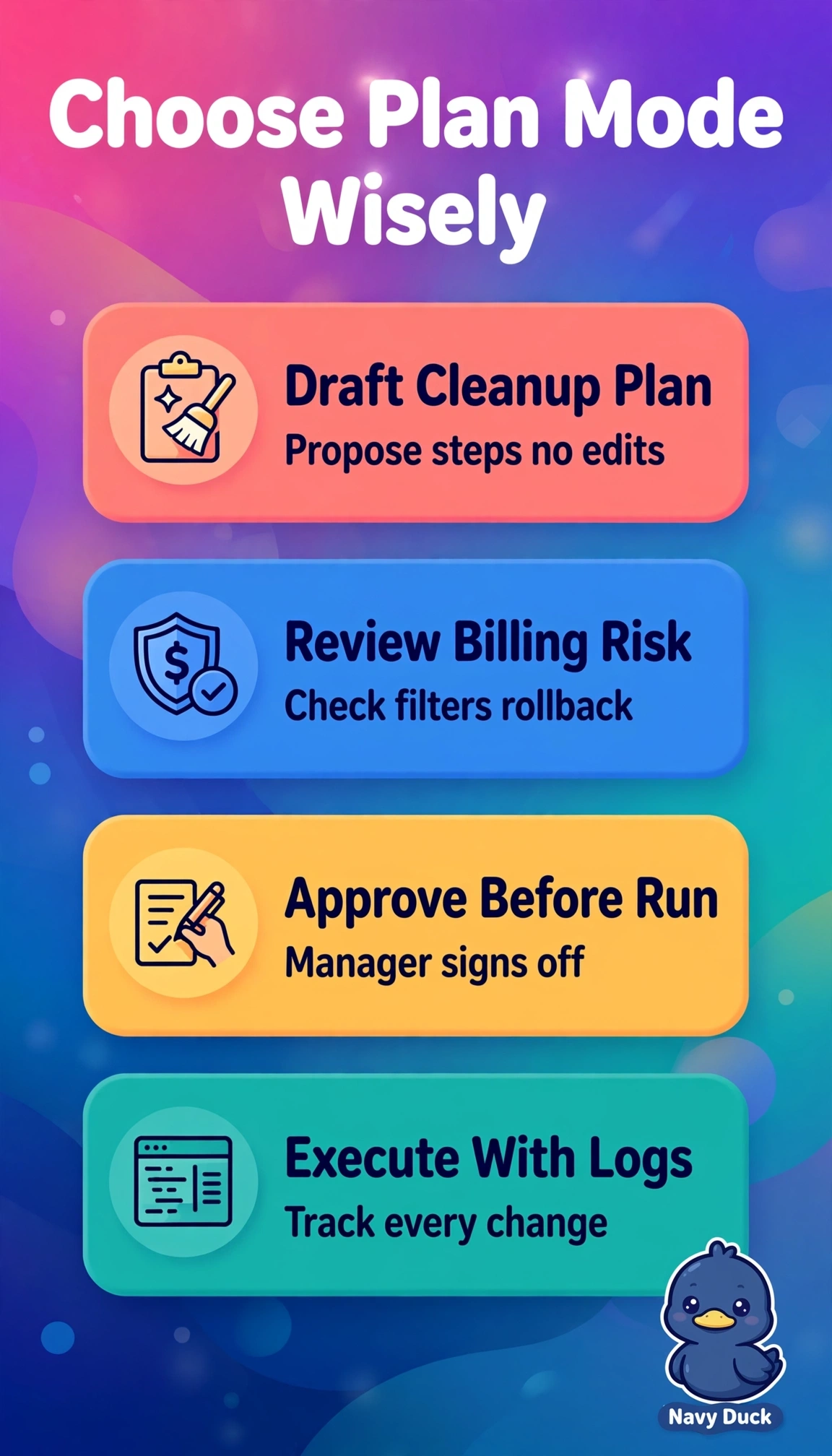
You're asking for a blueprint before demolition starts. Plan mode feels like reviewing a contractor quote, you approve the approach before anyone swings a hammer.
Full Explanation
Plan mode is correct because unclear rules plus billing-critical data plus an explicit request to learn before acting demand governance before execution, and a proposed step-by-step cleanup plan lets the manager evaluate logic, scope, and safeguards without risking live records. Supervised batch execution with rollback is a respected production pattern for containing blast radius, yet it fails the stated preview requirement because it begins live edits and relies on recovery after the fact rather than approval before any bulk change. Interactive collaboration on sample rows is widely used to clarify ambiguous rules, yet it substitutes continuous co-validation for an upfront reviewable plan and keeps a human in the loop through application, which weakens the requested learn-then-approve balance and scales poorly to sustained oversight across hundreds of rows. Isolated sandbox testing on a copy is standard for safety when billing is at stake, yet it validates logic technically without delivering the managerial learning gate, since successful tests still require a separate reviewed authorization to proceed to bulk edits. For exams, distinguish controls that reduce harm during or after execution from controls that prevent unreviewed execution, because rollback and isolation do not satisfy a requirement to review first. In practice, require the plan to list inferred rules, example transformations, billing fields affected, validation checks, and explicit approval before any bulk run.