
A product manager asks Copilot to summarize 25 customer interviews for executives who want a three-column table and no more than 150 words for a slide. Current outputs return long paragraphs that omit owners. Which instruction best specifies the structure of the response for reliable reuse?
Select an answer to reveal the explanation.
Short Explanation
You're giving Copilot a slide template, not a blank page. Output constraints act like a photo frame, they force the good stuff to fit exactly where executives will look.
Full Explanation
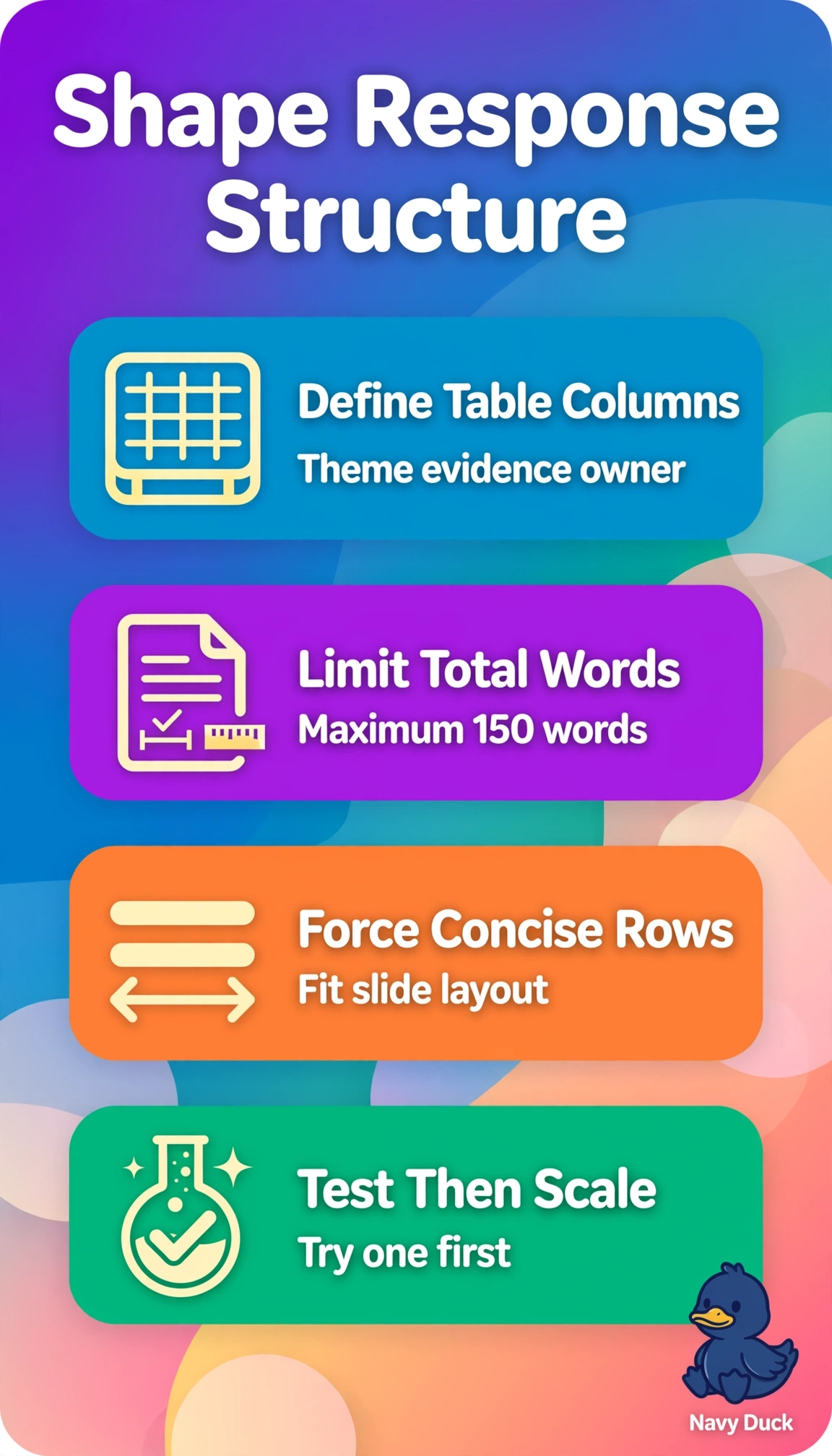
The correct instruction succeeds because it encodes all three explicit constraints together: a three-column table defines the reusable structure, the named columns theme, evidence, and owner ensure accountability that prior outputs omitted, and the 150-word total enforces executive-ready brevity for a slide. The detailed-paragraph table variant fails on conciseness by replacing the word cap with open-ended completeness, which reproduces the original problem of long outputs that cannot fit the slide and cannot be reliably reused. The concise bullet-summary variant fails on structure by preserving content and length but delivering bullets instead of the requested table, so executives must rework the layout manually and reuse suffers. The quote-based table variant fails on content by preserving format and length but substituting quotes for owners, leaving accountability unresolved despite looking complete and executive-ready. An exam caveat is that plausible prompt patterns that satisfy two of three constraints are deliberately tempting, so match every noun in the stem including table, columns, owners, and word count before selecting. A practical check is to run the prompt twice and confirm three headers appear exactly and the total stays under 150 words when pasted into the slide.