
A retail company runs Copilot agents and Actions workflows that deploy to staging, need cloud keys, and must satisfy quarterly audits across 30 repos. Which secrets management approach best protects credentials when agents and workflows run?
Select an answer to reveal the explanation.
Short Explanation
You're locking valuables in a safe, not taping them to the door. Scoped secrets work like hotel key cards, they open only the floor you need and expire on schedule.
Full Explanation
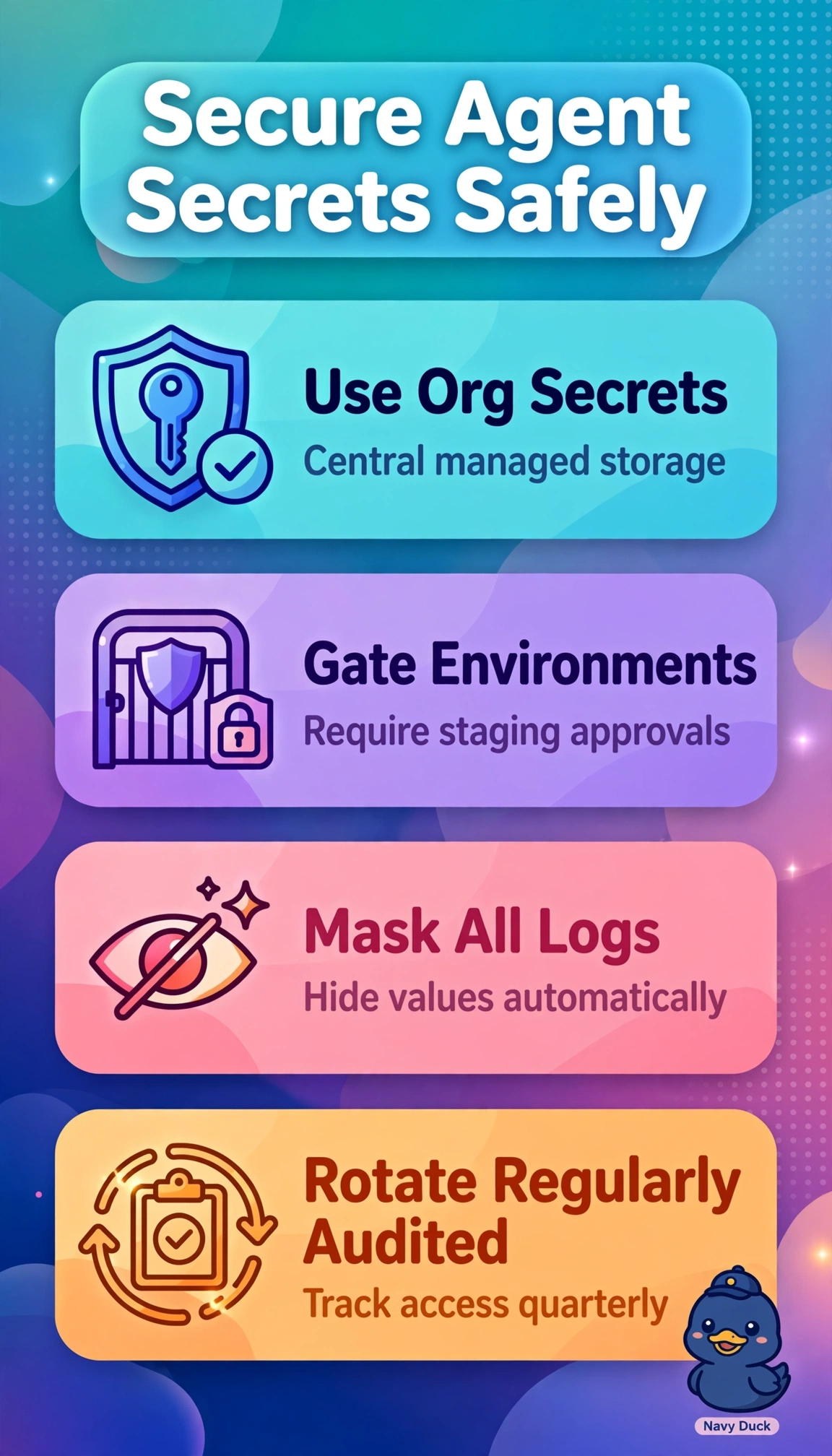
The correct approach centralizes staging cloud keys once as organization secrets so all 30 repos inherit consistent values without duplication, scopes use through a staging environment that enforces branch policies, required reviewers and deployment windows, and keeps values masked in Actions and Copilot agent logs to prevent disclosure during runs while preserving an auditable trail for quarterly reviews. Repository-level secrets with masking look secure for isolated workflows, but they fail the scale concept by creating 30 copies that drift, complicate rotation and fragment audit evidence across repos. Reusing organization secrets without branch restrictions solves distribution yet fails the least-privilege protection concept because any branch or pull request workflow could trigger staging deployments and exfiltrate credentials through agent prompts. Protected environments with approvals but verbose debug logging fail the confidentiality concept because echoed secrets persist in logs and artifacts where agents, caching and read access undermine controls. On the exam, distinguish tiers by keywords: organization implies reuse at scale, environment implies protection rules, masking implies log hygiene, and quarterly audit implies central reporting. As a practical check, inspect organization settings for inheritance, confirm staging limits branches and requires approval, run a test workflow and verify logs show redacted placeholders and audit entries record access.