
A program manager must automate a vendor contract migration affecting billing in 200 repositories. Legal requires review of the migration plan before any file changes, but then wants the agent to execute approved steps without constant prompts. Which agent work mode best balances required upfront approval with efficient execution for this migration?
Select an answer to reveal the explanation.
Short Explanation
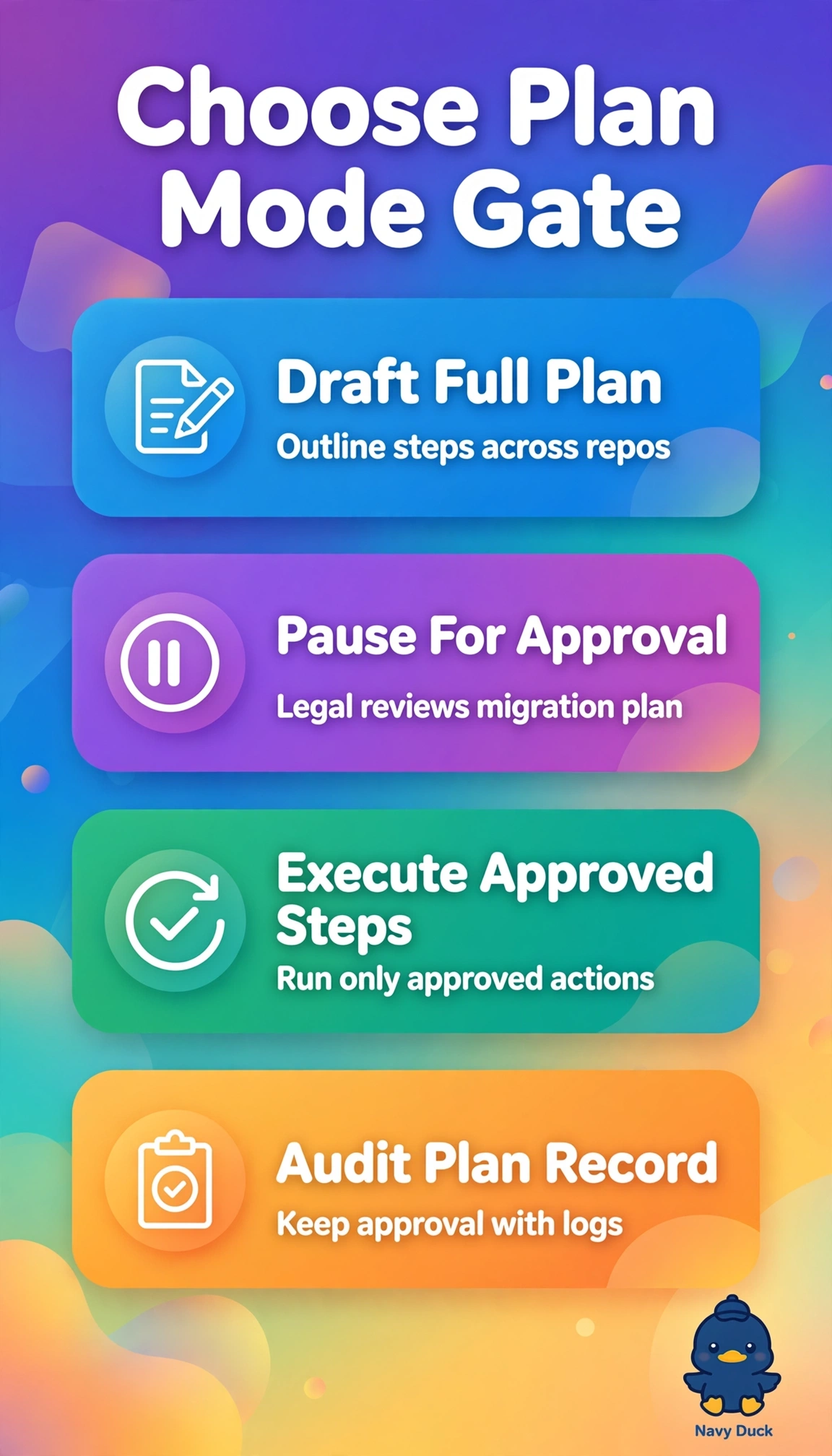
You can avoid a lot of headaches by getting legal’s sign-off before touching billing files in 200 repositories—like having the menu approved before cooking for a huge party. Once the plan is approved, plan mode lets your agent carry out the steps without constant prompts.
Full Explanation
Plan mode meets both requirements by separating planning from execution: legal can review the migration’s scope, billing impact, and rollback plan before any files change, then the agent can carry out the approved steps across 200 repositories without constant prompts. Requiring human confirmation for each batch preserves oversight, but it reintroduces interruptions and creates a bottleneck at scale, contrary to the request for efficient execution after approval. Using autonomous execution to update all repositories immediately may maximize speed for routine work, but it fails the governance requirement: billing changes need review before execution, and writing files first creates compliance and reversibility risks. Having senior engineers implement the approved plan preserves review and can support careful work, but manual rollout across 200 repositories is slower and less consistent than automating the approved steps. An exam caveat: distinguish when approval occurs from whether approval occurs; execution-time confirmations do not satisfy a pre-change plan-review gate. As a practical check, enforce a no-write condition until legal sign-off is logged, then run the approved migration unattended with diff logs and billing verification.