
A business analyst uses Copilot to draft release notes from 60 linked issues, but outputs mix in unrelated roadmap docs and miss version numbers. The prompt must lock the source set and make version a required input. Which prompt design best defines the data to be acted on and input variables?
Select an answer to reveal the explanation.
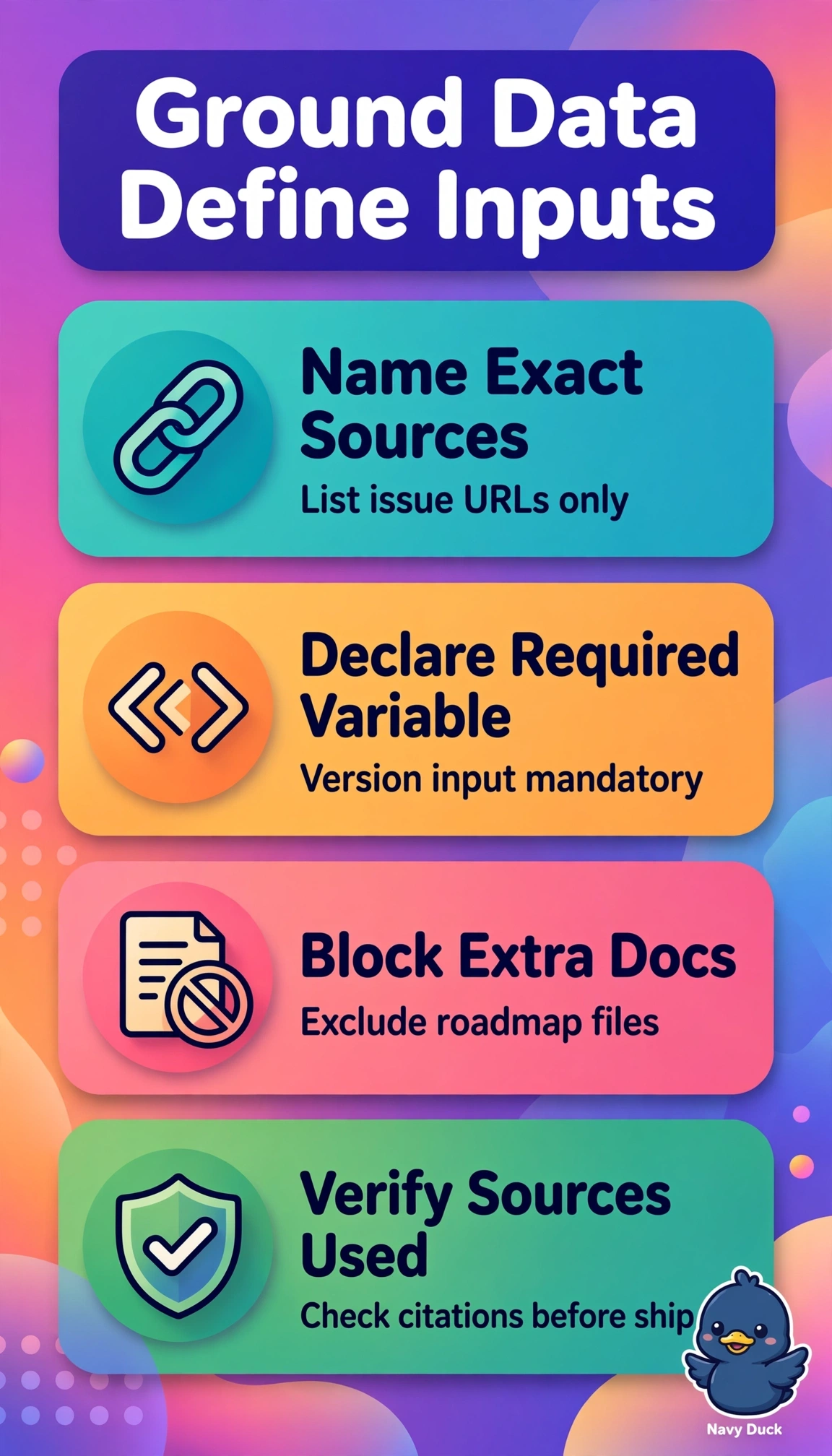
Short Explanation
You give Copilot the exact issue URLs and make version a required input, so it has a clear source set and a value it cannot skip. Grounding is like handing a chef labeled ingredients: you help keep the result tied to the recipe you actually wanted.
Full Explanation
Listing the exact URLs for all 60 issues as the source and declaring version a required input variable is the best design: it bounds retrieval to the authoritative issues and requires version to be supplied before generation. This directly addresses both problems by preventing unrelated roadmap documents from entering the source set and preventing version numbers from being omitted. Requiring version while letting Copilot auto-discover issues still allows open retrieval, so semantically similar roadmap documents may be included. Using the exact issue URLs but asking Copilot to infer version from metadata replaces a guaranteed input with probabilistic inference, which can fail when metadata is missing or inconsistent. Requiring version while using only ten representative issue URLs does not cover all 60 linked items, so the notes may be incomplete. For the exam, distinguish choices that define the actionable data set and required inputs from improvements to tone, examples, or output structure, which do not solve grounding. As a practical check, run the prompt without a version value and with an unrelated roadmap document in the workspace: confirm that generation stops until version is supplied and that the output cites only the listed issue URLs.