
A solo consultant must refactor a fragile billing module with no tests, strict compliance, and a client demo in two days. She wants speed but must prevent unreviewed destructive changes. Which execution mode should she choose for how the agent will perform work?
Select an answer to reveal the explanation.
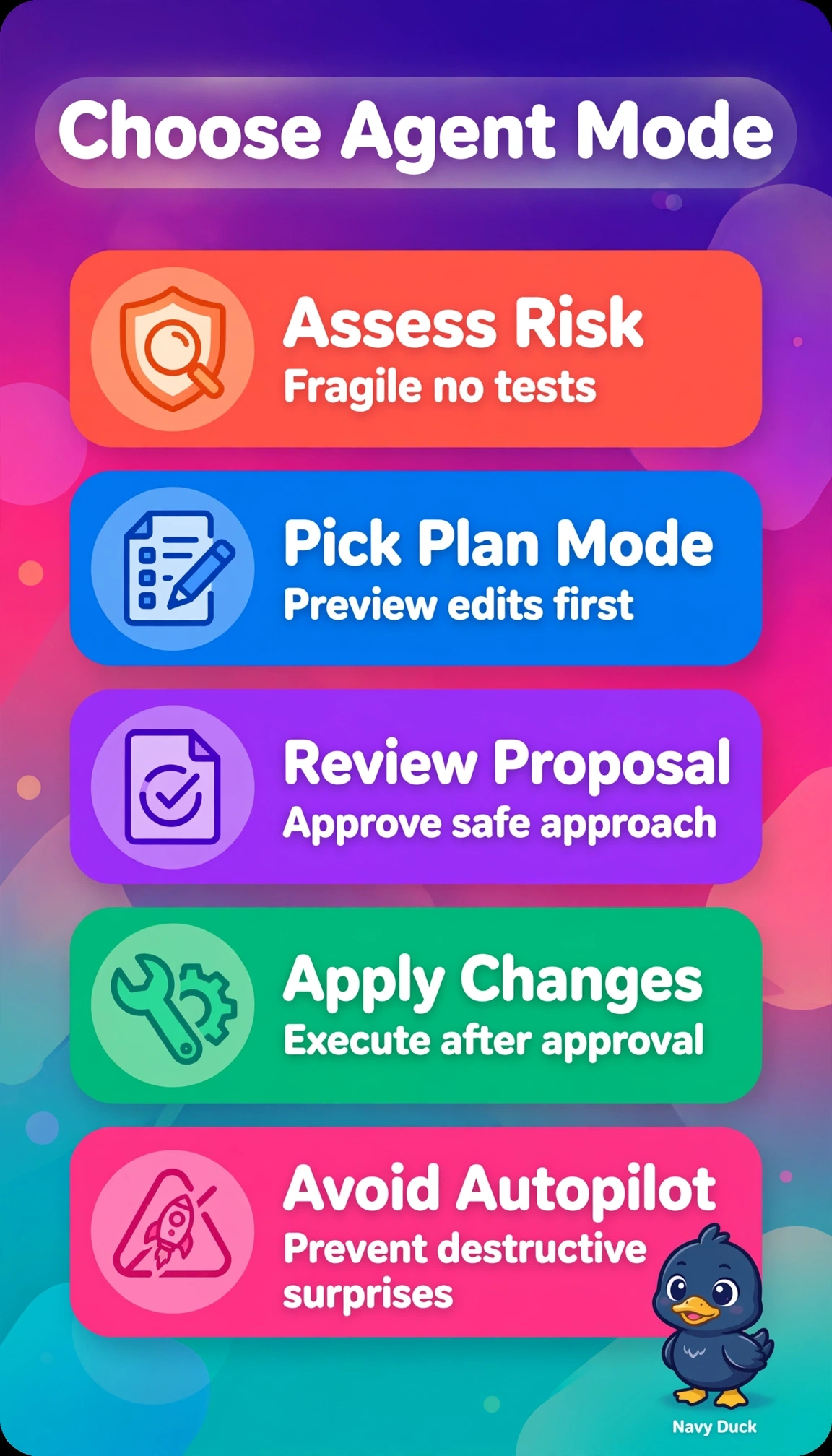
Short Explanation
Blueprints before bulldozers save costly rebuilds, and plan mode is your blueprint. You can review the proposed approach before any fragile billing code changes, protecting your deadline and compliance needs.
Full Explanation
Plan mode fits this scenario because it separates planning from execution: you can review a complete refactor proposal for the fragile, untested billing module before authorizing any code changes. That gives you one efficient review gate, helps maintain momentum toward the client demo in two days, and prevents unreviewed destructive edits from applying. Automatically applying edits and reverting risky billing changes later is inadequate because reversal happens after changes have already been made; it cannot prevent a faulty update from altering compliant behavior. Requiring approval only for destructive billing deletions is too narrow: important billing risks can arise from changes to calculations, logic, or migrations that are not deletions, leaving them unreviewed. Confirming every agent tool call step by step offers oversight but adds approval overhead to routine actions, undermining the speed needed for the imminent demo. As an exam caveat, distinguish a preventive review gate from after-the-fact reversal, and a comprehensive change review from approval limited to destructive actions. As a practical check, verify that the agent presents the full proposed diff for review while unable to write files; retain the approved plan as compliance evidence before allowing execution.