
A logistics coordinator oversees an agentic workflow that nightly reconciles shipment records across two systems and posts exceptions. Last week two runs silently stalled and one posted duplicate exceptions. Which monitoring approach best tracks agentic workflow runs in production?
Select an answer to reveal the explanation.
Short Explanation
Silent stalls need a live pulse, not a monthly receipt. Your run monitoring spots stuck or noisy runs before bad data piles up.
Full Explanation
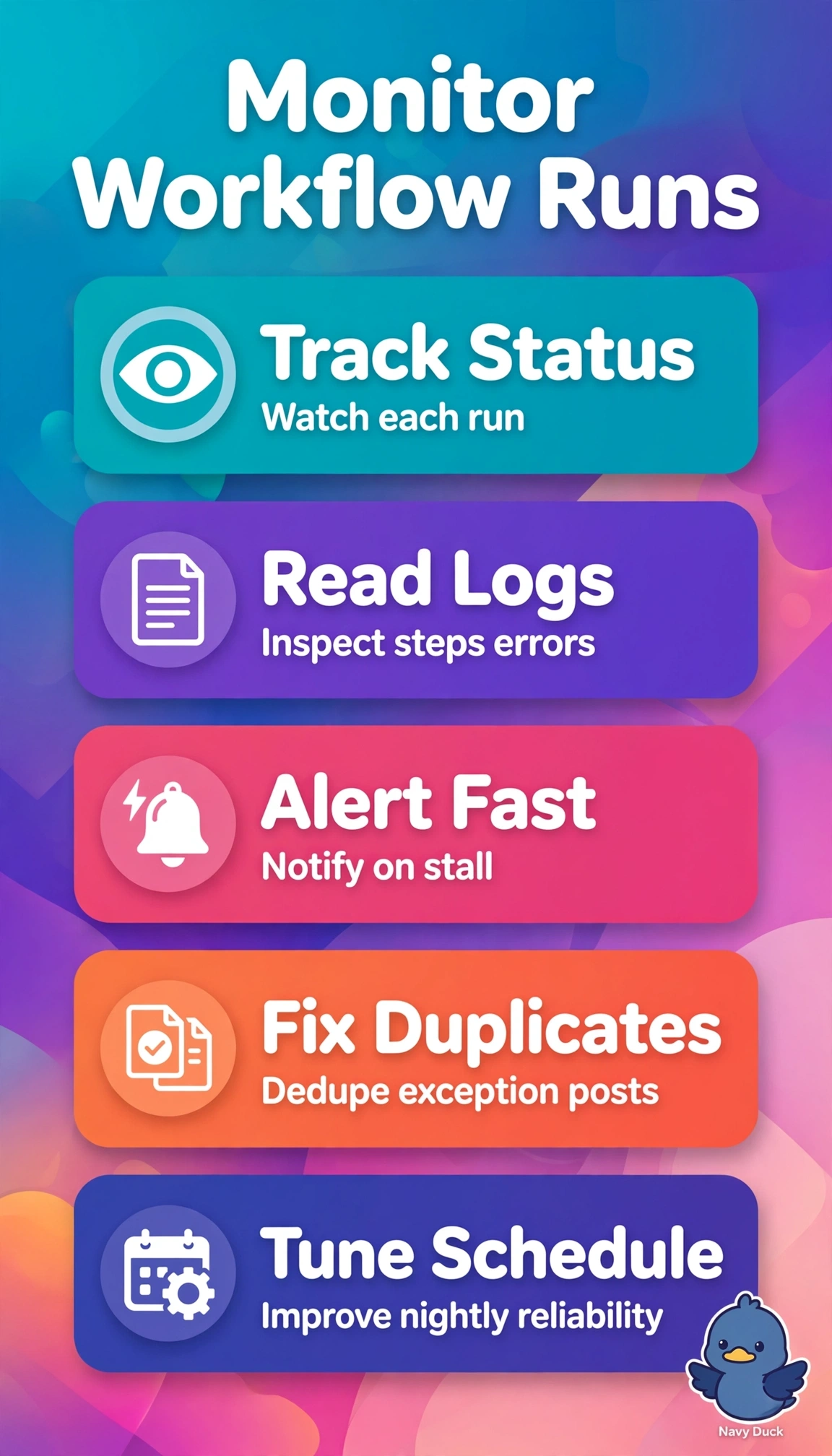
The correct monitoring approach is right because nightly reconciliation is an agentic workflow with distinct runs that can stall silently, fail partially, or act twice, so production oversight must combine run status for lifecycle state, logs for step-level evidence, and alerts for prompt human notice, which together catch both observed failure modes rather than inferring health from downstream artifacts. Tracking run completion dashboards each morning to confirm issues were resolved fails on timeliness and observability because a dashboard checked after the fact cannot interrupt a silent stall overnight and provides no diagnostic trail for why duplicate posts occurred. Monitoring system uptime and API latency nightly to detect issues promptly fails on level of abstraction because healthy infrastructure metrics can coexist with a stuck agent loop or faulty posting logic, confusing platform availability with workflow correctness. Auditing posted exceptions daily against source records to verify accuracy fails on prevention versus detection because output reconciliation validates data quality but does not track live execution, so stalls remain invisible until business impact appears. As an exam caveat, distinguish workflow run monitoring from data quality auditing and infrastructure monitoring, since stems mentioning stalled runs and duplicate actions point to run-centric observability with logs and alerts rather than morning-after verification. As a practical check, verify each nightly run emits started, heartbeat, completed, and action-posted events with idempotency keys and that an alert fires if no completion or duplicate post IDs appear within the expected window.