
A delivery manager oversees an agent that migrates support tickets into GitHub issues nightly and must prove each issue has correct labels and no sensitive data. Which supervision practice best ensures that agentic workflows meet requirements?
Select an answer to reveal the explanation.
Short Explanation
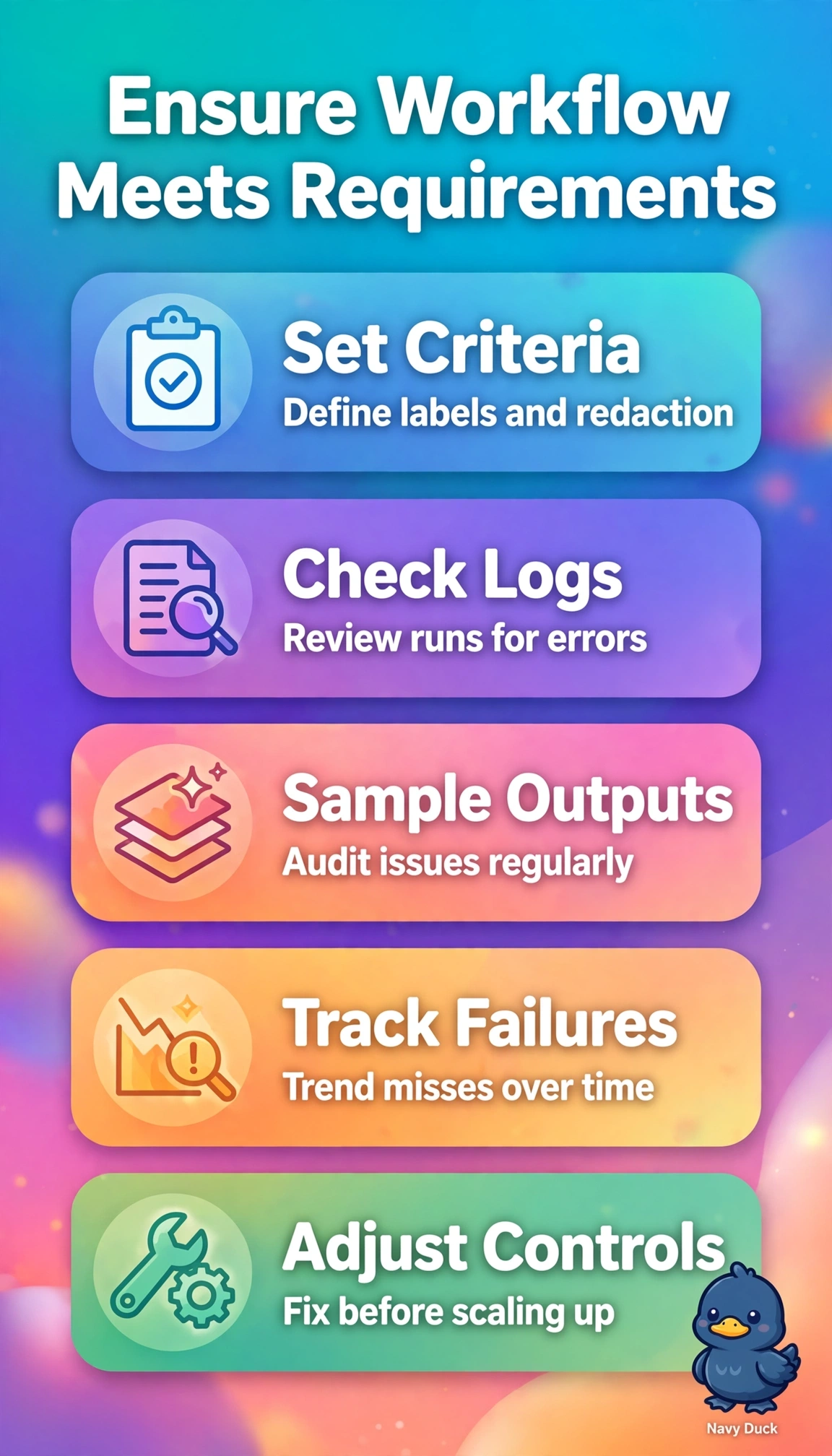
Trust grows when you can show receipts every morning. Checks plus spot reviews catch drift early, and acceptance turns hopes into proof.
Full Explanation
The correct practice works because effective supervision requires defined success criteria plus recurring evidence review, and measurable acceptance checks for label correctness and absence of sensitive data combined with regular comparison of run logs and sampled issues against those checks provides both detection and proof. Tracking throughput, latency, and error-rate dashboards is valuable for reliability monitoring, yet it fails by concept because operational metrics confirm the job ran, not that each output met content and privacy requirements. Applying automated PII redaction with standardized label mapping is valuable for prevention by design, yet it fails by concept because upfront controls can drift or be bypassed and without ongoing sampling there is no verification or demonstrable assurance. Retaining complete logs and issue records in immutable storage is valuable for auditability, yet it fails by concept because storage alone is unevaluated evidence and without predefined checks and scheduled review it never becomes active supervision. For the exam, watch for plausible governance practices that cover only one pillar such as reliability, prevention, or retention while omitting evaluative review. As a practical check, require every nightly run to link its logs and a sampled review result to explicit pass thresholds for labels and sensitive data before claiming compliance.