
A technical program manager uses an agent to draft customer migration runbooks that often contain missed steps and confident errors. She needs the agent to check its own work against a checklist, fix issues, and show revisions before a human signs off. Which self-critique loop configuration best improves accuracy?
Select an answer to reveal the explanation.
Short Explanation
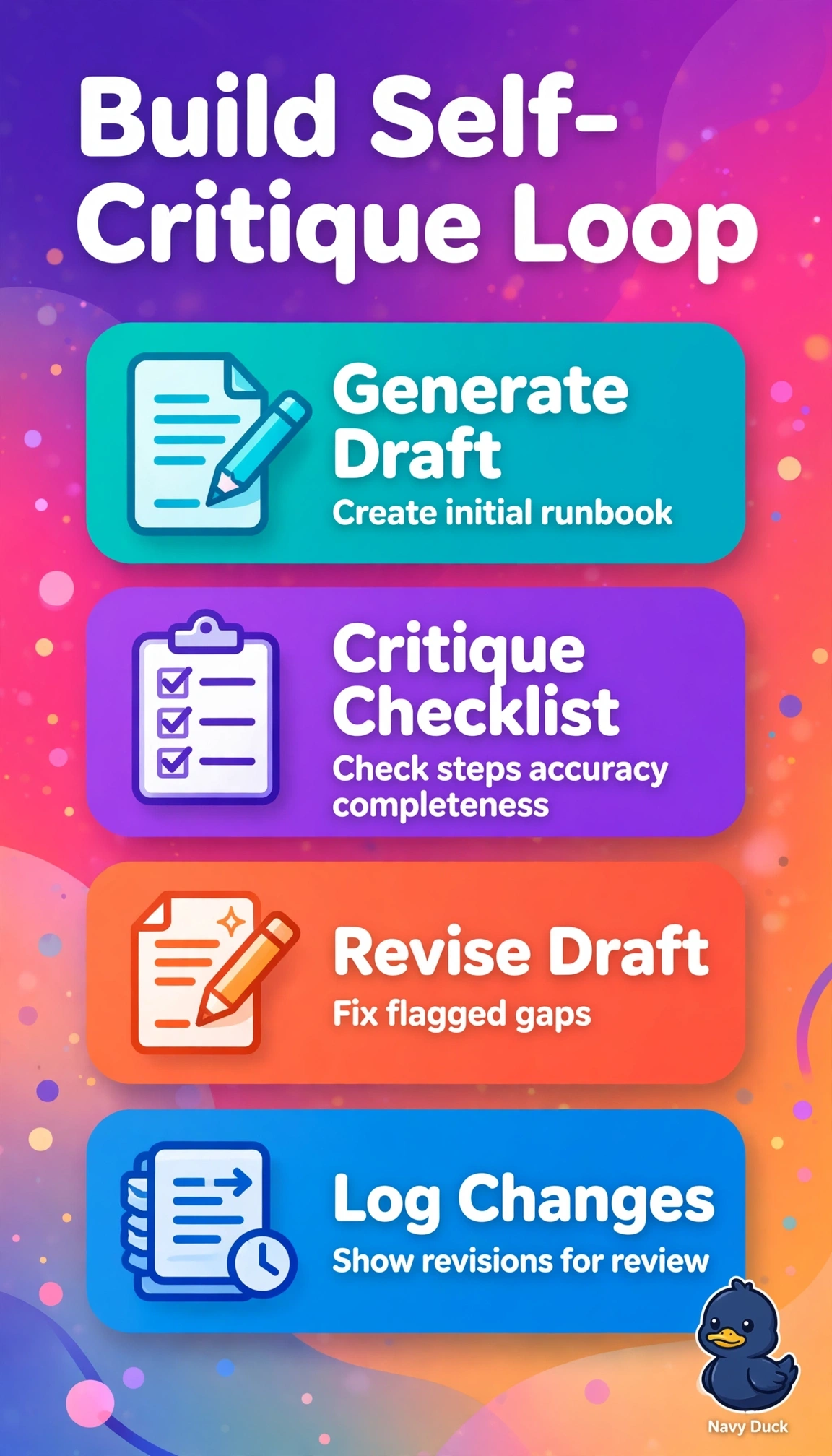
You get a stronger accuracy loop when the agent critiques its draft against a checklist, revises it, and records what changed before human review. That iterative refinement gives you visible evidence of the agent’s corrections while keeping final sign-off with a person.
Full Explanation
The checklist-based critique, revision, and change log form a closed loop: migration runbooks can omit steps or contain confident errors, and a checklist makes coverage explicit. Having the agent revise before human review means flagged issues are addressed rather than left for the reviewer to fix; the change log then provides an auditable trail from findings to edits for final risk acceptance. Requiring only a draft, critique, and annotated change log for a human to finalize corrections can be useful for triage, but it leaves the corrections to the reviewer and does not show that the agent can repair its own errors. A scored holistic self-assessment with revision and a change log is less grounded: a general score may reflect fluency or tone while missing checklist items, allowing omissions to persist. Adding verifier-agent validation may help catch faults, but it adds a checking step without replacing the need for the agent’s checklist-driven revision and human sign-off; operational risk remains with the human reviewer. Exam caveat: distinguish improving draft quality from authorizing execution—checklists and verification can help, but high-stakes work still needs human approval. Practical check: trace every checklist item to a logged edit or a justified dismissal, then dry-run the revised runbook in staging before approval.