
A healthcare startup plans to let Copilot agents read private repos, summarize patient-ops tickets, and propose process changes under HIPAA constraints. Executives want continued rollout without privacy or compliance gaps. Which governance evaluation should be completed to assess privacy, usage, and risk controls?
Select an answer to reveal the explanation.
Short Explanation
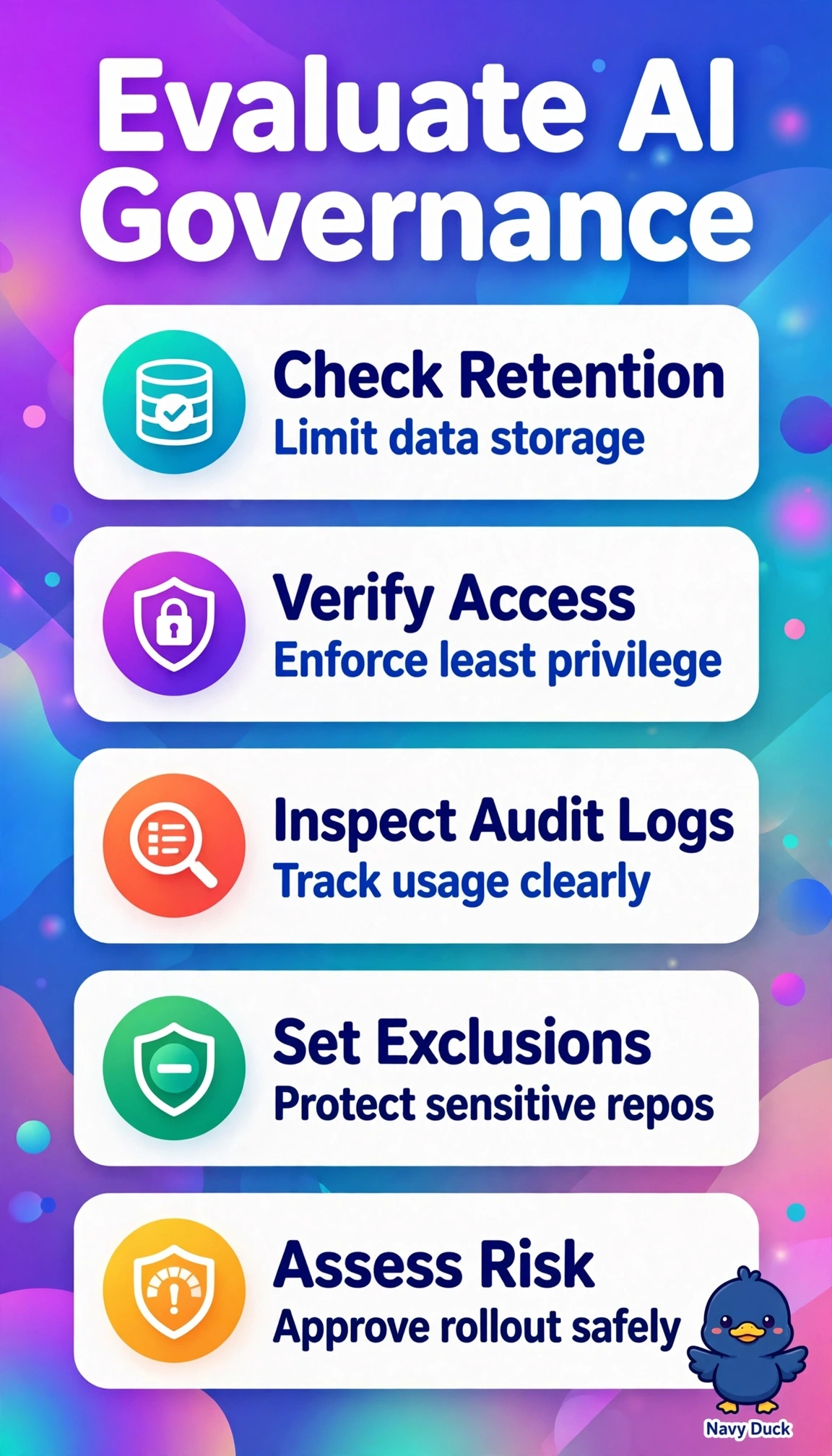
Before opening new lanes, you check guardrails, and governance review is that safety check. Retention, access, and audit controls keep sensitive work compliant.
Full Explanation
The correct evaluation is right because HIPAA-governed Copilot use requires joint review of what data is retained, who can access private repos, how usage is logged, and what sources are excluded, which together enforce least privilege, auditability, and PHI minimization before scaling. Evaluating summarization accuracy and relevance is standard quality assurance for AI outputs but fails on governance scope because it validates usefulness without assessing privacy controls or audit trails. Assessing adoption, satisfaction, and productivity is a common change-management metric for continued rollout but fails on risk concept because enthusiasm and efficiency do not demonstrate compliance or safe data handling. Auditing encryption and retention for stored tickets is essential security hygiene but fails on completeness because it protects data at rest without governing agent access policies, active usage monitoring, or repo exclusions. Exam caveat: do not confuse performance, adoption, or storage-security reviews with a full privacy-usage-risk governance review, as stems asking for compliance gaps require the broadest control. Practical check: before expansion, confirm repo allowlists, identity-based access, immutable audit logs, defined retention purges, and documented exclusions for PHI sources.