
A logistics company repeats the same shipment-exception summary weekly, needing carrier, delay code, and next action in a fixed format. The business analyst wants a reusable instruction the team can invoke. Which approach should be used to create custom skills that standardize this work?
Select an answer to reveal the explanation.
Short Explanation
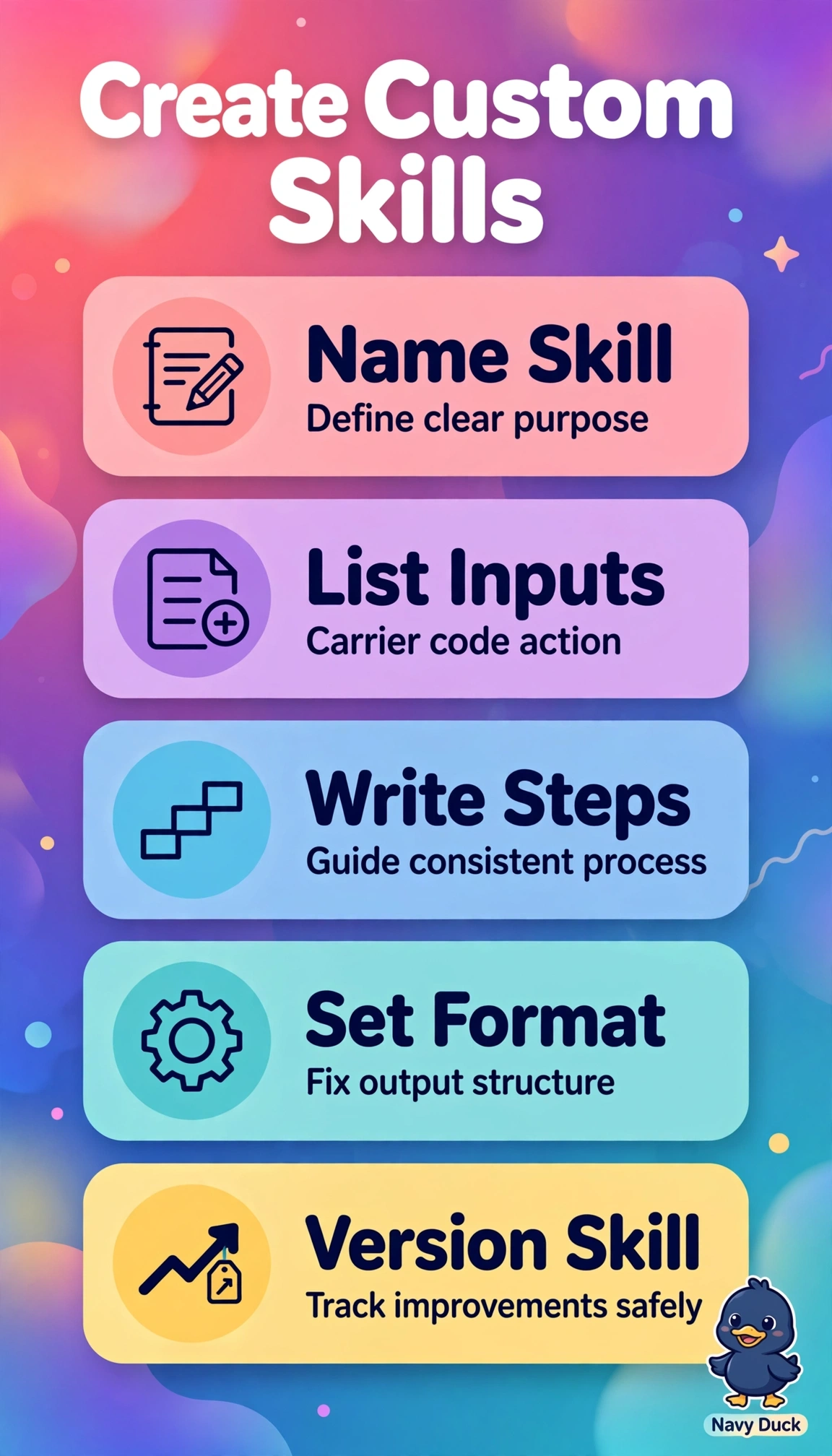
Recipes save your team from reinventing dinner, and a SKILL file is that recipe. Versioned inputs and steps keep every summary consistent and reusable.
Full Explanation
The correct approach works because a versioned SKILL file packages the repeatable procedure into an invocable team asset with explicit inputs for carrier, delay code context, and next-action logic, ordered steps to ensure consistency, and a fixed output schema that guarantees the weekly exception summary is comparable over time while versioning enables review and improvement. The versioned wiki page approach fails by concept because documentation informs humans but does not create an invocable skill runtime that enforces inputs and format on execution. The scheduled automated workflow approach fails by concept because automation triggers delivery on a timetable rather than providing an on-demand reusable instruction the analyst and teammates can invoke with different weekly data. The live carrier data source approach fails by concept because connectivity supplies fresh facts but does not define the standardized procedure or output contract that makes the summary repeatable. An exam caveat is to focus on the asked artifact type rather than attractive helpers: weekly cadence does not imply scheduled sending is required, and needing data fields does not make a data integration the standardization mechanism when the stem asks for a reusable invocable instruction. As a practical check, store the SKILL file in version control, invoke it with a representative carrier, delay code, and scenario to confirm it prompts for all three required fields and emits the fixed format, then review diffs and usage feedback before promoting a new version.