
A program manager must report status across 12 repositories where features move from issues to pull requests to deployment. Leaders complain the spreadsheet is stale and misses links between work and code. Which GitHub practice best tracks and captures work across issues, pull requests, and projects?
Select an answer to reveal the explanation.
Short Explanation
Stale sheets break trust in status meetings. You're connecting code to plans on a live project board, like a flight board showing every plane and gate together.
Full Explanation
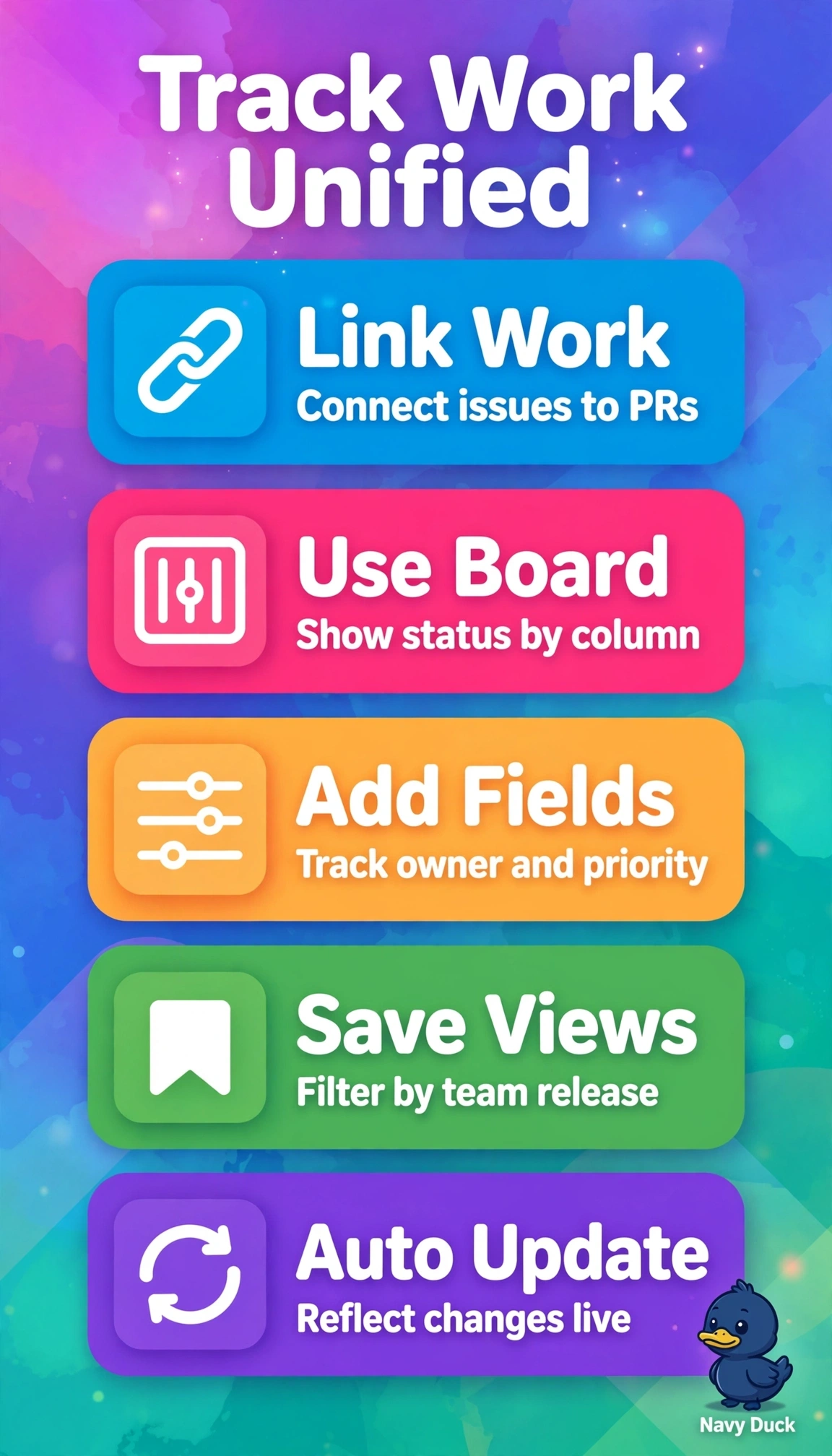
The correct practice succeeds because a cross-repository project collects issues and pull requests in one place where closing keywords and development links preserve the chain from planned work to code change to deployment, while status fields and saved views replace a stale manual spreadsheet with live, filterable leadership reporting across all twelve repositories. By contrast, monitoring Insights for contributor activity and code frequency is valuable for retrospectives on team health and throughput, yet it analyzes historical commits and traffic without tracking what planned issue each change implements or its current delivery state. Enforcing intake discipline with templates, labels, assignees, and milestones strengthens consistent triage and prioritization, yet it organizes work at creation time inside individual repositories and does not establish the issue-to-pull-request linkage or unified status rollup the scenario demands. Verifying rollouts through releases, tags, and deployment environments correctly confirms what reached production, yet it covers only the final deployment fact and omits the upstream connection between planning artifacts and the implementing code. On the exam, watch for lifecycle confusion where a strong practice from intake, analytics, or release management appears to solve tracking but lacks the explicit linkage plus multi-repo project view. As a practical check, open the board and confirm issues from different repositories move automatically when linked pull requests merge and that a leadership view groups everything by status and deployment result.