
A program manager notices a coding agent stuck in a loop during business hours: it keeps pushing unwanted commits to a shared feature branch, triggering CI costs and confusing reviewers. The run shows no completion. Which action best stops the agentic workflow that is running?
Select an answer to reveal the explanation.
Short Explanation
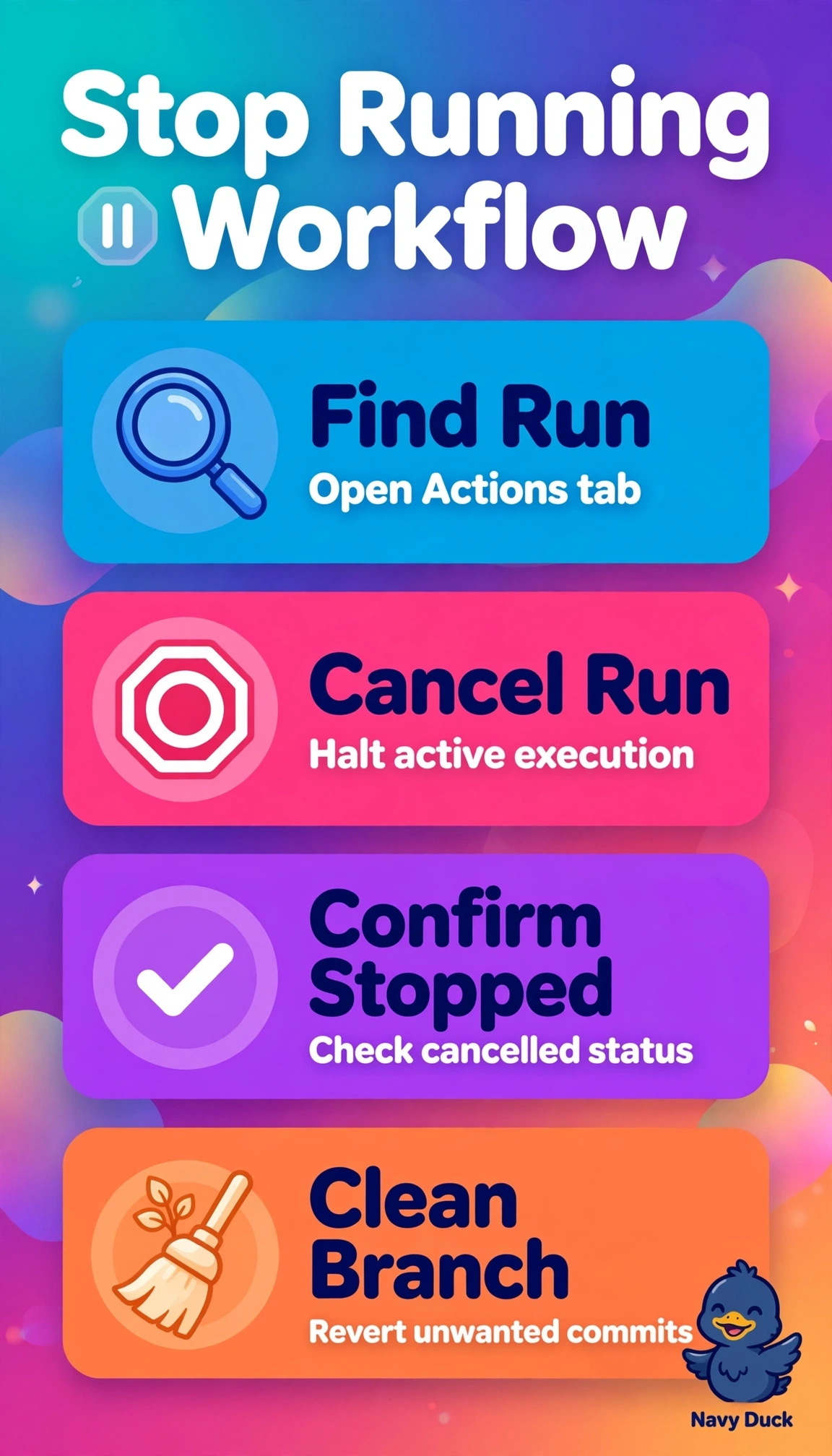
A runaway bot needs a firm brake from you. Hitting cancel with run cancellation halts compute before you tidy the branch.
Full Explanation
The correct action is right because a looping coding agent with no completion status is an active run that must be terminated at the execution layer, so canceling it from the Actions tab immediately halts further pushes, CI consumption, and reviewer noise, after which reverting or cleaning the branch addresses the already-pushed damage without losing intentional work. Requiring manual approval is a sound governance control for shared branches but fails by timing because it gates only future queued runs and does nothing to interrupt the process already executing and pushing. Reverting the branch to a clean commit is standard remediation for polluted history but fails by layer because it treats the Git state while the agent process remains alive to push again and retrigger CI. Temporarily disabling automatic triggers is a commonly used incident containment step during business hours but fails by scope because it prevents new runs from starting while the current stuck run continues to execute. The exam caveat is to distinguish stopping the active execution from preventing the next execution or repairing the repository artifact, since only cancellation satisfies a stem that explicitly says the run shows no completion and is still looping. As a practical check, confirm the Actions run status changes to canceled, observe that no new commits appear on the feature branch, verify CI usage stops accruing, and only then perform the revert cleanup and notify reviewers.