
A product manager runs an agent that drafts vendor comparisons for a support tooling purchase. The team needs balanced pros, cons, pricing limits, and security notes, but drafts favor one vendor and miss risks. Which configuration best implements a self-critique loop to improve the draft?
Select an answer to reveal the explanation.
Short Explanation
First drafts often play favorites. You're adding a built-in second look with a critique pass that scores and repairs gaps, like a peer review before submission.
Full Explanation
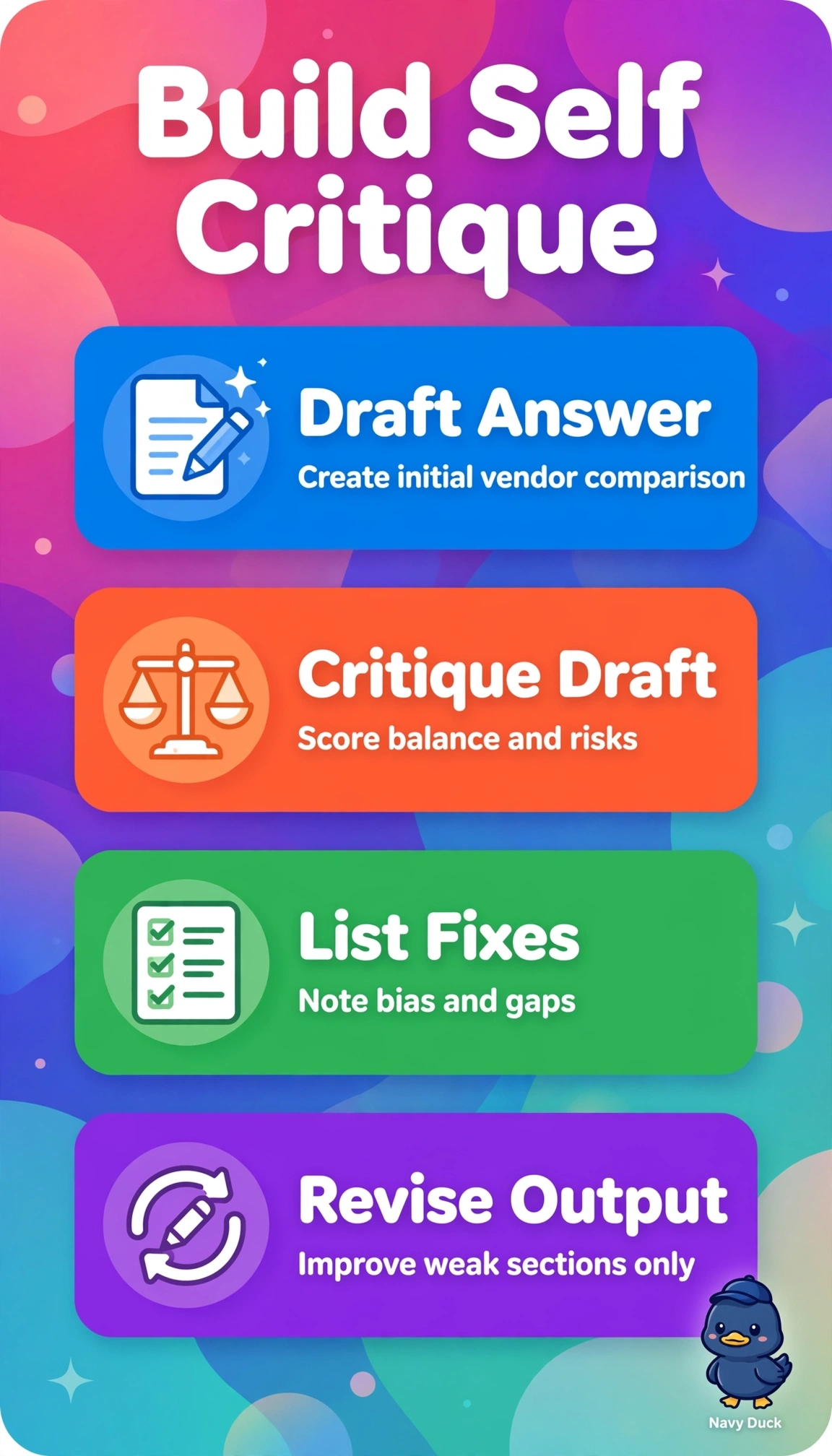
A self-critique loop works by having the agent produce a draft, then explicitly evaluate it against stated criteria such as balance, pricing limits, and security coverage, then revise the identified weaknesses, which corrects bias and omissions within the same run. Generating multiple drafts and delivering the first adds cost without evaluation or revision, so bias remains. Connecting more sources broadens input but without a critique step the agent can still overweight one vendor and skip risks. Raising creativity and length encourages elaboration, which often amplifies favoritism rather than enforcing balanced criteria. For the exam, remember self-critique equals generate plus criteria-based review plus targeted revision, and a practical check is to inspect the intermediate critique to confirm each criterion was scored before the final version.