
A technical project manager coordinates a mobile launch with design, API, and QA teams in GitHub. Work stalls because ownership is unclear, duplicates appear, and dependencies are hidden in comments. Which practice best manages issues including creating, assigning, linking, and tagging for this launch?
Select an answer to reveal the explanation.
Short Explanation
Hidden work creates stalled launches. You're making ownership and dependencies visible with well-tagged issues, like labeled bins on an assembly line everyone can see.
Full Explanation
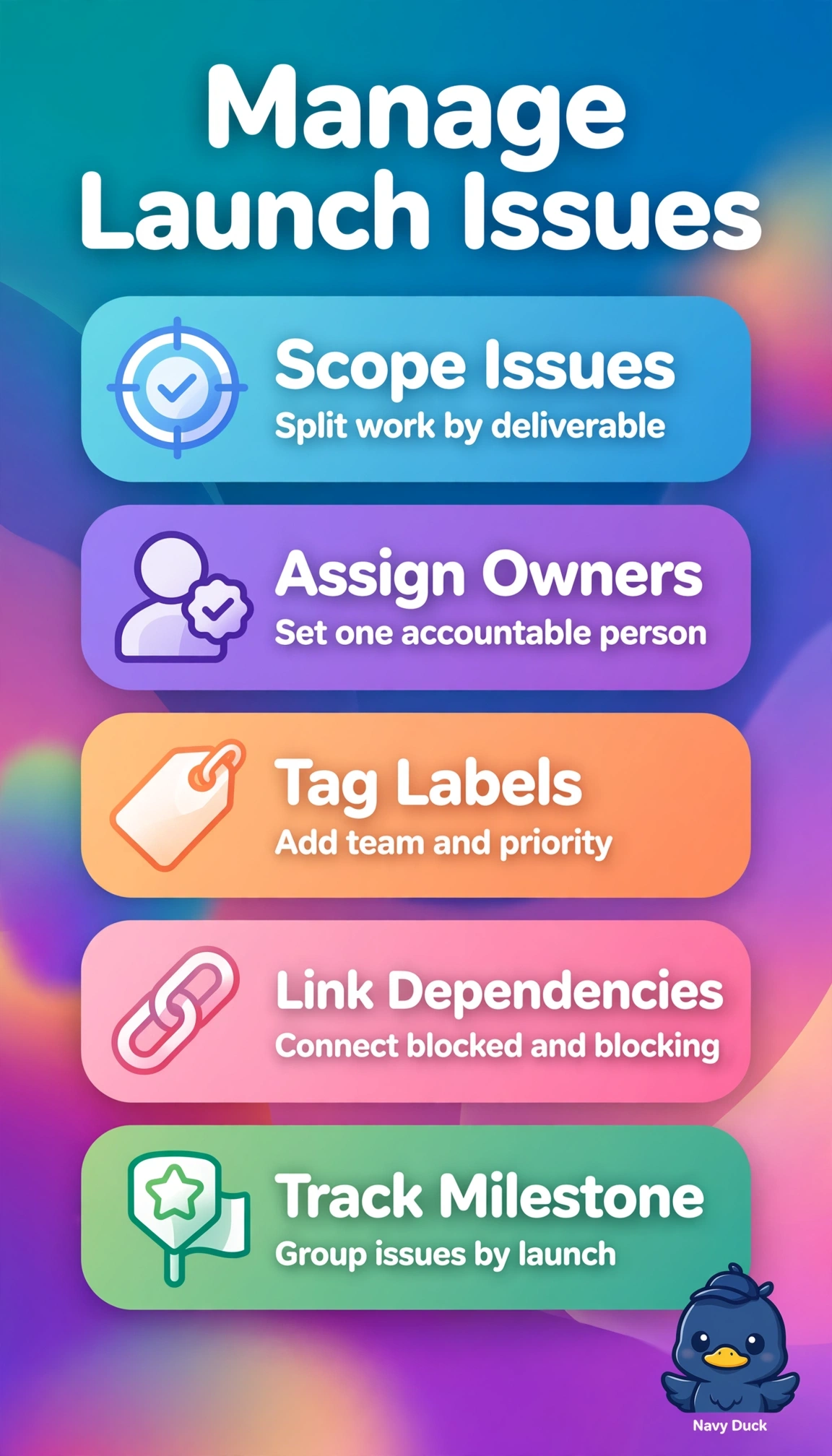
The correct practice succeeds because it combines all five controls needed for the launch: scoped issues prevent duplicates by defining clear units of work, assignees resolve unclear ownership through direct accountability, labels enable tagging and filtering across design, API, and QA work, linked blockers make dependencies explicit instead of hidden in comments, and milestone tracking provides a launch-level view of progress toward the release. The triaged team review variant fails on accountability because without assignees work remains collectively owned and stalls when no individual is responsible for driving it to done. The detailed checklists variant fails on dependency management because checklists track subtasks inside a single issue but do not expose cross-team blockers with link semantics that notify and sequence work. The Kanban board variant fails on release coordination because a board visualizes workflow state but does not aggregate issues against a launch deadline and completion percentage the way a milestone does. An exam caveat is to distinguish GitHub mechanisms by purpose rather than similarity: boards manage flow, labels manage categorization, links manage relationships, and milestones manage timeboxed delivery, so questions mentioning launch, release, or cross-team coordination usually require milestone tracking. A practical check is to audit the launch milestone for orphan issues before standup, confirming every open issue has an assignee, appropriate labels, explicit blocker links where needed, and no duplicates.