
A non-technical operations lead uses Copilot to draft vendor comparisons, but answers lack current pricing, cite stale specs, and cannot explain which source was used. IT offers an internal pricing API and a docs library with access controls. Which criterion should the lead use to recommend when to use Model Context Protocol (MCP) servers for this task?
Select an answer to reveal the explanation.
Short Explanation
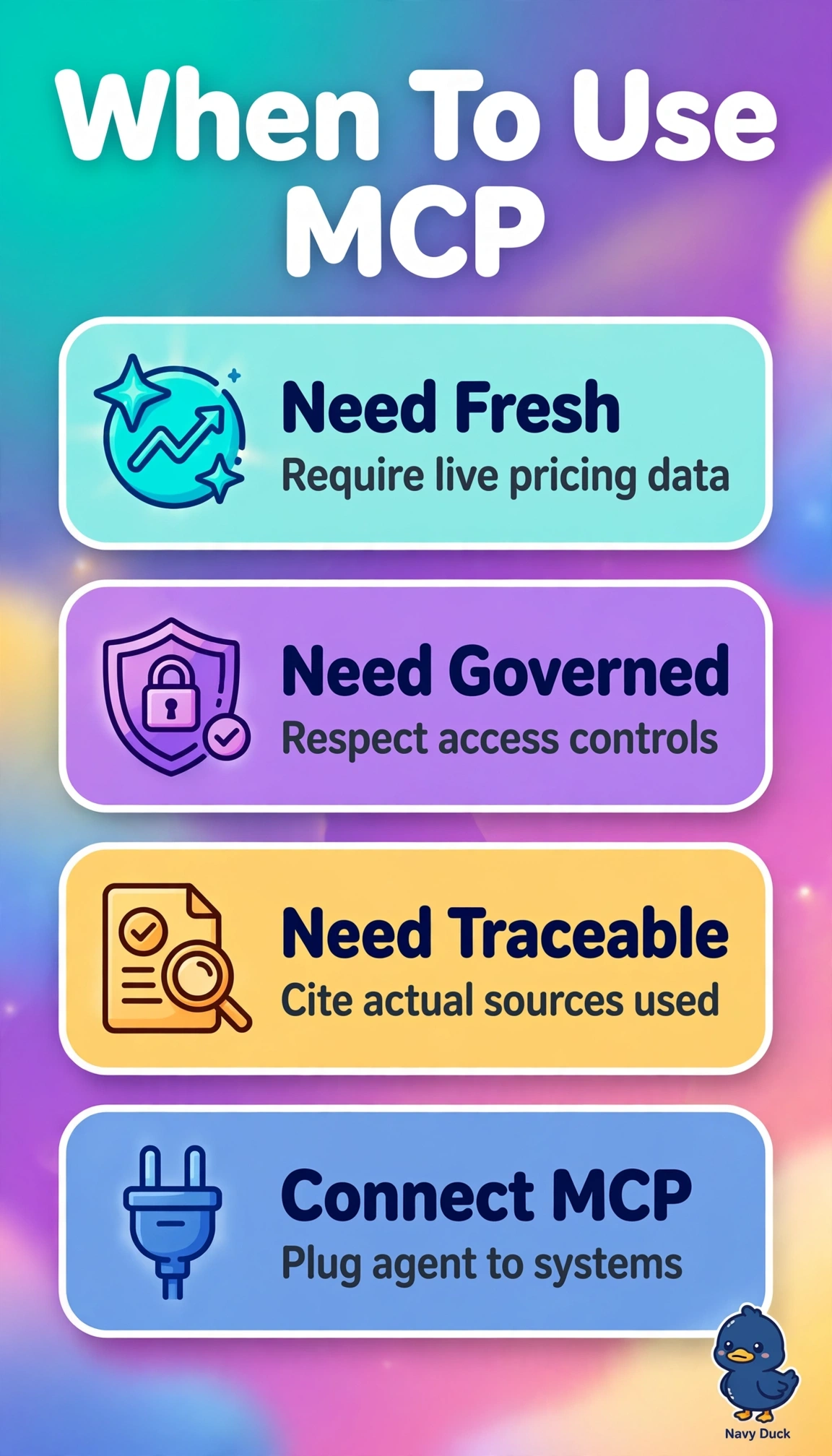
You’ve got stale answers where fresh facts matter most. Grounding changes the game by plugging Copilot into live, governed sources. Save MCP for moments when provenance beats pure creativity.
Full Explanation
MCP is appropriate here because it connects Copilot at run time to the internal pricing API and the permission-controlled docs library as authenticated tools, so each comparison can fetch current values under the user's identity and return source metadata that supports citations and audit. The scheduled indexed snapshot pattern is a sound enterprise grounding method that improves relevance and citation quality, but it misses currency because periodic indexing still leaves pricing and specs stale between refreshes. The unified web search pattern is a standard way to add live market pricing with citations, but it misses access enforcement because public results cannot substitute for identity-aware reads from internal systems. The seamless in-prompt enrichment pattern is common for live personalization with access checks, but it misses provenance because data merged invisibly into context cannot explain which API record or document supported each statement. For exams, focus on the discriminator rather than general grounding benefits, since many approaches cite sources, and only live execution with propagated permissions plus traceable references satisfies all three stated pains together. Before recommending, run one vendor question with a low-privilege test account and verify the trace shows the called MCP tool, the current price, correct allow or deny behavior, and a clickable source for every comparative claim.