
A business analyst in VS Code must summarize a legacy payment module, propose a refactor plan without editing code, and later generate unit tests. She opens Copilot Chat with multiple specialized agents available. Which approach best selects an agent in chat for the initial task?
Select an answer to reveal the explanation.
Short Explanation
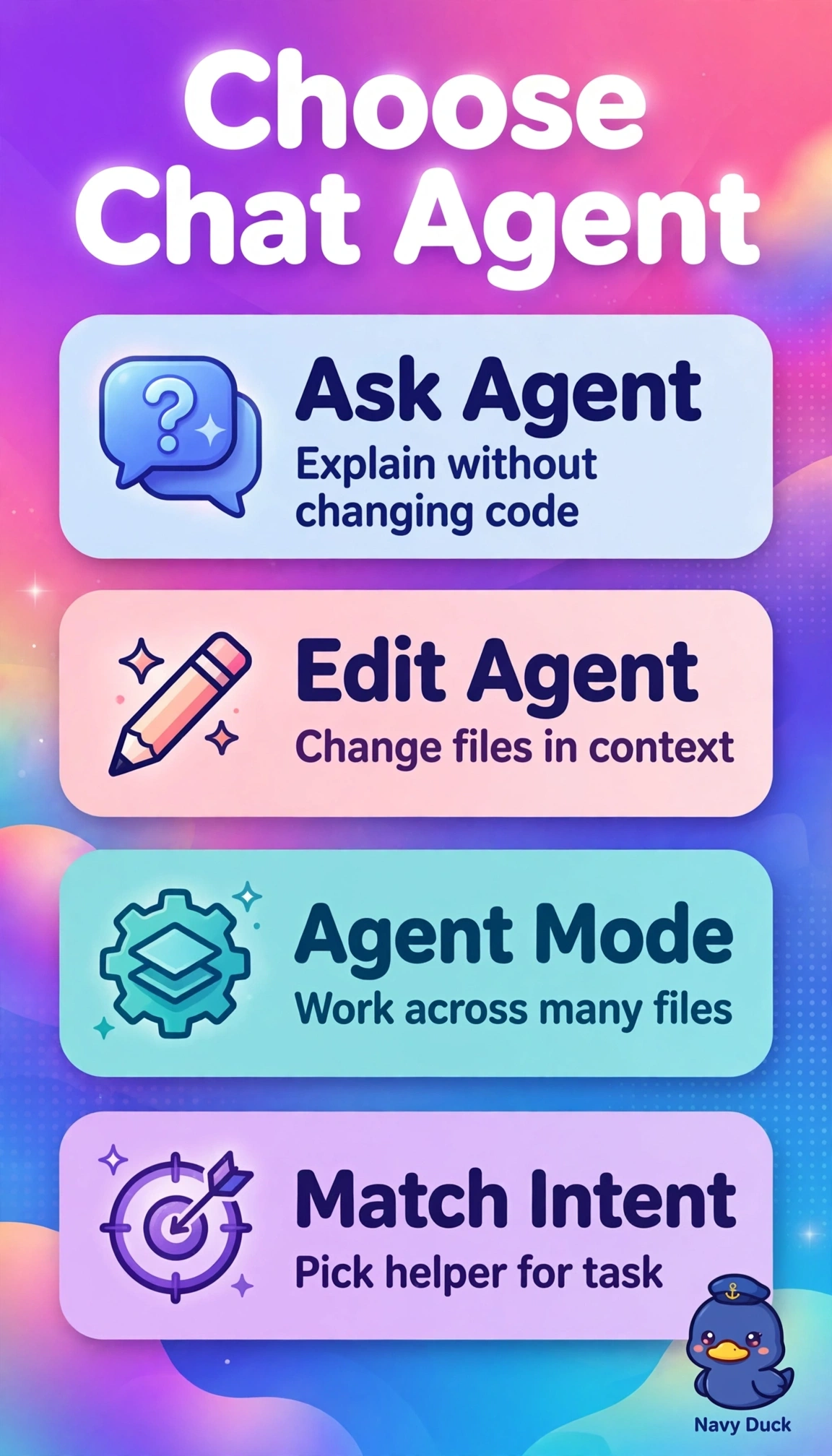
Matching the helper to the job saves you rework. Choosing Ask mode keeps this exploratory step read-only while you learn the system.
Full Explanation
The correct approach succeeds because the Ask agent is designed for read-only dialogue, answering questions, explaining unfamiliar code, and brainstorming plans without touching files, which exactly matches the initial requirement to summarize the legacy payment module and propose a refactor without editing while deferring test creation. By contrast, using the Edit agent to review and outline a plan fails on agent purpose because that agent is optimized to modify files, so even when asked to withhold changes it invites unintended diffs and is mismatched to a comprehension-first task. Using the Tests agent to explain logic while preparing for later tests fails on sequence and specialization because that agent expects understood behavior and interfaces as input for generation, so invoking it before understanding yields shallow explanations and weak coverage. Using Agent mode to investigate and summarize fails on scope control because that mode orchestrates autonomous multi-step actions across the repository, which is excessive for simple Q&A and violates least-privilege selection by risking broader actions. For exams, anchor on the current step and constraints like without editing and initial task rather than a plausible future need. As a practical check, confirm Ask is selected in Chat, request the summary and plan, and verify no diffs appear before switching agents.