
A regional logistics company manages shipment exceptions in one GitHub repository, with product code in /app and a 60-person operations team needing a triage agentic workflow. Leadership requires change history, pull-request review for every update, and automatic discovery by GitHub. Which folder structure should the program manager approve to configure the agentic workflow for reliable discovery and governance?
Select an answer to reveal the explanation.
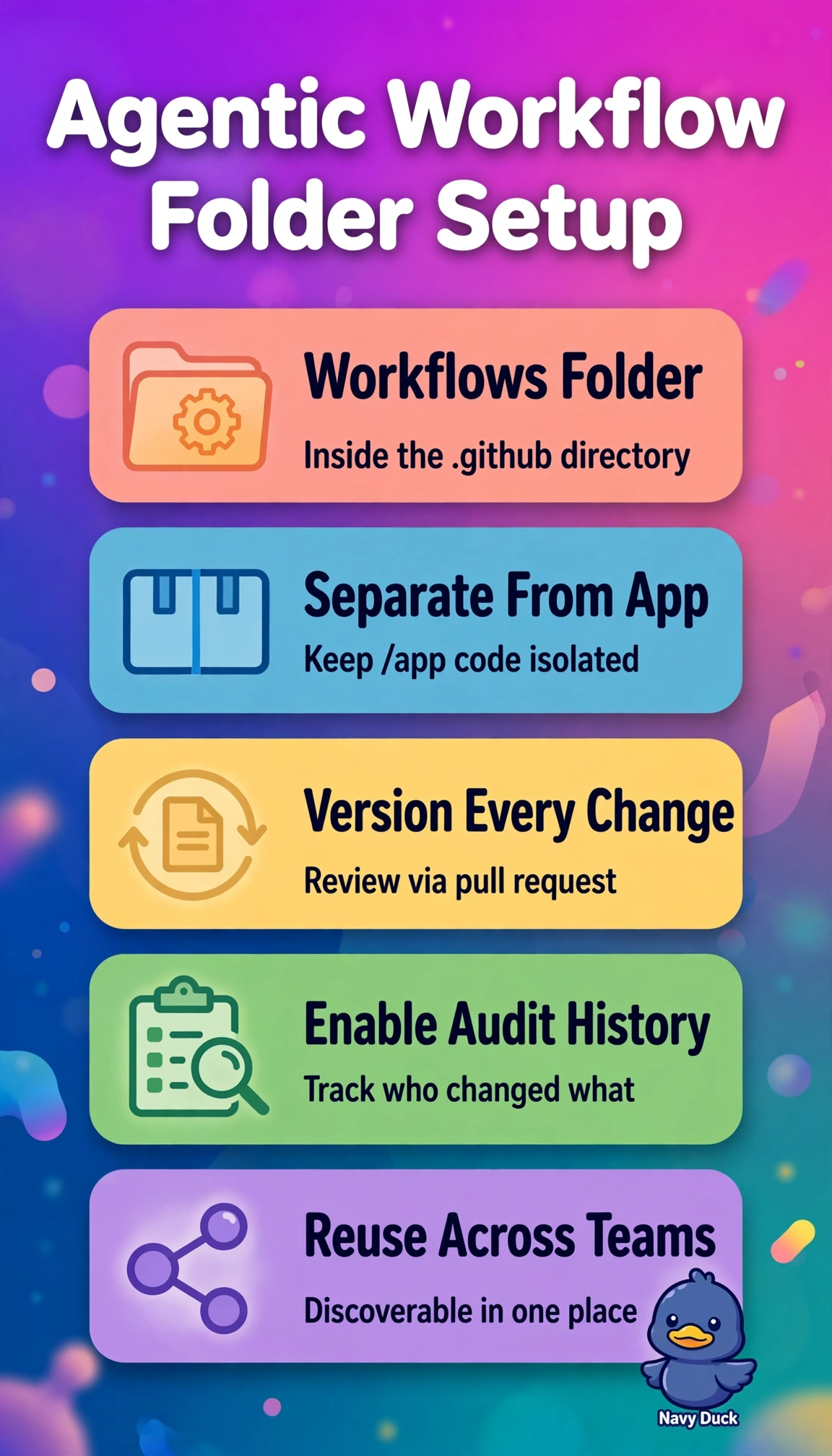
Short Explanation
You wouldn't stash the warehouse floor plan in someone's locker when everyone needs it. Keeping workflows in .github/workflows puts them where GitHub expects them, so you've got history, review, and discovery built in.
Full Explanation
GitHub natively discovers automation definitions stored under .github/workflows as version-controlled files, which satisfies governance because every edit creates commit history and must pass pull-request review and required checks before merging while remaining separate from application logic in /app and staying consistently runnable by events, schedules, or manual dispatch. Keeping files inside the /app product folder colocates automation with release code, which couples operational changes to product deploys and breaks independent review cadence and clear ownership. Maintaining instructions as repository wiki pages enables fast edits but bypasses pull-request governance and event-driven execution because wiki content is not treated as executable, reviewable workflow definitions. Saving definitions in a personal gist collection fragments ownership outside the repository, losing centralized history, access control, and automatic discovery for the operations team. Exam caveat: GH-700 prioritizes governance and discoverability over speed of editing, so favor repository-controlled .github paths when history and review are required. Practical check: open the repository file tree and confirm the workflow appears under .github/workflows with recent pull-request history before enabling it for operations.