
A fintech team runs a loan-review agent weekly, and last month an untracked prompt tweak caused inconsistent decisions that auditors cannot reproduce. The team needs safe iteration without breaking auditability or rollback. Which versioning consideration keeps workflow evolution controlled and traceable?
Select an answer to reveal the explanation.
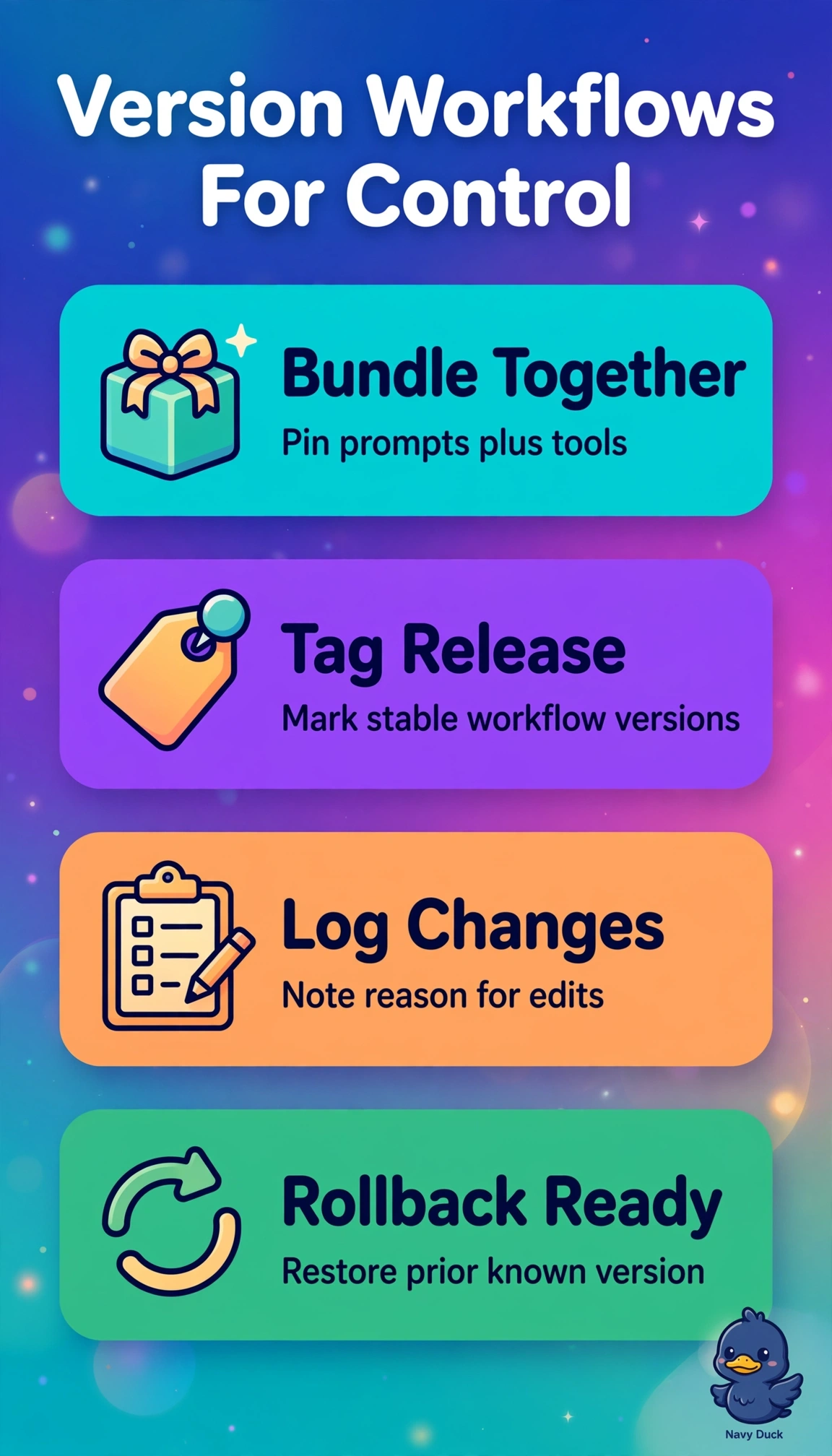
Short Explanation
You cannot audit what you cannot rewind. Versioning together prompts, tools, and policies gives you replay and rollback power. Silent tweaks feel fast until auditors ask questions.
Full Explanation
The correct approach is required because weekly loan-review decisions must be fully reproducible for auditors, which means prompts, tools, and policies cannot drift independently and every execution must map to a tagged, changelog-documented bundle that supports exact replay and rollback; versioning only prompts with clean Git history improves prompt rollback but leaves tool and policy changes untracked, so an auditor still cannot reconstruct why a decision changed when a model tool or threshold changed; freezing the full bundle with approval gating improves safety and change control but provides no run-level traceability, so without tags and changelog you cannot prove which version produced which weekly output or roll back to it; versioning with tags and staging validation improves release quality but substitutes pre-production testing for auditability, so without a changelog linking inputs, prompts, tools, and policies to each run you cannot reproduce past decisions on demand. Exam caveat: do not select a choice merely because it mentions versioning, approval, or staging as best practice, verify it covers joint versioning plus tagged reproducibility plus rollback. Practical check: before each weekly run, record the bundle tag, diff the changelog since the prior tag, and re-execute the prior tagged bundle on a sample to confirm identical outputs before promoting the new bundle.