
A product manager pilots a custom agent that triages 80 daily support issues, and leadership asks for evidence that its labels, assignments, and closed actions were correct and compliant. Which method should the manager use to review custom agent activities effectively?
Select an answer to reveal the explanation.
Short Explanation
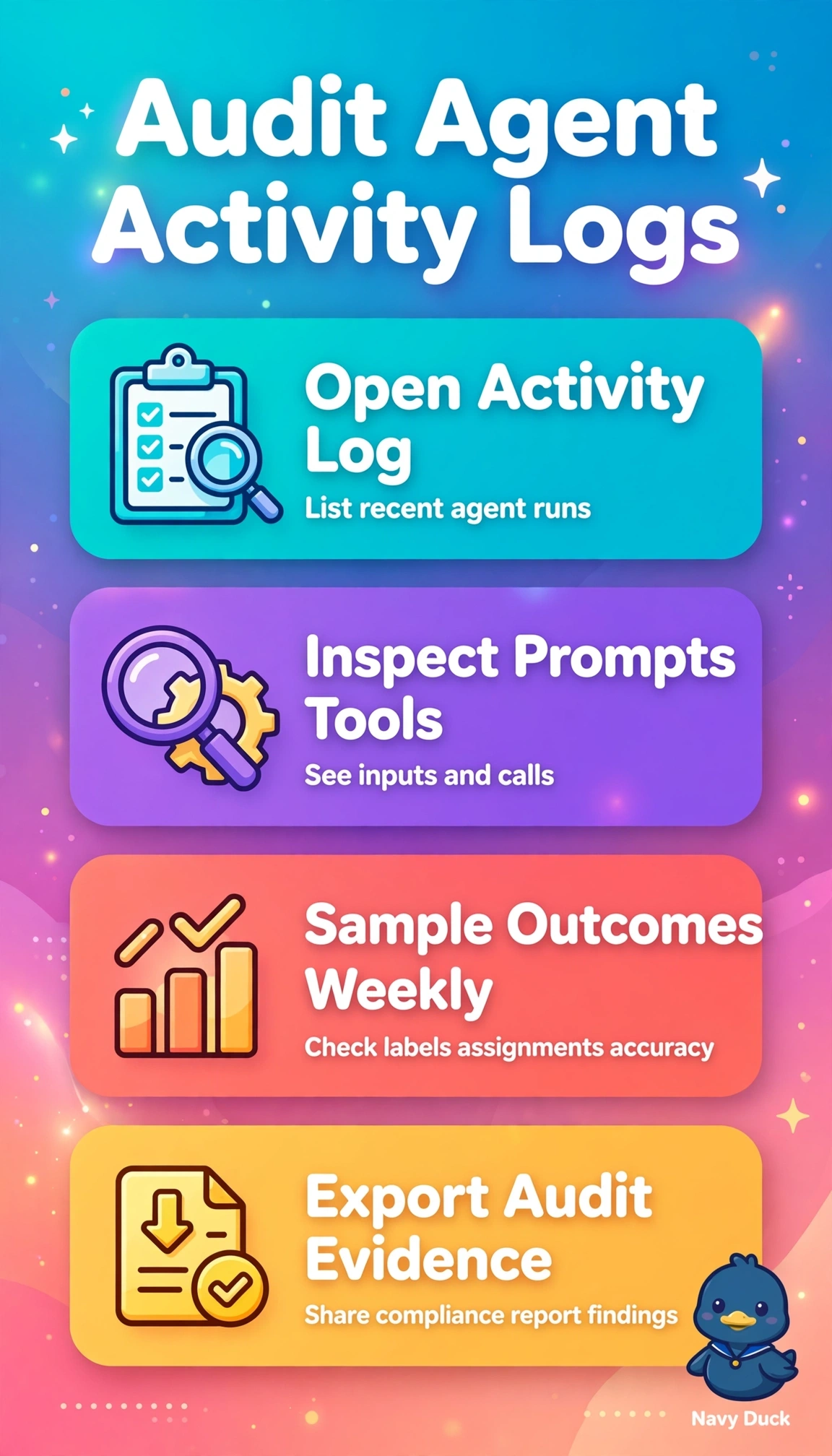
You need receipts, not vibes. Opening the full run history shows what the agent saw and did and activity transparency turns a black box into evidence you can actually defend.
Full Explanation
The correct method succeeds because it provides a verifiable run-time audit trail for each of the 80 daily cases, linking the user prompt, model reasoning, specific tool calls for labeling, assignment and closure, plus final outcomes, which lets the manager sample records and prove accuracy and policy compliance to leadership rather than relying on claims. Reviewing sampled transcripts and satisfaction scores is a standard experience quality practice, but it evaluates perceived helpfulness and sentiment while leaving correctness of labels, assignees and closed actions unverified against compliance rules. Reviewing instructions and routing rules is standard configuration governance, but it only confirms intended triage logic was defined, not that the agent executed it correctly in production where prompts, data issues or tool errors can cause deviation. Reviewing aggregate resolution counts and handling time is a common efficiency reporting practice, but throughput demonstrates speed and volume while providing no per-action evidence that each decision was accurate and compliant. For exams, distinguish design intent and aggregate performance from auditable execution evidence whenever the stem asks for proof that actions were correct and compliant. As a practical check, filter the activity log for the pilot period, randomly sample labeled, assigned and closed issues, and reconcile each prompt, tool input and result against the support taxonomy and compliance checklist before summarizing findings.