
A department lead oversees 200 Copilot seats across contractors and staff, facing surprise overages from premium requests and unused licenses while needing to forecast next quarter without blocking delivery. Which evaluation of budget guardrails for GitHub and Copilot usage best controls cost?
Select an answer to reveal the explanation.
Short Explanation
You'll stay ahead of surprise bills like checking your streaming subscriptions before they renew. When you reclaim unused seats and set spending alerts, your visibility turns into confident forecasts without slowing your teams down.
Full Explanation
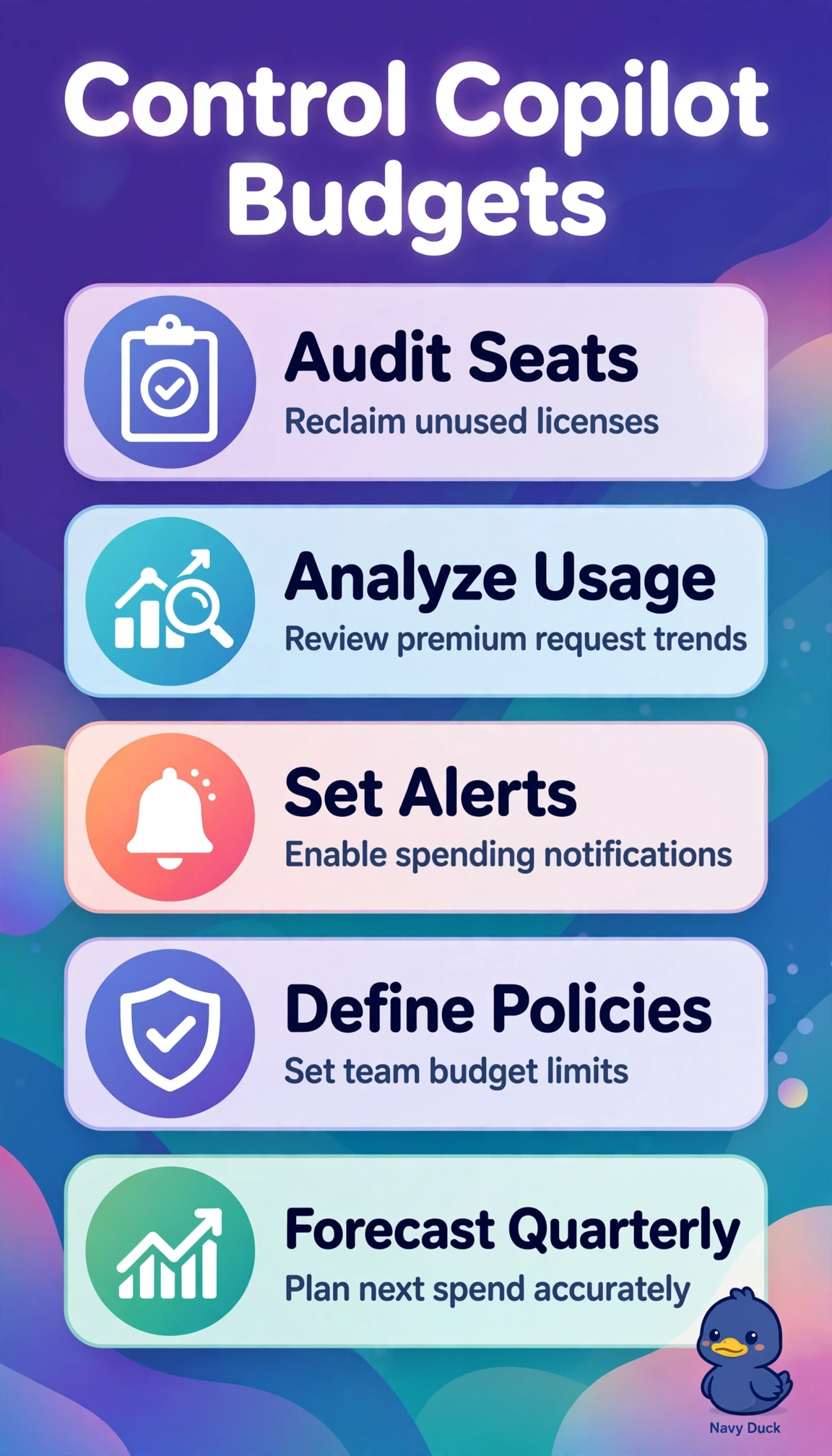
The correct evaluation succeeds because it unifies seat hygiene, premium-request governance, and forward planning by reviewing assignments to identify contractor churn, analyzing usage analytics to separate premium overages from normal consumption, and using spending alerts to enforce budget policies per team without pausing delivery, which directly resolves surprise overages, reclaims unused licenses, and enables next-quarter forecasting. The seat-audit approach that forecasts demand while preserving delivery fails on cost containment because without premium consumption and alert concepts it cannot explain or curb the overage driver. The premium-monitoring approach that forecasts budgets while retaining all seats fails on license efficiency because it leaves unused contractor seats allocated and never converts utilization into reclamation savings. The seat-and-policy review that reclaims seats and caps overages without disruption fails on planning because it controls current spend but provides no trend projection for next quarter staffing and premium needs. Exam caveat: choose the answer that satisfies all stem constraints together rather than the one that optimizes a single cost vector most aggressively. Practical check: confirm in billing, seat management, and budget alerts that reclaimed seats reduce base cost, premium policies trigger before overrun, and forecast exports align to team budgets.