
You supervise an agent that drafts supplier contracts from approved templates, with requirements for exact clause order, no invented penalties, and manager sign-off on deviations. Legal reports a draft with reordered clauses and a new fee. Which supervision practice ensures the agentic workflow meets stated requirements?
Select an answer to reveal the explanation.
Short Explanation
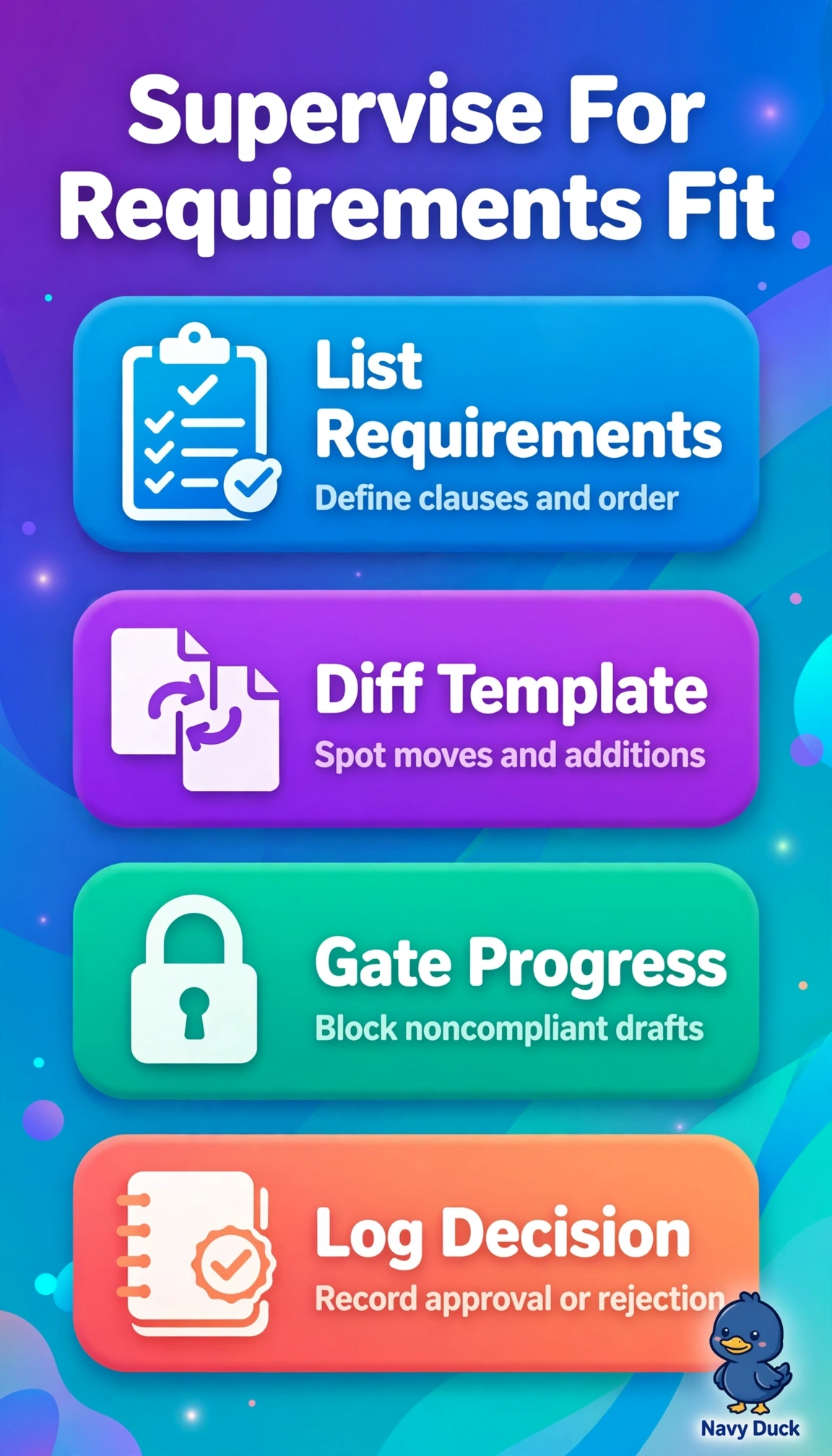
You can catch problems that a polished draft may hide by checking the exact requirements, not just the overall meaning. Use a requirements checklist with a template diff, and block drafts with reordered clauses or new fees from advancing.
Full Explanation
Checking outputs against a requirements checklist, using a template diff, and blocking noncompliant drafts from advancing directly enforces the stated requirements: exact clause order, approved fees, and no release of a draft that fails the checks. This matters because an agent can produce plausible text while still changing required details. Approving drafts that preserve legal meaning and contain only approved fees after manager review of deviations relies on meaning rather than exact order; reordered clauses can affect precedence or enforceability even when the language seems equivalent. Enforcing exact template order and approved penalties by automatically rejecting every deviation is strict, but it removes the manager sign-off path required for deviations, including cases needing accountable review. Verifying clause order and fees with a template diff while allowing drafts to advance pending manager review detects problems but does not prevent a noncompliant draft from moving forward; it turns a preventive control into a later review. Exam caveat: prioritize exactness and blocking language in the requirements over a generally reasonable approach that permits review after advancement. Practical check: test a draft with swapped clauses and a new fee, and confirm that both are flagged and the draft cannot advance while noncompliant.