
A technical project manager must standardize how three teams use a coding agent to generate release notes, requiring the same sources, audience, and definition of done despite different repos and deadlines. Which approach to creating agentic workflow instructions gives the agent reusable and reliable direction?
Select an answer to reveal the explanation.
Short Explanation
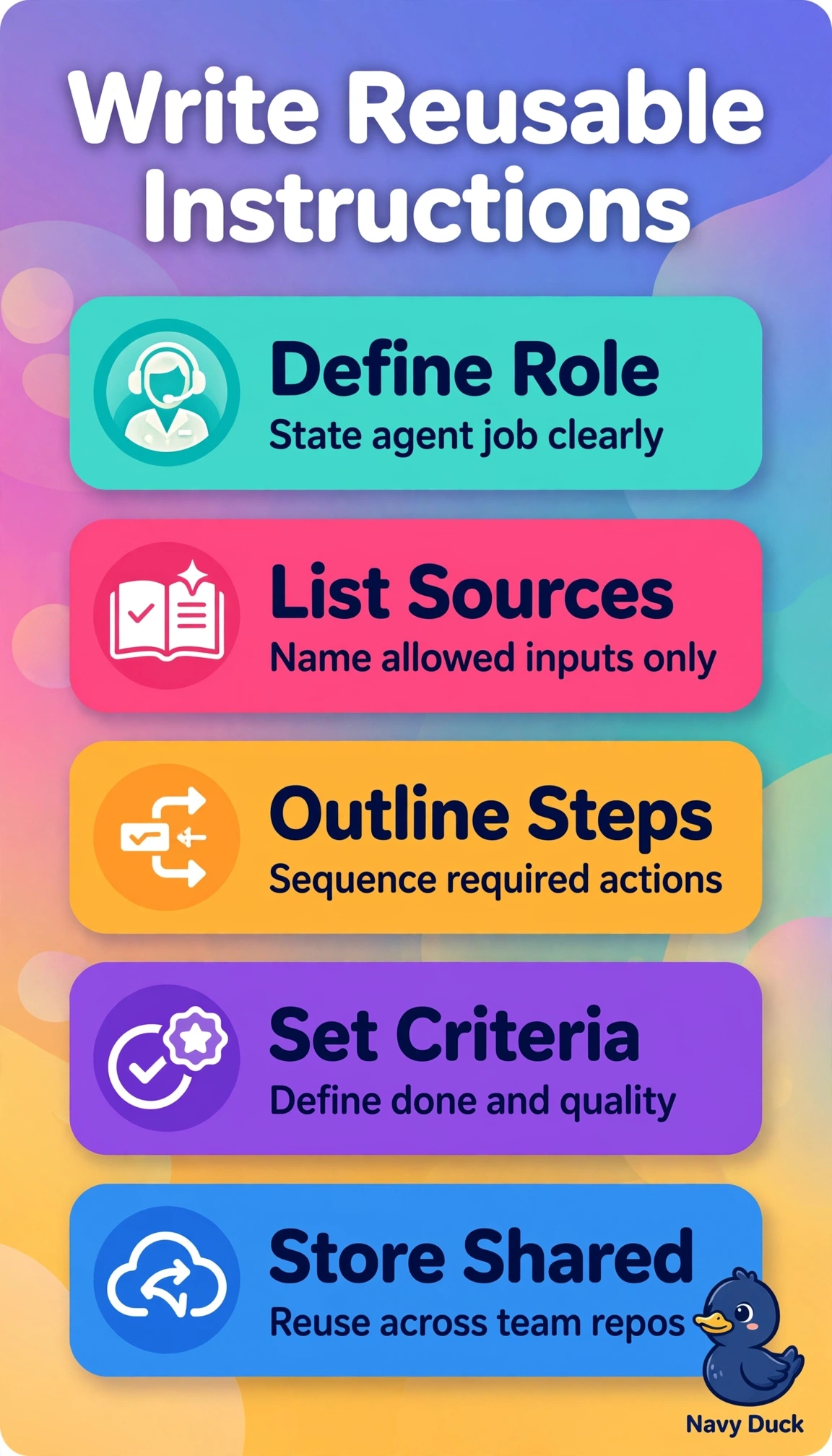
You get consistent results when the rules live where the agent always looks. Clear stored guidance acts as your recipe card for instructions that every run can follow reliably.
Full Explanation
Creating effective agentic workflow instructions works by persisting role, context, constraints, and acceptance criteria in a shared instructions location so every run inherits the same expectations without relying on memory or ad hoc prompts. A long one-off chat prompt fails by concept of ephemeral prompting, because it disappears after the session and varies by author, so different repos drift despite similar intent. A recorded demo video fails by concept of unstructured knowledge transfer, since the agent cannot reliably parse and enforce procedural rules from narration and teams interpret style differently. Granting broad admin access fails by concept of permission substitution, confusing access with direction, which increases risk while providing no testable definition of sources, steps, or done. For the exam, focus on durable, scoped, reviewable instructions over improvisation or over-permissioning, and a practical check is to run the same instructions in two repos and verify both outputs cite allowed sources and meet the stated acceptance criteria.