
A program manager is watching a Copilot coding agent mid-run migrate a billing export job, with live progress, partial edits, and a confirmation request before deleting legacy fields, and she must steer it without losing context or forcing a restart. Which in-run interaction with the agentic workflow best preserves continuity while steering the outcome?
Select an answer to reveal the explanation.
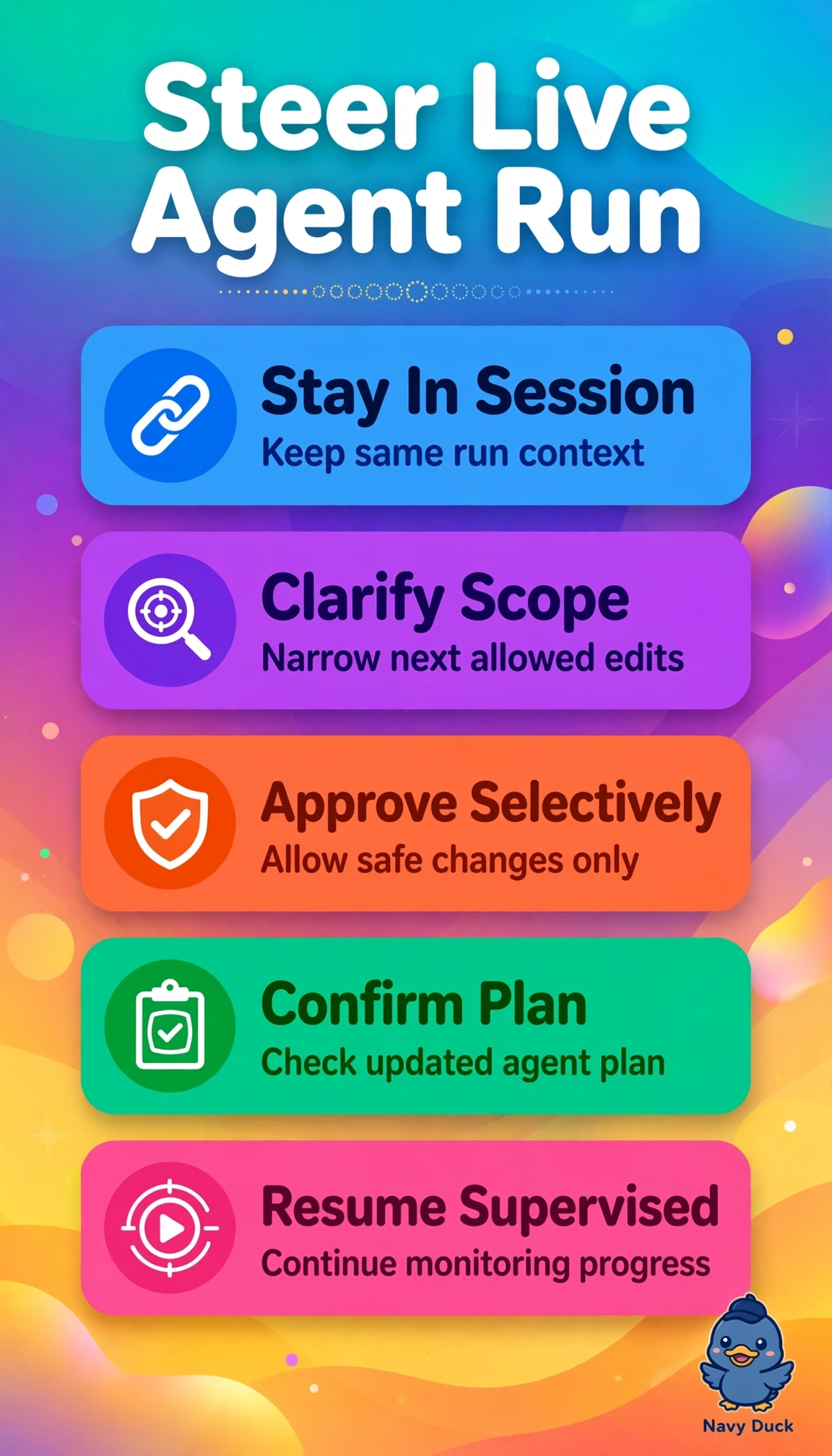
Short Explanation
You can steer the live run without losing its history or making the agent start over. A same-session clarification with selective approval keeps you in control and preserves continuity as the work proceeds.
Full Explanation
A follow-up clarification in the same session is the best fit because an agentic coding run retains its thread memory, tool history, file diffs, and pending approvals. You can narrow the billing-export scope and approve only safe edits while leaving deletion of legacy fields at the confirmation gate, so work continues without a restart. Editing the original task description in place can refine requirements, but during a live run it may trigger replanning or re-execution, risking current progress and conflicting with the need to preserve context. Rolling back to a stable checkpoint is useful for recovery, but it discards valid partial edits and moves backward rather than steering the active work forward. Asking for a concise status summary helps you inspect completed and pending edits, but it provides information rather than direction and does not resolve how the pending deletion should be handled. An exam caveat is to distinguish steering the active run from restarting, rolling back, or merely reviewing its status; wording about the same session and continuing mid-run signals the need for continuity. In practice, check that you are still in the identical session, that the history and diffs remain visible after your clarification, and that the agent presents a newly scoped plan or selective approval request before proceeding.