
A business analyst must summarize 80 pages of vendor contracts for risks, then generate concise executive talking points for a board meeting within two hours. Speed matters for the summary but nuanced reasoning matters for risk detection. Which model selection best aligns Copilot capabilities with this business purpose?
Select an answer to reveal the explanation.
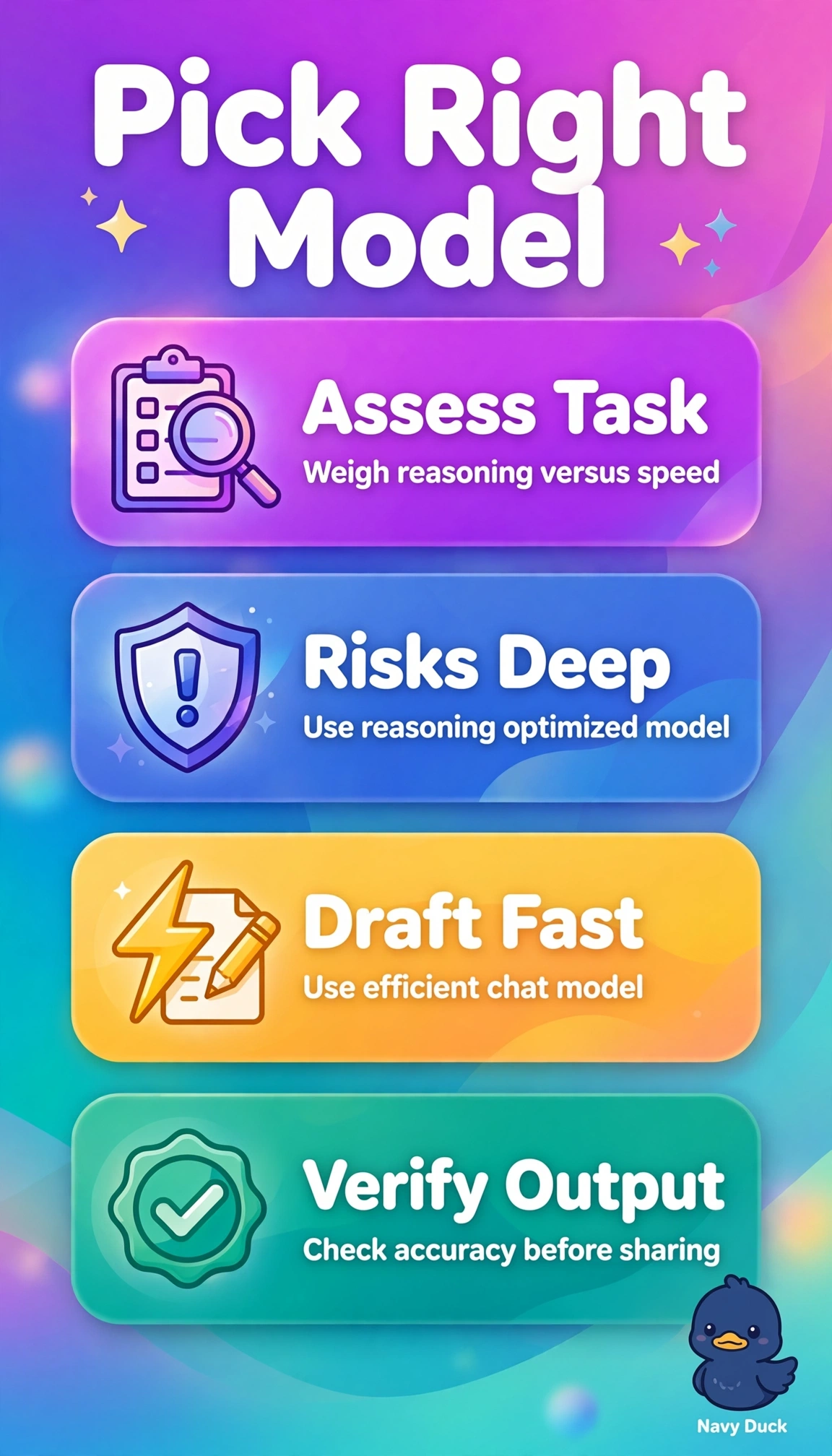
Short Explanation
You're casting the right brain for each scene. Fit-for-purpose models are like picking a detective for clues and a sprinter for delivery. Deep reasoning catches risks, speed polishes the message.
Full Explanation
The correct strategy pairs model strengths to distinct subtasks because contract risk detection demands careful inference over ambiguous language, obligations, and exceptions across 80 pages, while executive talking points demand fluent condensation under a tight two-hour window where latency matters more than deep deduction. Using a fast efficient model for everything delivers rapid summarization and drafting but sacrifices the deliberative reasoning needed to surface hidden liabilities, renewal traps, or indemnity exposure, creating false confidence in completeness. Using a reasoning-optimized model for everything preserves analytical rigor but incurs higher latency and cost for a straightforward reformatting task, jeopardizing the deadline when speed was explicitly prioritized for the summary output. Reversing the assignment applies intensive reasoning where brevity and turnaround are key and applies shallow processing where nuance is critical, so risks are likely missed while simple bullets consume unnecessary compute. As an exam caveat, distinguish stated business purpose and constraints from generic best-model thinking and select fit-for-task over most powerful in isolation. As a practical check, pilot both models on a sample contract section and confirm that risks flagged, summary time, and talking-point clarity meet stakeholder expectations before scaling to the full set.