
A technical project manager oversees 120 engineers using GitHub Copilot across three business units with a fixed quarterly platform budget and a mandate to prevent surprise overages. Usage spikes at sprint end threaten the cap. Which budget guardrail best controls GitHub and Copilot spending without halting delivery?
Select an answer to reveal the explanation.
Short Explanation
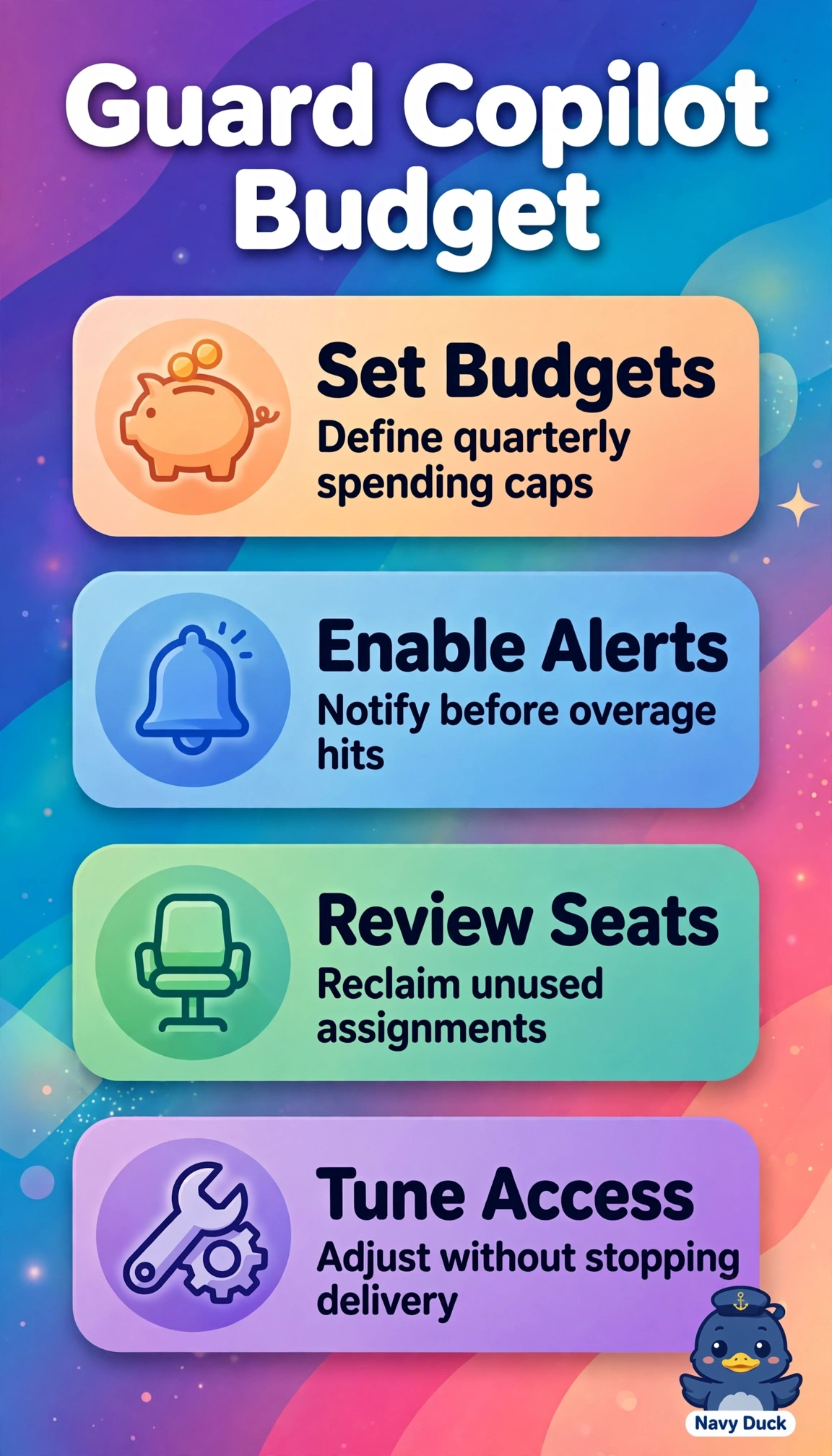
You're keeping spending visible so delivery never hits a wall. Proactive guardrails work like a fuel gauge with early warnings, not an empty-tank surprise. Budgets plus alerts let you tune access in time.
Full Explanation
The correct guardrail works because organization-level budgets with usage alerts provide proactive visibility into combined GitHub and Copilot consumption against a fixed quarterly cap, while recurring seat reviews let the manager trim unused assignments and rebalance across the three business units before sprint-end spikes create overages, preserving delivery continuity rather than reacting after spend occurs. Monthly chargeback reporting by business unit is a sound FinOps allocation practice, but it fails on prevention by documenting spend after the billing cycle instead of alerting before the cap is breached, so it cannot stop surprise overages. Automated usage caps that suspend completions do enforce a hard spending ceiling, yet they fail on the delivery constraint because blocking assistance during peak sprint periods directly halts engineering throughput to save cost. Centralized monthly reclamation of inactive Copilot seats is an effective license-hygiene routine, but it fails on scope because it optimizes only seat count and ignores metered GitHub platform usage and the need for threshold alerts tied to the quarterly budget. On the exam, distinguish preventive budget controls from retrospective cost allocation and from disruptive hard blocks, focusing on wording like prevent surprise, without halting delivery, and fixed quarterly cap. In practice, verify the control by confirming budget alerts route to owners at 50%, 80% and 100% thresholds and that seat-review data maps active Copilot users to each business unit before sprint-end demand peaks.