
A 200-person product division adopted Copilot Business with premium requests, and finance fears a quarterly overrun from unchecked agent coding sessions. Leaders need visibility, limits, and accountability without blocking delivery. Which budget guardrail should the admin evaluate first to control GitHub and Copilot usage costs?
Select an answer to reveal the explanation.
Short Explanation
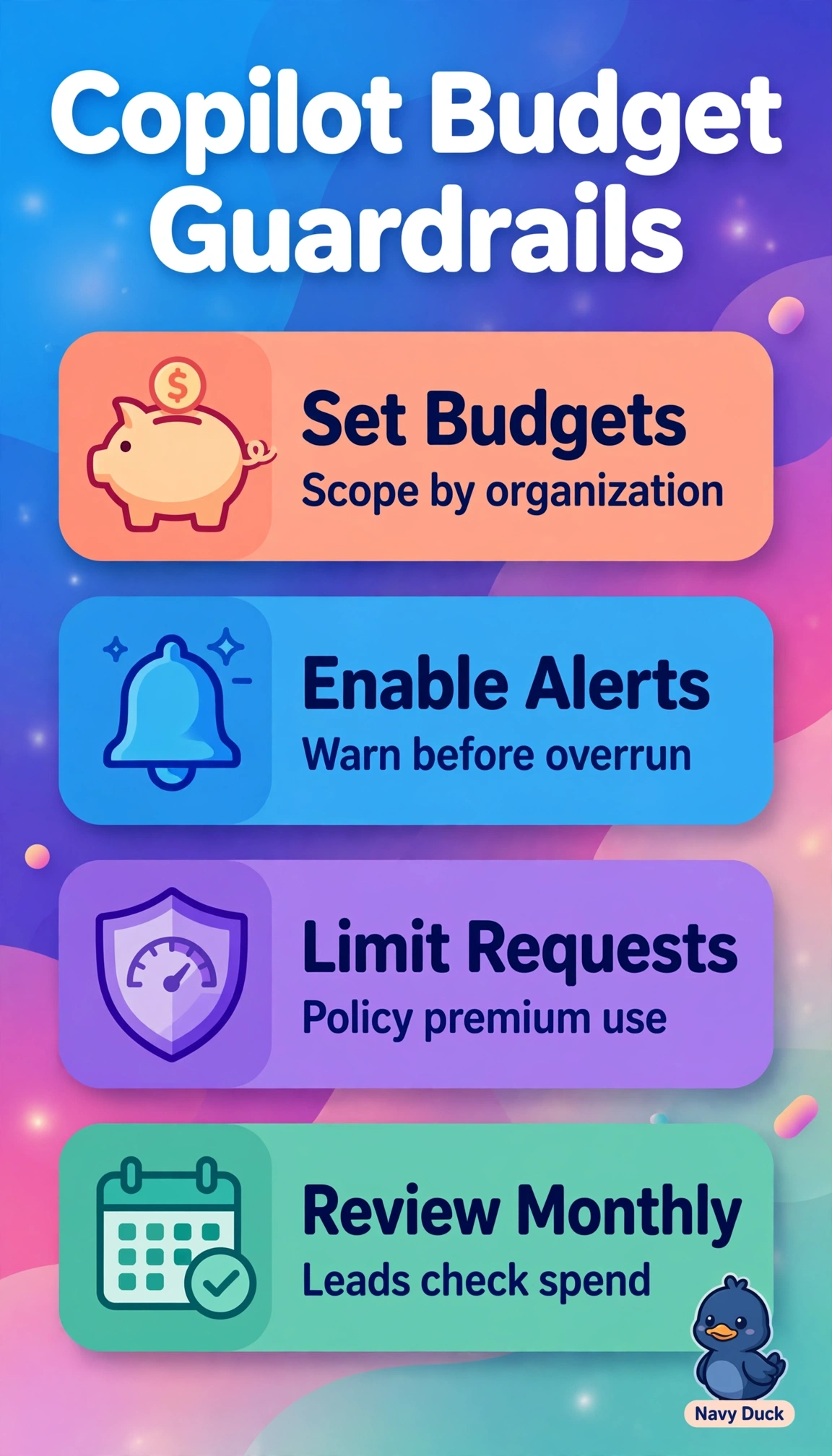
You steer spend before it crashes, not after. Organization budgets, usage alerts, premium-request policies, and periodic team-lead reviews give you limits, visibility, and accountability without blocking delivery.
Full Explanation
Organization budgets, usage alerts, premium-request policies, and periodic team-lead reviews form a comprehensive guardrail. Budgets create a boundary for GitHub and Copilot spend; alerts provide visibility before a quarterly overrun; premium-request policies specifically control costly agent coding sessions while preserving normal assistance; and team leads can review usage with engineering context and shared accountability. Configuring alerts, premium-request policies, and lead review while postponing formal budgets offers monitoring and guidance but no spending boundary, so aggregate consumption can still exceed finance’s tolerance. Configuring budgets, premium-request policies, and lead review while relying on monthly invoices makes detection retrospective: unchecked agent usage may already have caused an overrun before it appears. Configuring budgets and alerts under centralized finance oversight without periodic team-lead review weakens accountability and engineering context, risking bottlenecks or blanket restrictions that hinder delivery. Exam caveat: when a question calls for visibility, limits, and accountability together, look for all three controls rather than a partial set. Practical check: confirm the budget scope and amount, alert thresholds and recipients, team-aligned premium allowances, and a documented lead-review cadence with follow-up actions.